Sriracha Chicken Skillet — The 25-Minute Dinner With Serious Heat and a Sticky, Irresistible Glaze
Most spicy chicken recipes fail at balance. They are either too hot to eat comfortably or so mild that the sriracha is completely undetectable behind a wall of sweetness. The sauce either stays thin and watery and slides off the chicken, or it reduces so far it burns to the bottom of the pan before the chicken is fully cooked.
For more easy and delicious chicken recipes, explore our collection.
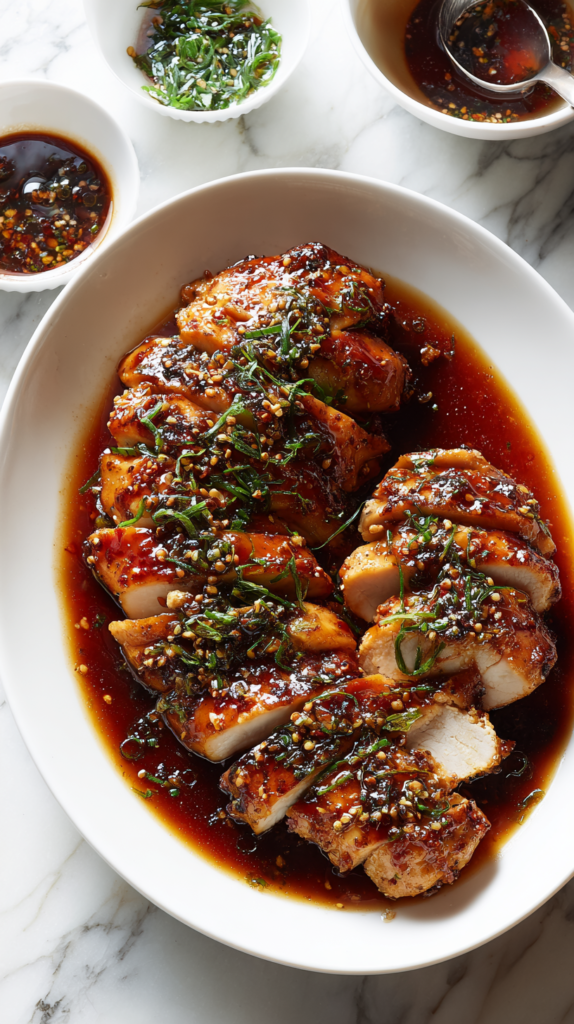
This sriracha chicken skillet gets the balance exactly right. The 1/3 cup of honey provides the sweetness that tames the sriracha’s heat without eliminating it. The soy sauce adds depth and umami that prevents the sauce from tasting one-dimensionally sweet. The rice vinegar cuts through the richness and keeps the glaze tasting bright even after it has reduced into a sticky, clingy coating. Garlic and ginger bring the aromatic complexity that makes the sauce taste like something significantly more involved than a five-minute whisking job.
Sriracha chicken skillet is a one-pan dinner made by searing seasoned bite-sized chicken in olive oil until golden, then pouring a honey-sriracha-soy sauce over the hot chicken and simmering until the sauce reduces into a sticky, glossy glaze that coats every piece. It is ready in 25 minutes from start to plate.
The technique that makes the sauce stick — reducing it directly in the skillet over the already-seared chicken rather than making it separately — concentrates the sauce while the chicken juices that have released into the pan blend into it, enriching the glaze with chicken flavor that a separately made sauce simply does not have. The result is a glaze that tastes complex and deeply developed despite being made entirely in the same pan in under 6 minutes.
This sriracha chicken skillet works on weeknights when dinner needs to be on the table in under 30 minutes, on weekends when you want bold flavor without extensive effort, and for meal prep because it reheats exceptionally well — the sauce re-liquifies slightly during reheating and re-coats the chicken as thoroughly as it did when first made.
Why This Sriracha Chicken Skillet Recipe Works
Every ingredient in the sauce plays a specific technical role — changing any one of them shifts the balance of the entire finished dish.
Honey Provides Both Sweetness and Glaze Viscosity
Honey does two jobs in this sriracha chicken skillet simultaneously. As a sweetener it balances the sriracha’s sharp heat and the soy sauce’s saltiness, creating the sweet-spicy-savory triangle that defines the sauce’s flavor profile. As a viscosity agent, honey’s natural sugars caramelize and thicken when heated in the skillet — this is what transforms a thin, pourable sauce into the sticky, glossy glaze that clings to every piece of chicken. Plain sugar or maple syrup at the same quantity do not have honey’s full viscosity and produce a thinner, less clingy result.
Sriracha Provides Both Heat and Garlic Depth
Sriracha is not simply a hot sauce. It is a fermented chili-garlic sauce with a specific flavor profile that includes not just heat but also a distinct garlic note, a mild tanginess from the vinegar it contains, and a subtle sweetness from its sugar content. In this sriracha chicken skillet, the sriracha contributes all three of these elements to the sauce simultaneously — heat, garlic background, and a secondary layer of acidity that works alongside the dedicated rice vinegar. Plain hot sauce at the same quantity produces a sauce with more pure heat and less complexity.
Rice Vinegar Prevents Cloying Sweetness
With 1/3 cup of honey and the natural sugar in the sriracha, the sauce would be cloyingly sweet without an acidic counterbalance. The 1 tablespoon of rice vinegar provides exactly that — mild, clean acidity that cuts through the sweetness and keeps the glaze tasting balanced and bright rather than dessert-like. Rice vinegar’s milder flavor compared to white or apple cider vinegar is intentional — it provides acid without a competing flavor presence that would distract from the sriracha and honey combination in the center of the sauce profile.
Soy Sauce Adds Umami and Deepens the Glaze Color
The 2 tablespoons of soy sauce in this sriracha chicken skillet contributes the deep, savory umami base that prevents the sauce from tasting like a dessert glaze rather than a dinner sauce. Soy sauce also darkens the honey’s natural golden color into a deeper amber-brown that reads visually as more complex and appetizing than a pale honey coating alone. Its salt content means no additional salt is needed in the sauce beyond what seasons the chicken directly — the sauce arrives at the correct saltiness level without adjustment.
Fresh Ginger Adds Brightness and Digestive Contrast
Ginger powder and fresh grated ginger behave completely differently in a sauce that reduces over heat. Ginger powder intensifies as it cooks and can become medicinal and sharp. Fresh grated ginger releases its bright, citrusy, slightly spicy notes during the brief simmer, then mellows into a warm aromatic background that complements the sriracha’s heat without competing with it. The 1 teaspoon of fresh grated ginger in this sriracha chicken skillet recipe is the correct quantity — enough to be perceptible as ginger specifically, not just as undifferentiated aromatic complexity.
Chicken Thighs Stay Juicy Through the Sauce Reduction
Boneless skinless chicken thighs contain enough intramuscular fat to stay moist and tender through the full searing and simmering process in this sriracha chicken skillet. Chicken breast pieces in the same recipe, cooked to the same internal temperature, emerge slightly drier because breast meat contains less fat and is more vulnerable to moisture loss during the extended high-heat sauce reduction. Both work, but thighs produce a noticeably more succulent result — a critical quality in a dish where the sauce-to-chicken ratio creates high expectations for juiciness at every bite.
1/3 cupHoney
1/4 cupSriracha
2 tbspSoy Sauce
1 tbspRice Vinegar
2 clovesGarlic
1 tspFresh Ginger
Ingredients for Sriracha Chicken Skillet
These quantities serve 4 people as a main course. The sauce quantities are calibrated to the 1.5 pounds of chicken specified — scaling the chicken up requires scaling the sauce proportionally.
Chicken
- Boneless skinless chicken thighs or breasts1.5 lbs
- Olive oil2 tbsp
- Salt1/2 tsp
- Black pepper1/2 tsp
- Paprika (sweet or smoked)1 tsp
Honey-Sriracha Sauce
- Honey1/3 cup
- Sriracha sauce1/4 cup
- Soy sauce2 tbsp
- Rice vinegar1 tbsp
- Garlic, minced2 cloves
- Fresh ginger, grated1 tsp
Key Ingredient Notes
Chicken Thighs: Boneless skinless chicken thighs are the recommended protein for this sriracha chicken skillet. Their higher fat content keeps them moist and tender through the searing and sauce simmering stages and produces a slightly richer, more satisfying bite than chicken breast. Cut them into even 1-inch pieces before cooking — uneven pieces produce some overcooked and some undercooked bites in the same skillet because smaller pieces reach temperature before larger ones. If using chicken breasts, choose thicker breasts and cut them the same way, but watch the cook time closely — breasts cook faster and dry out more readily than thighs at medium-high heat.
Sriracha Sauce: Standard Huy Fong sriracha is the benchmark for this recipe’s heat level and flavor profile. The sauce is calibrated to the specific fermented chili-garlic-sugar profile of Huy Fong sriracha — other brands vary significantly in heat intensity, vinegar content, and sweetness. If using a different brand, start with 3 tablespoons rather than the full 1/4 cup and adjust after tasting the combined sauce before it goes onto the chicken. The full 1/4 cup of standard sriracha produces a moderate-to-bold heat level that most adults find comfortable — reduce to 3 tablespoons for a milder version or increase to 5 tablespoons for a genuinely hot sriracha chicken skillet.
Fresh Ginger: Fresh grated ginger is not interchangeable with ground ginger at the same quantity in this recipe. Ground ginger is significantly more concentrated and carries a drier, spicier, more medicinal flavor that overpowers the balanced sauce profile when used at 1 teaspoon. If fresh ginger is unavailable, use 1/4 teaspoon of ground ginger as a substitute — not the full teaspoon. To grate fresh ginger efficiently, freeze the ginger root for 30 minutes before grating — frozen ginger grates in seconds on a microplane into fine, fiber-free shreds with no stringy texture.
Honey: Use standard liquid honey for this sriracha chicken skillet — creamed honey, raw set honey, or very thick cold honey do not dissolve smoothly into the sauce at room temperature and can remain as small honey pockets rather than fully integrating. Wildflower or clover honey both work well. Avoid strongly flavored honey varieties like buckwheat or manuka — their distinctive flavors compete with the sriracha and soy rather than serving as a neutral sweetness background.
Required Equipment
This sriracha chicken skillet requires minimal equipment — the entire dish is made in a single pan from start to finish.
Large Skillet (12-inch, stainless or cast iron)Small Mixing BowlWhisk or ForkTongs or Wooden SpoonMicroplane or Fine GraterInstant-Read Thermometer
A 12-inch skillet is the correct size for 1.5 pounds of bite-sized chicken. A smaller pan crowds the chicken pieces against each other — they release steam and poach rather than sear, producing pale, grey chicken rather than the golden, slightly caramelized exterior that creates the textural contrast with the sticky glaze. A stainless steel or cast iron skillet handles the high-heat searing better than a non-stick pan, which can degrade at the medium-high temperatures needed to achieve proper golden color on the chicken before the sauce goes in.
The microplane is specifically necessary if using fresh ginger — it produces the fine, paste-like grated ginger that fully incorporates into the sauce without leaving fibrous strings. A box grater’s finest holes work as a substitute but produce slightly coarser ginger shreds.
How to Make Sriracha Chicken Skillet — Step by Step
Nine steps from cold ingredients to glazed, plated sriracha chicken. Active work takes 5 minutes. The skillet handles the rest.
1
Cut the Chicken Into Even Pieces
Cut the chicken thighs or breasts into uniform bite-sized pieces — approximately 1-inch cubes. Even sizing is essential: if some pieces are significantly larger than others, they will still be pink inside when the smaller pieces are already overcooked and dry.
All pieces should be roughly the same size when viewed side by side in the bowl — no piece should be more than 50 percent larger than the smallest piece in the batch.
2
Season the Chicken
Add the salt, black pepper, and paprika to the chicken pieces and toss until every piece is evenly coated. The seasoned chicken should appear uniformly dusted with red-orange paprika with no plain white pieces visible.
Seasoning the chicken directly — not just relying on the sauce — ensures a well-seasoned interior. The sauce coats the outside of each piece but does not penetrate the chicken during the brief simmer time. The seasoning on the chicken surface is what flavors the meat itself.
3
Make the Honey-Sriracha Sauce
In a small bowl, whisk together the honey, sriracha, soy sauce, rice vinegar, minced garlic, and grated ginger until fully combined and smooth. The completed sauce should be a deep amber-red color with visible garlic pieces, a glossy surface, and a balanced aroma of honey sweetness and chili heat — neither element dominating the other.
Taste the sauce before it goes into the skillet — this is your only opportunity to adjust. Add more honey for less heat, more sriracha for more heat, or an extra splash of soy sauce if the sauce tastes undersalted. Do not adjust the rice vinegar quantity — too much acid unbalances the sauce more visibly than any other change.
4
Heat the Skillet
Place the large skillet over medium-high heat. Add the 2 tablespoons of olive oil and heat until the oil shimmers visibly across the full pan surface and a single piece of chicken dropped in sizzles aggressively from the first second of contact.
Medium-high heat — oil must shimmer before chicken goes in
A properly preheated pan is what produces searing rather than steaming. If the oil is not yet at temperature when the chicken goes in, the pieces sit in warm rather than hot oil, release moisture, and poach — producing grey, tender chicken with no golden color and significantly less flavor than properly seared pieces.
5
Sear the Chicken Until Golden
Add the seasoned chicken pieces to the hot skillet in a single layer. Do not move them for the first 2 minutes — allow them to sear undisturbed so the contact surface can develop its golden crust before being turned.
Cook, stirring occasionally, for 6–8 minutes total until the chicken pieces are golden-brown on the majority of their surfaces, cooked through with no visible pink at the cut edges, and the juices around the chicken in the pan are clear rather than pink.
Verify internal temperature with an instant-read thermometer — the chicken must reach 165°F (74°C) before the sauce is added, as the sauce simmer time that follows is too brief to safely cook undercooked chicken.
6
Reduce Heat and Add the Sauce
Reduce the skillet heat to medium. Pour the prepared honey-sriracha sauce evenly over the cooked chicken pieces in the skillet.
The sauce should begin simmering gently within 30 seconds of hitting the hot pan — small bubbles forming around the edges of the pan first, then spreading across the surface as the sauce heats through. If the sauce immediately boils aggressively, the heat is too high — reduce it slightly.
7
Stir to Coat Every Piece
Using a wooden spoon or spatula, gently stir and turn the chicken pieces to coat them completely in the sauce. Ensure every piece has sauce contact on all visible surfaces.
After the first coat, the chicken pieces should appear evenly covered in a thin, glossy, amber-red sauce with the garlic pieces visible and no chicken piece showing its unsauced paprika surface.
8
Simmer Until the Sauce Thickens and Becomes Sticky
Allow the sauce to simmer over medium heat for 4–6 minutes, stirring every 60–90 seconds to prevent the sauce from burning on the bottom of the pan while allowing it to reduce and concentrate.
The sauce is ready when it has reduced to approximately half its original volume, coats the back of a spoon in a thick, glossy layer that holds its shape rather than running, and the chicken pieces are visibly glazed — each piece coated in a sticky, shiny, deep amber-red layer that clings without dripping. The aroma at this stage should be intensely sweet-spicy with a noticeable caramelized honey note.
9
Remove From Heat and Serve Immediately
Remove the skillet from the heat the moment the sauce reaches the sticky, glossy consistency described above. The sauce continues to thicken from the residual heat in the pan even after removal from the burner — serving immediately while the glaze is at peak consistency produces the best result.
Serve directly from the skillet or transfer to a serving dish. Garnish with sesame seeds, sliced green onions, or fresh cilantro if desired. The bright garnish color contrasts beautifully with the deep amber-red glaze of the finished sriracha chicken skillet.
Dana’s Pro Tips for the Perfect Sriracha Chicken Skillet
- Pat the chicken pieces dry before seasoning. Surface moisture on chicken pieces causes steaming in the hot skillet rather than searing. Patting each piece dry before adding the seasoning ensures the paprika, salt, and pepper coat a dry surface — and that when the chicken hits the hot oil, the contact produces immediate sizzling browning rather than a steam release. This single step produces golden-brown pieces with developed crust versus pale, simmered-looking pieces that lack color before the sauce is even added to the sriracha chicken skillet.
- Add 1 teaspoon of cornstarch to the sauce for a more intensely glossy glaze. Whisking 1 teaspoon of cornstarch into the honey-sriracha sauce before pouring it over the chicken produces a glaze that is noticeably thicker, glossier, and more clingy than the cornstarch-free version. The cornstarch creates a clearer, more translucent glaze rather than the slightly cloudy finish that sauce reduced by evaporation alone produces. This is the technique restaurant-quality sticky glazes use — it takes 10 extra seconds and produces a visually dramatic result.
- Do not crowd the skillet during searing. If 1.5 pounds of bite-sized chicken pieces are too many for your skillet to hold in a single layer with space between each piece, cook in two batches rather than crowding. Crowded pieces touch each other, trap steam, and the collective moisture prevents any individual piece from reaching the high surface temperature needed for the Maillard browning reaction. The first batch can wait covered in a warm oven while the second batch sears — both batches then come together for the sauce step.
- Adjust the heat level by changing the honey-to-sriracha ratio, not the overall sauce volume. Reducing the total sauce quantity to make the dish milder produces a dry, under-glazed result where not enough sauce is present to coat all the chicken. Instead, maintain the total sauce volume and adjust the internal ratio — increase honey to 1/2 cup and reduce sriracha to 3 tablespoons for a milder sriracha chicken skillet, or maintain the honey at 1/3 cup and increase sriracha to 6 tablespoons for a genuinely hot version.
- Use a stainless steel skillet rather than non-stick for better fond development. Stainless steel allows small amounts of chicken protein and seasoning to stick to the pan surface during searing — this is called fond. When the honey-sriracha sauce hits the hot stainless steel pan, it dissolves the fond into the sauce, adding concentrated, deeply savory chicken flavor to the glaze that a non-stick surface cannot replicate. The fond is what makes the sriracha chicken skillet sauce taste so developed despite being made in minutes.
- Finish with a squeeze of fresh lime juice immediately before serving. The moment the sriracha chicken skillet comes off the heat, a squeeze of fresh lime juice — approximately half a lime — adds a burst of citrus acidity that brightens every flavor in the dish simultaneously. The lime’s acid reinforces the rice vinegar’s balancing work, cuts through the honey’s sweetness, and makes the sriracha’s heat feel cleaner and more defined rather than heavy and lingering. This is a finishing step, not a cooking step — the lime goes on at the table, not in the pan.
- Let the sauce simmer without stirring for 60-second intervals. Constant stirring during the sauce reduction prevents the honey from developing caramelized notes at the pan surface — those slightly browned honey edges are where the most complex flavor develops. Stir every 60–90 seconds rather than continuously: allow the sauce 60 seconds of undisturbed contact with the pan surface, then stir to prevent burning and expose fresh sauce to the heat. This produces a deeper, more caramelized glaze than constant stirring allows.
- Serve immediately — do not hold the sriracha chicken skillet warm on the stove. The honey-sriracha glaze continues to reduce and thicken from the residual heat in the pan and the chicken even after the heat is turned off. Holding the dish warm on a low burner for more than 3–4 minutes causes the glaze to over-reduce, turn tacky and sticky rather than glossy, and eventually develop burnt sugar notes from the prolonged honey caramelization. If you need to hold the dish before serving, transfer it off the heat entirely to a serving bowl.
For more easy and delicious chicken recipes, explore our collection.
Common Mistakes to Avoid With Sriracha Chicken Skillet
Adding the Sauce to Undercooked Chicken
The sauce simmer step in this sriracha chicken skillet recipe takes 4–6 minutes — not nearly enough time to safely cook chicken from raw or even from partially cooked. The sauce’s sugar content causes it to caramelize and potentially burn before undercooked chicken reaches 165°F. Always verify the chicken is fully cooked to 165°F with a thermometer before reducing the heat and adding the sauce. The sauce step is for glazing cooked chicken, not for finishing cooking it.
Cooking the Sauce Over Too High Heat
Pouring the honey-sriracha sauce into a still-blazing medium-high heat skillet produces immediate, aggressive caramelization that burns the honey sugars before the sauce has time to evenly coat the chicken. The result is a dark, slightly bitter glaze with burnt notes rather than the sweet-spicy-caramelized character intended. Reduce the heat to medium before adding the sauce — medium heat allows a controlled simmer that concentrates the sauce without burning its sugars.
Not Stirring During the Sauce Reduction
Honey burns quickly where it contacts the hot pan surface in the absence of stirring. A fully unstirred sauce reduction in a sriracha chicken skillet produces dark, bitter burnt spots on the pan bottom and an unevenly glazed, partly scorched result. The correct approach is to stir every 60–90 seconds — frequently enough to prevent burning, infrequently enough to allow caramelization to develop between stirs.
Over-Reducing the Sauce
Reducing the honey-sriracha sauce past the sticky-glossy stage into a thick, taffy-like consistency produces a glaze that is intensely sweet, almost candy-like, and so viscous it does not coat the chicken evenly — it clumps in thick spots and leaves other areas bare. The sauce is done when it coats the back of a spoon and a drawn line holds its shape. Remove from heat at that precise moment — do not push for further reduction.
Using Uneven Chicken Pieces
In a skillet dinner where all pieces cook simultaneously in the same pan, size variation means some pieces overcook while others remain undercooked. A 1-inch piece finishes cooking significantly before a 2-inch piece at the same heat level. Cut all chicken pieces to the same 1-inch size before seasoning — this single preparation habit determines whether the sriracha chicken skillet contains uniformly juicy, properly cooked pieces or a mix of dry small pieces and underdone large ones.
Substituting Ground Ginger at the Same Quantity
Ground ginger is approximately four times more potent than fresh grated ginger at the same volume measurement. Using 1 teaspoon of ground ginger in place of the 1 teaspoon of fresh ginger in this sriracha chicken skillet produces an aggressively ginger-forward sauce with a dry, medicinal quality rather than the fresh, bright ginger note the recipe intends. If fresh ginger is unavailable, use 1/4 teaspoon of ground ginger — not the full teaspoon.
Sriracha Chicken Skillet Variations and Substitutions
With Vegetables Added
Add 1 cup of broccoli florets, 1 sliced red bell pepper, or 1 cup of sugar snap peas to the skillet alongside the chicken during the last 3 minutes of searing. The vegetables cook through in the time it takes for the sauce to reduce after being added — they absorb the honey-sriracha glaze and become lightly caramelized at their edges. This turns the sriracha chicken skillet into a complete one-pan meal without requiring any additional cooking steps.
Milder Family Version
Reduce the sriracha to 2 tablespoons and increase the honey to 1/2 cup. Add 1 tablespoon of tomato ketchup to the sauce — the ketchup adds a mild tang and body that makes up for the reduced sriracha volume without adding heat. The result is a sweet, slightly tangy glaze with a background warmth that most children and heat-sensitive adults find very comfortable while still tasting distinctly of the honey-sriracha character.
Extra-Hot Version
Increase the sriracha to 6 tablespoons, add 1/4 teaspoon of cayenne pepper to the chicken seasoning alongside the paprika, and add 1 finely chopped fresh jalapeño or Thai chili to the sauce mixture. This version of the sriracha chicken skillet is genuinely hot — serve with a side of plain steamed rice specifically to moderate the heat and with additional honey available for guests who want to dial back the intensity at the table.
Sesame-Ginger Version
Add 1 tablespoon of toasted sesame oil to the sauce alongside the other sauce ingredients. Increase the fresh ginger to 2 teaspoons. Finish the dish with 2 tablespoons of toasted sesame seeds stirred in immediately before serving. This version of the sriracha chicken skillet leans more noticeably toward East Asian flavor profiles — the sesame oil adds a rich, nutty depth that complements the ginger and soy sauce beautifully.
With Orange
Replace the rice vinegar with 2 tablespoons of fresh orange juice and add 1 teaspoon of orange zest to the sauce. The orange’s natural sweetness complements the honey while its acidity provides the same balancing function as the rice vinegar. The citrus note adds a bright, fruity dimension to the sriracha chicken skillet sauce that makes it taste distinctly different from the standard version without altering the basic technique.
Gluten-Free Version
Replace the standard soy sauce with tamari — a Japanese-style soy sauce made without wheat that is certified gluten-free. All other ingredients in this sriracha chicken skillet recipe are naturally gluten-free. Use the same 2-tablespoon quantity and expect an identical result — tamari and soy sauce are interchangeable in this recipe with no flavor difference detectable in the finished dish.
Quick Substitution Reference
No sriracha? Sambal oelek at 3 tablespoons plus 1 teaspoon of sugar produces the closest substitute — sambal is a pure chili paste without sriracha’s garlic and sugar, so adding sugar compensates for the sweetness difference. Gochujang at 2.5 tablespoons produces a deeper, more fermented, slightly smokier result. Plain hot sauce like Tabasco at the same quantity is significantly thinner and more vinegary — reduce rice vinegar to 1/2 tablespoon if using Tabasco.
No rice vinegar? Apple cider vinegar at the same 1-tablespoon quantity is the most neutral substitute and produces a nearly identical result. White wine vinegar works as well. Plain white distilled vinegar is sharper and more aggressive — use 1/2 tablespoon rather than the full tablespoon if substituting white vinegar in this sriracha chicken skillet recipe.
No honey? Maple syrup at the same 1/3-cup quantity produces a slightly thinner glaze with a distinctive maple note that works well with the sriracha — particularly in the sesame-ginger variation. Agave syrup works identically to honey in both sweetness level and sauce viscosity. Brown sugar dissolved in 2 tablespoons of warm water (use 1/4 cup brown sugar packed) produces a good substitute but a slightly less glossy glaze than honey.
How to Store and Reheat Sriracha Chicken Skillet
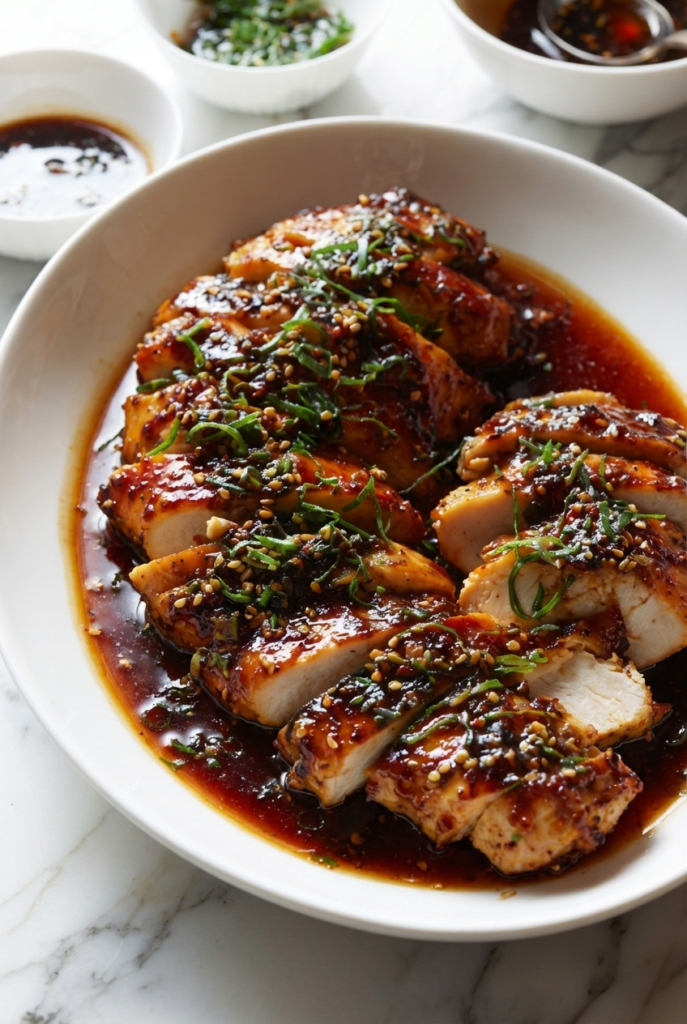
Store leftover sriracha chicken skillet in an airtight container in the refrigerator for up to 4 days. The honey-sriracha glaze thickens further during refrigerator storage as it cools — the cold chicken will appear more heavily coated and slightly tacky when removed from the refrigerator. This is normal behavior from the honey sugars and does not indicate anything has gone wrong with the dish.
To reheat, place the refrigerated chicken in a skillet over medium-low heat with 1 tablespoon of water added to the pan. The water loosens the thickened glaze as it heats, restoring the sauce to its original pourable, glossy consistency and re-coating each piece with even coverage. Stir gently and heat for 3–4 minutes until the chicken is heated through and the sauce is glossy again. Microwave reheating at 70 percent power for 90 seconds works as a faster alternative — add a splash of water to the container before microwaving to prevent the sauce from drying out around the edges.
This sriracha chicken skillet is one of the best recipes in this style for meal prep. The sauce flavor intensifies during refrigerator storage as the spices continue to infuse the chicken — day-two leftovers often taste bolder and more developed than the freshly made dish. Make a full batch on Sunday and portion it into containers with steamed rice for a complete meal prep solution that reheats beautifully four days into the week.
The sriracha chicken skillet freezes well for up to 2 months. Cool completely, transfer to freezer-safe airtight containers, and freeze. Thaw overnight in the refrigerator and reheat in a skillet with 1–2 tablespoons of water as described above. The sauce may appear slightly separated after freezing — brief stirring over heat restores its cohesive, glossy consistency within 2 minutes.
Serving Suggestions for Sriracha Chicken Skillet
Steamed jasmine or basmati rice
Sesame noodles or plain lo mein
Cauliflower rice for a low-carb option
Steamed broccoli with sesame oil
Sliced cucumber and spring onion salad
Crispy wonton strips for texture
Warm flour tortillas as wraps
Toasted sesame seeds and lime wedges
Building a Complete Bowl Around Sriracha Chicken Skillet
The most popular way to serve this sriracha chicken skillet is over steamed jasmine rice in a bowl format — the rice absorbs any excess sauce and the neutral starch perfectly moderates the dish’s bold heat and sweetness. Add a handful of thinly sliced green onions, a sprinkle of sesame seeds, and a wedge of fresh lime alongside for a complete bowl that takes 2 minutes to assemble after the chicken is done.
For a lighter, lower-carb serving option, use the glazed chicken as a filling for large butter lettuce cups. The lettuce provides cool, crisp contrast to the hot, sticky chicken and the natural cup shape makes each serving self-contained. Add a small spoonful of thinly sliced cucumber and a drizzle of additional sriracha directly into each lettuce cup for a fresh, bright plate that works equally well as a starter or a light main course.
For more easy and delicious chicken recipes, explore our collection.
Nutrition Estimate Per Serving
Based on 4 servings. One serving includes one-quarter of the chicken and sauce with no rice or additional sides.
| Nutrient | Per Serving |
|---|---|
| Calories | 380 kcal |
| Macronutrients | |
| Protein | 38g |
| Total Carbohydrates | 28g |
| — Dietary Fiber | 0g |
| — Total Sugars | 24g |
| Total Fat | 12g |
| — Saturated Fat | 2.5g |
| — Trans Fat | 0g |
| Vitamins and Minerals | |
| Cholesterol | 140mg |
| Sodium | 760mg |
| Potassium | 480mg |
| Iron | 12% DV |
| Vitamin B6 | 28% DV |
| Vitamin C | 10% DV |
| Zinc | 10% DV |
Values are estimates based on boneless skinless chicken thighs, standard Huy Fong sriracha, and standard liquid honey. Using chicken breast instead of thighs reduces fat by approximately 3g per serving and reduces calories by approximately 30 kcal. The sugar content reflects the 1/3 cup of honey in the sauce — this is naturally occurring sugar from honey, not added refined sugar. Adding 1 cup of steamed jasmine rice per serving adds approximately 205 calories and 45g of carbohydrates. Sodium is primarily from the soy sauce — using reduced-sodium soy sauce reduces sodium by approximately 150mg per serving.
Sriracha Chicken Skillet — Frequently Asked Questions
How spicy is sriracha chicken skillet?
As written with 1/4 cup of standard Huy Fong sriracha and 1/3 cup of honey, this sriracha chicken skillet is moderately spicy — a noticeable, warm, building heat that most adults find bold but comfortable, similar to a medium Thai takeout dish. The honey’s sweetness softens the immediate impact of the sriracha without eliminating it. For a milder version suitable for children or heat-sensitive guests, reduce the sriracha to 2 tablespoons and increase the honey to 1/2 cup. For a genuinely hot version, increase sriracha to 6 tablespoons and add 1/4 teaspoon of cayenne to the chicken seasoning.
Can I use chicken breast instead of chicken thighs?
Yes. Chicken breast works well in this sriracha chicken skillet but requires slightly more attention during cooking. Breast meat contains less fat than thigh meat and is more prone to drying out during the searing phase — watch the cook time carefully and remove from heat the moment the pieces register 165°F on a thermometer. Cut breast pieces slightly larger than thigh pieces — approximately 1.25 inches rather than 1 inch — to give them slightly more interior mass that stays moist during the sauce reduction step. The finished dish will be slightly leaner and lighter but equally flavorful.
Why is my sriracha chicken sauce not thickening?
A sriracha chicken skillet sauce that is not thickening is almost always caused by the heat being too low during the simmer step. The honey in the sauce must reach a temperature at which its sugars begin to concentrate and caramelize — this requires a genuine active simmer with small bubbles across the sauce surface, not a gentle warm. Increase the heat to medium and maintain the simmer for the full 4–6 minutes, stirring every 60–90 seconds. If the sauce is still thin after 6 minutes at medium heat, mix 1 teaspoon of cornstarch with 1 tablespoon of cold water and stir this slurry directly into the simmering sauce — the sauce will thicken visibly within 90 seconds.
What can I serve with sriracha chicken skillet?
Steamed jasmine rice is the most natural pairing — the neutral rice absorbs the excess honey-sriracha sauce and moderates the dish’s heat level. Cauliflower rice is the best low-carb alternative and absorbs the sauce similarly. Sesame noodles work well for a more filling meal. For a lighter option, serve the sriracha chicken skillet as a filling for large butter lettuce cups with sliced cucumber and green onions inside. Roasted broccoli or steamed edamame alongside add vegetables without competing with the bold flavors of the glaze.
Can I make sriracha chicken skillet ahead of time?
Yes — sriracha chicken skillet is one of the best make-ahead skillet dinners because the sauce flavor intensifies during refrigerator storage. Cook the full recipe, allow it to cool completely, and store in an airtight container for up to 4 days. The glaze thickens significantly in the refrigerator — add 1 tablespoon of water when reheating in a skillet over medium-low heat to restore the sauce’s original glossy consistency. For weekly meal prep, the sriracha chicken skillet paired with portioned steamed rice in individual containers provides four complete, flavorful lunches from a single 25-minute cooking session.
Is sriracha chicken skillet healthy?
Sriracha chicken skillet is a relatively high-protein, moderate-calorie dinner at approximately 380 calories and 38 grams of protein per serving. The main nutritional consideration is the sugar content from the 1/3 cup of honey — approximately 24 grams of naturally occurring sugar per serving. For a lower-sugar version, reduce the honey to 3 tablespoons and add 1 tablespoon of additional soy sauce to maintain the sauce volume and depth. The dish uses olive oil rather than butter or large quantities of cooking fat, making it lower in saturated fat than many comparable restaurant versions. Served over cauliflower rice, it is both low-carb and moderate-calorie.
Can I marinate the chicken in the sriracha sauce before cooking?
Marinating the chicken pieces in the honey-sriracha sauce before cooking is not recommended for this recipe. The honey’s high sugar content caramelizes rapidly in a hot skillet — chicken that has been marinated in honey-based sauce develops dark, bitter, potentially burnt surface areas during searing before the interior is cooked through. The correct technique is to sear the seasoned chicken completely first, then add the sauce for the final glazing simmer. This produces clean, golden searing on the chicken exterior with a fresh, properly reduced glaze applied only at the end.
How do I make the glaze thicker and stickier?
Three methods produce a thicker, stickier sriracha chicken glaze. The first is to add 1 teaspoon of cornstarch whisked into the sauce before adding it to the skillet — cornstarch produces a clear, intensely glossy glaze that is noticeably thicker than the reduction-only method. The second is to simmer the sauce for the full 6 minutes rather than stopping at 4 — additional reduction time concentrates the honey sugars further. The third is to increase the honey slightly to 6 tablespoons — more honey means more sugar available to concentrate into a thicker glaze during the reduction. Combining the cornstarch method with the full 6-minute simmer produces the stickiest, most glossy sriracha chicken skillet glaze possible with this sauce formulation.
The Sriracha Chicken Skillet That Makes 25-Minute Dinners Worth Craving
Pat the chicken dry. Cut it evenly. Season boldly. Preheat the pan properly. Sear without moving. Verify 165°F before the sauce goes in. Reduce to medium heat. Simmer for the full 4–6 minutes. Serve immediately before the glaze over-reduces.
Those nine practices are the complete technical difference between a pale, thin-sauced, underwhelming result and the kind of sriracha chicken skillet that produces a glaze so sticky and glossy every piece is completely coated — bold heat from the sriracha, deep sweetness from the honey, savory depth from the soy, brightness from the vinegar, and the ginger and garlic threading through it all in every bite.
One skillet. Twenty-five minutes. A dinner with restaurant-level flavor that every weeknight deserves.
Follow me on Pinterest for more delicious recipes.