Lemon Magic Cake (3 Layers, 1 Batter — Pure Magic!)
If you have never made a lemon magic cake before, prepare to be completely amazed. You pour one single batter into a baking dish, slide it into the oven, and what comes out is three distinct layers — a dense fudgy base, a creamy custard middle, and a light sponge top. All from one bowl. No layering, no tricks, no complicated technique.
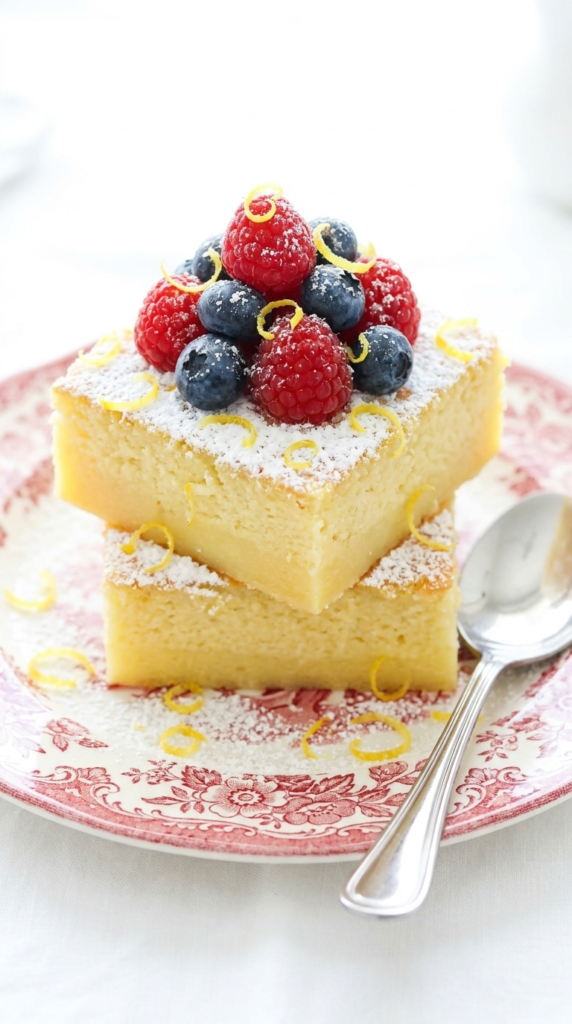
This lemon magic cake is bright, tangy, and just sweet enough. The fresh lemon juice and zest cut through the richness of the custard layer and give every bite a clean citrus punch that makes it feel lighter than it actually is. It is one of those recipes that looks like it took hours but comes together in under 20 minutes of active work.
Why This Lemon Magic Cake Works
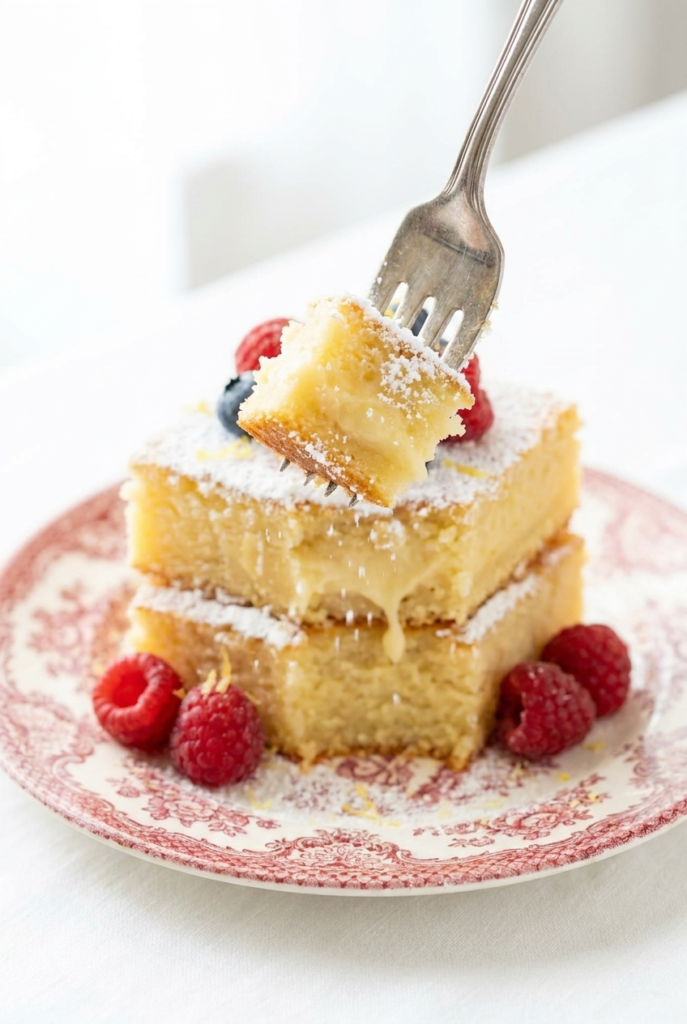
The magic is real — and it is pure science. The egg whites, folded in gently and left slightly lumpy on purpose, float to the surface during baking and form the sponge layer. The heavier custard sinks to the middle. The dense buttery base settles at the bottom. Three layers, one batter, one pan.
The lemon in this recipe does more than just flavor. The acidity from the fresh lemon juice reacts slightly with the milk and eggs during baking, helping the layers set cleanly and giving the custard that silky, almost cream-like texture that makes this cake so special.
Ingredients
For the cake:
- 4 large eggs, yolks and whites separated
- ¾ cup sugar (150g)
- 1 stick / ½ cup unsalted butter, melted (125g)
- 1 teaspoon vanilla extract
- ¾ cup all-purpose flour (115g)
- ¼ cup fresh lemon juice (60ml)
- Zest from one lemon
- 1¾ cup lukewarm milk (420ml)
For finishing:
- Powdered / icing sugar for dusting
Learn more about lemon and its culinary uses on Wikipedia — one of the most versatile citrus fruits in baking worldwide.
Equipment You Need
- 8×8 inch baking dish, greased or lined with parchment paper
- Two mixing bowls
- Electric hand mixer
- Rubber spatula
- Fine mesh sieve for the icing sugar
Step-by-Step Instructions
Step 1 — Preheat and prep
Preheat your oven to 325°F (160°C). Grease your 8×8 inch baking dish generously or line it with parchment paper. This cake has a delicate custard layer at the bottom that will stick if the dish is not properly prepared.
Step 2 — Beat the egg whites
Separate your eggs carefully — not a single drop of yolk can get into the whites or they will not whip properly. Beat the egg whites in a clean, dry bowl until stiff peaks form. The whites should hold their shape when you lift the beaters. Set aside. Do not over-beat.
Step 3 — Beat yolks and sugar
In a separate large bowl, beat the egg yolks with the sugar until the mixture turns pale, light, and fluffy — about 2 to 3 minutes. Add the melted butter and vanilla extract and continue beating for another 1 to 2 minutes until fully incorporated.
Step 4 — Add the flour
Add the flour all at once and mix on low speed until just incorporated. Do not overmix at this stage.
Step 5 — Add lemon and milk
Add the fresh lemon juice and lemon zest. Then slowly pour in the lukewarm milk in a thin stream while mixing on low speed. The batter will be very thin and liquid at this point — that is completely normal and exactly what you want. Do not panic.
Step 6 — Fold in the egg whites
Add the stiff egg whites in three additions. Fold gently with a rubber spatula using slow bottom-to-top strokes. The key here is to leave visible white blobs of egg white floating in the batter. Do not fold until smooth — those lumps are what create the magical sponge top layer during baking.
Step 7 — Bake
Pour the batter immediately into your prepared baking dish and transfer to the oven. Bake for 45 to 50 minutes. The top should be lightly golden and the cake should feel firm to the touch with only a very slight wobble in the center. Check at 45 minutes — every oven behaves differently.
Step 8 — Cool and serve
Let the cake cool completely in the pan before cutting. This is non-negotiable. The custard layer needs time to fully set as it cools. Once completely cool, dust generously with icing sugar and slice into squares.
Chef Dana’s Pro Tips
- Lukewarm milk is critical. Cold milk will cause the melted butter to solidify into little lumps in the batter. Warm it gently to around 95°F (35°C) — just slightly above room temperature.
- Do not fully incorporate the egg whites. This is the step that confuses most people. You want the batter to look lumpy and separated. Those egg white chunks float up and become your sponge layer.
- Use fresh lemon juice only. Bottled lemon juice has a flat, slightly bitter taste that will come through in every layer of this cake. Fresh zest and fresh juice make a noticeable difference.
- The cake will look underdone when it comes out. The center will still have a slight wobble. That is the custard layer — it firms up as it cools. Do not add extra baking time or you will lose the creamy middle.
- Cool completely before dusting. Icing sugar melts into a warm cake and disappears. Wait until the cake is fully cool and at room temperature before finishing.
- Use a sharp, clean knife dipped in hot water for clean slices that show all three layers beautifully.
Common Mistakes to Avoid
- Using cold milk. Cold milk causes the butter to seize and creates an uneven batter that does not separate into three layers properly.
- Over-folding the egg whites. If the batter looks smooth and uniform after folding, you have gone too far. Lumpy is correct. Smooth means no sponge layer on top.
- Opening the oven door early. The delicate structure forming inside needs stable heat for the first 35 minutes. Do not open the door before 40 minutes.
- Cutting while warm. The custard layer will run and the three-layer effect will be completely lost. Patience is the most important ingredient in this recipe.
- Using a larger pan. An 8×8 is specifically sized for this recipe. A larger pan means thinner layers and a less dramatic effect. Stick to the dimensions.
Variations & Substitutions
Orange magic cake — replace the lemon juice and zest with fresh orange juice and orange zest for a sweeter, more mellow citrus flavor.
Lime magic cake — use lime juice and zest for a sharper, more tropical version that pairs beautifully with a coconut dusting instead of icing sugar.
Vanilla magic cake — skip the lemon entirely and add an extra teaspoon of vanilla extract plus a tablespoon of honey for a classic version.
Gluten-free version — substitute the all-purpose flour with a 1:1 gluten-free baking flour blend. The layers may be slightly less defined but the flavors remain intact.
Extra lemony — increase the lemon zest to two lemons and add ½ teaspoon of lemon extract along with the vanilla for an intensely bright citrus flavor.
Storage & Make-Ahead
Refrigerator: Cover the pan tightly with plastic wrap and store in the fridge for up to 4 days. The custard layer actually improves overnight as the flavors deepen and the texture becomes even silkier.
Freezer: Cut into individual squares, wrap each piece tightly in plastic wrap and freeze for up to 1 month. Thaw overnight in the refrigerator. Dust with fresh icing sugar after thawing.
Make-ahead tip: This cake is actually better the next day. Make it the evening before, refrigerate overnight, and dust with icing sugar right before serving. The layers are more defined and the lemon flavor is more pronounced after a full night of resting.
Serving Suggestions
Serve slices of this lemon magic cake dusted with icing sugar alongside a dollop of fresh whipped cream or a spoonful of lemon curd for an extra citrus hit. Fresh berries — raspberries, blueberries, or sliced strawberries — complement the lemon beautifully and add color to the plate. A cup of Earl Grey tea or a cold glass of sparkling lemonade makes this dessert feel like a proper afternoon treat.
Nutrition Estimate (Per Slice, Based on 9 Slices)
Calories: 280 kcal — Fat: 14g — Saturated Fat: 8g — Carbohydrates: 33g — Sugar: 22g — Protein: 6g — Fiber: 0.5g — Sodium: 85mg — Cholesterol: 115mg
For more on the science behind cake and how baking chemistry creates structure and texture, Wikipedia has a thorough breakdown worth reading.
FAQ
— Why does lemon magic cake form 3 layers? The three layers form because of the different densities of the components. The stiff egg white blobs float to the top and bake into a sponge. The heavy flour-and-yolk base sinks to the bottom. The liquid custard mixture stays in the middle and sets during baking.
— Why is my magic cake only 2 layers? Usually this means the egg whites were folded in too thoroughly. You need visible white lumps remaining in the batter before it goes into the oven. If the batter looks completely smooth and uniform, the sponge layer will not form.
— Can I use bottled lemon juice? Fresh lemon juice is strongly recommended. Bottled juice lacks the brightness and the zest — which carries most of the lemon flavor — cannot be replicated. For a recipe where lemon is the star, fresh is the only choice.
— My cake is still wobbly in the center after 50 minutes — is it done? A slight wobble in the very center is correct and expected — that is the custard layer. As long as the edges are set and the top is golden, remove it from the oven. It will firm up completely as it cools.
— Can I make this in a round pan? Yes, a 9-inch round cake pan works. The layers will be slightly thinner and the baking time may reduce by 5 minutes. Check at 40 minutes.
— Why did my icing sugar disappear? The cake was still warm when you dusted it. Icing sugar melts into a warm or even room-temperature cake within minutes. Wait until the cake is fully cooled and dust immediately before serving.
— Can I double the recipe? Yes. Use a 9×13 inch pan and increase the baking time to 55 to 60 minutes. Check for the same visual cues — golden top, slight wobble in the center only.
— Can I add blueberries or raspberries to the batter? You can scatter a handful of fresh berries over the batter right before baking. They will mostly sink into the custard layer and add a lovely fruity element without disrupting the three-layer structure.
Conclusion
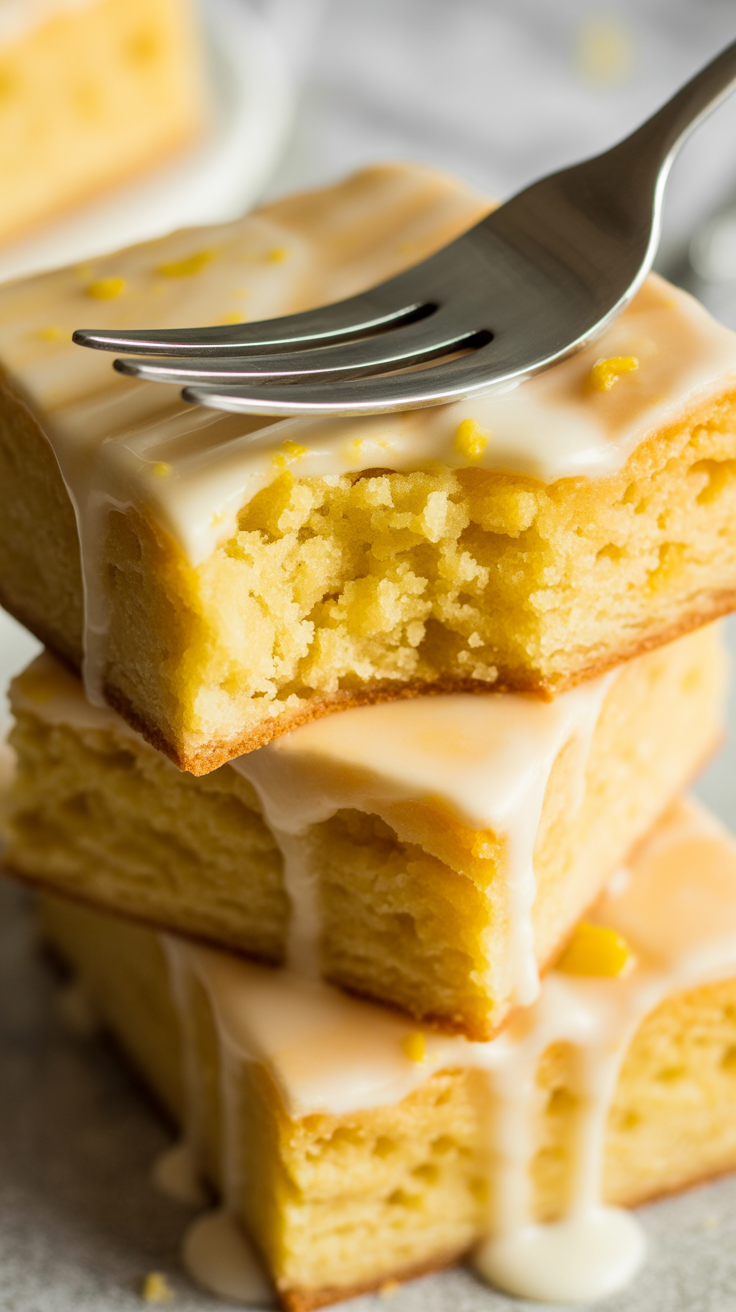
This lemon magic cake is one of those rare recipes that delivers something genuinely surprising every single time you make it. One batter, one pan, three beautiful layers — a fudgy base, a silky lemon custard, and a delicate sponge top dusted in snowy icing sugar.
Make it the night before, let it chill, slice it cold with a hot knife, and watch people ask you how on earth you did it.
Follow me on Pinterest for more delicious recipes. For more easy and delicious Dessert recipes, explore our collection.
Print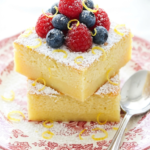
Lemon Magic Cake (3 Layers, 1 Batter — Pure Magic!)
- Prep Time: 20
- Cook Time: 50
- Total Time: 1 hour 10 min
- Yield: 9
- Category: Dessert
- Method: Baking
- Cuisine: French
- Diet: Vegetarian
Description
One batter, one pan, three magical layers — a fudgy base, a silky lemon custard middle, and a light sponge top. This lemon magic cake is bright, tangy, and completely irresistible. No complicated technique required.
Ingredients
- 4 large eggs, yolks and whites separated
- ¾ cup sugar (150g)
- ½ cup unsalted butter, melted (125g)
- 1 teaspoon vanilla extract
- ¾ cup all-purpose flour (115g)
- ¼ cup fresh lemon juice (60ml)
- Zest from one lemon
- 1¾ cup lukewarm milk (420ml)
- Icing sugar for dusting
Instructions
- Preheat oven to 325°F (160°C). Grease or line an 8×8 inch baking dish.
- Beat egg whites to stiff peaks. Set aside.
- Beat egg yolks with sugar until pale and fluffy. Add melted butter and vanilla. Beat 1 to 2 minutes more.
- Add flour and mix until incorporated.
- Add lemon juice and zest. Slowly pour in lukewarm milk while mixing on low. Batter will be very thin.
- Fold egg whites in three additions. Leave visible white lumps in the batter — do not fully incorporate.
- Pour into prepared dish. Bake 45 to 50 minutes until top is golden and center has only a slight wobble.
- Cool completely. Dust with icing sugar before serving.
Notes
- Lukewarm milk is essential — cold milk causes the butter to seize.
- Do not fully fold in the egg whites. White lumps create the sponge top layer.
- The cake will look underdone when it comes out — the custard sets as it cools.
- This cake is better the next day. Make ahead and refrigerate overnight.
- Dust with icing sugar only right before serving, not before.