Chicken Cordon Bleu — The Classic That Most Home Cooks Get Wrong
Most homemade chicken cordon bleu fails in one of three predictable ways. The roll unravels during cooking because it was not secured tightly enough. The breadcrumb crust goes soggy before serving because the chicken was pan-fried and then baked without the right technique. Or the filling — the ham and cheese that define the dish — slides out in a single molten mass the moment the roll is cut, leaving a hollow center and a puddle on the plate.
For more easy and delicious chicken recipes, explore our collection.
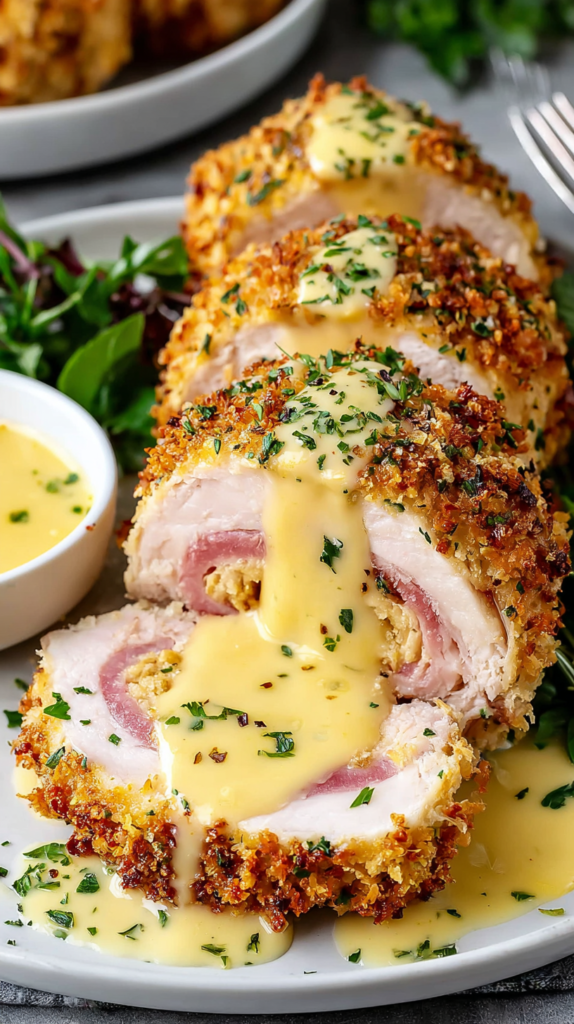
This chicken cordon bleu recipe addresses each of those failures directly with specific technique corrections that take no additional time but produce a completely different result. A three-stage breading system locks the crust onto the roll. The pan-sear-then-bake method sets the crust in the skillet and finishes the interior in the oven without over-cooking either. The Dijon cream sauce — made in four minutes from a simple roux — provides the creamy, tangy, restaurant-quality finish that turns a home dinner into something genuinely impressive.
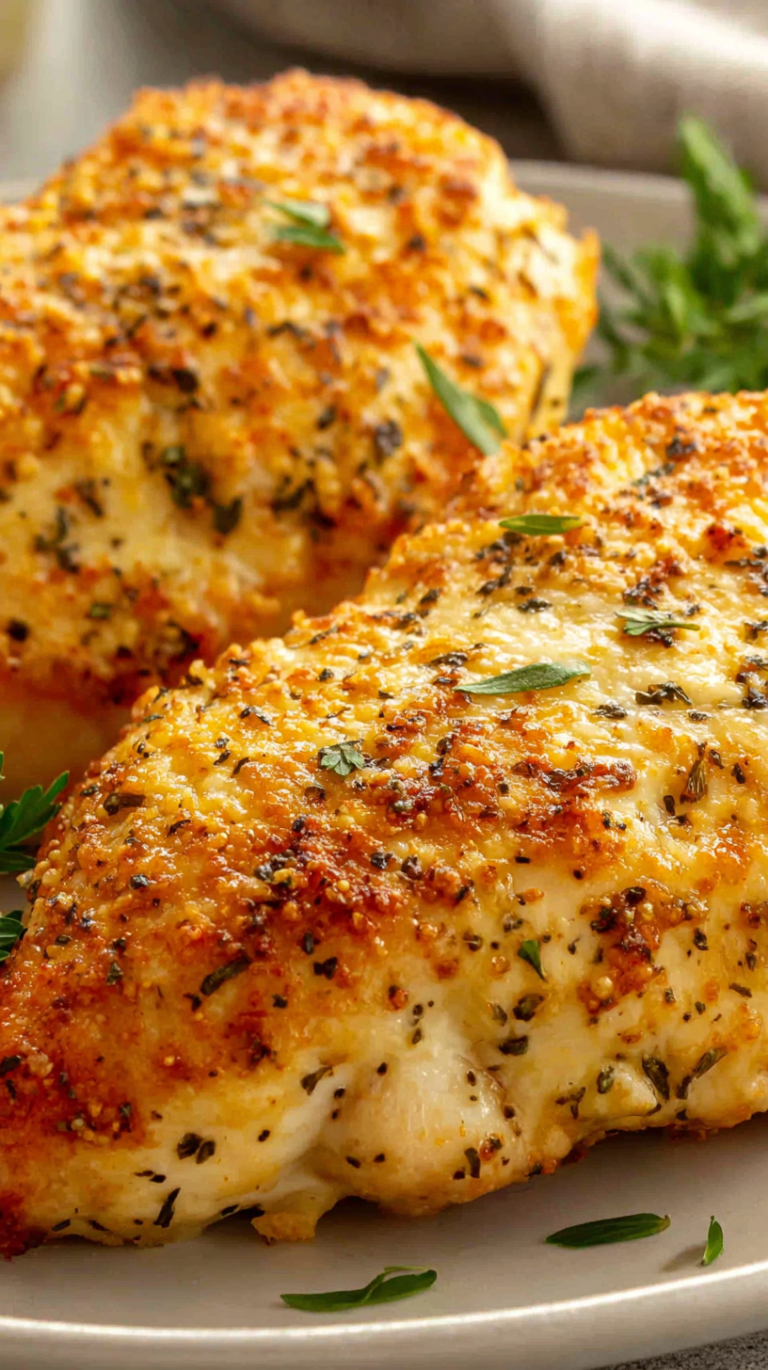
Chicken cordon bleu is a breaded and rolled chicken breast stuffed with turkey ham and Swiss cheese, pan-seared until golden on all sides, then baked at 375°F for 15–20 minutes until cooked through, and served with a Dijon cream sauce made from butter, flour, milk, and mustard. It is ready in under 50 minutes from start to plate.
The name comes from the French “cordon bleu” — blue ribbon — a term historically used to describe excellence in cooking. The dish as most people know it is actually a Swiss-American adaptation of the French paupiette technique, in which a protein is stuffed, rolled, breaded, and pan-fried. What makes the home version succeed or fail is almost entirely about the rolling and breading technique, not the ingredients themselves.
Turkey ham instead of traditional pork ham is the choice in this recipe for a lighter, less fatty filling that lets the Swiss cheese’s nutty, slightly sweet character come through more clearly. Swiss cheese melts at a moderate temperature without becoming greasy or separating — making it technically the best cheese choice for a filling that needs to stay cohesive through both the sear and the bake. Every ingredient in this chicken cordon bleu recipe is doing specific, functional work.
Why This Chicken Cordon Bleu Recipe Works
The pan-sear-then-bake method is the single most important structural decision in this recipe — and the reason it produces results that a bake-only or fry-only method cannot match.
Pan-Searing Sets the Crust Before the Oven Cooks the Interior
Baking chicken cordon bleu from raw at 375°F produces a pale, soft crust because the internal steam from the chicken saturates the breadcrumbs before they have time to brown and crisp. Pan-searing in olive oil before baking sets the outer breadcrumb layer — the Maillard browning reaction locks the crust into a rigid, golden structure that resists the subsequent oven steam. The oven then safely cooks the interior to 165°F without any further effect on the already-set crust surface.
The Three-Stage Coating Creates a Sealed Crust
Flour, then egg, then breadcrumbs is not arbitrary. The flour provides a dry surface for the egg to grip — without it, the egg slides off the smooth chicken surface and the breadcrumbs do not adhere evenly. The egg acts as the adhesive between the flour base and the breadcrumb outer layer. The breadcrumbs provide the surface area that crisps in the hot oil and oven. Skipping or combining any of these three stages produces a crust that is either uneven, poorly bonded, or falls away from the chicken cordon bleu roll during cooking.
Swiss Cheese Melts Without Separating or Leaking
Swiss cheese — specifically Emmentaler or standard supermarket Swiss — has a moderate moisture content and a fat structure that melts slowly and smoothly rather than releasing oil or breaking into greasy puddles. It reaches its fully melted, stretchy state at approximately the same temperature the chicken reaches 165°F internally, meaning the cheese is perfectly molten at the exact moment the roll is ready to serve. Using a higher-fat or higher-moisture cheese produces a filling that either leaks through the chicken seams during baking or separates into oily and watery components in the finished cordon bleu.
Turkey Ham Provides Flavor Without Excess Fat
Traditional chicken cordon bleu recipes use thinly sliced prosciutto or standard pork ham. Turkey ham at the same thickness provides a similar savory, slightly smoky flavor with considerably less fat. The lower fat content means the interior of the chicken cordon bleu roll stays cleaner and drier during baking — excess fat from pork ham can partially liquify under heat, saturate the roll interior, and create a greasy quality in the finished filling that competes with the Swiss cheese rather than complementing it.
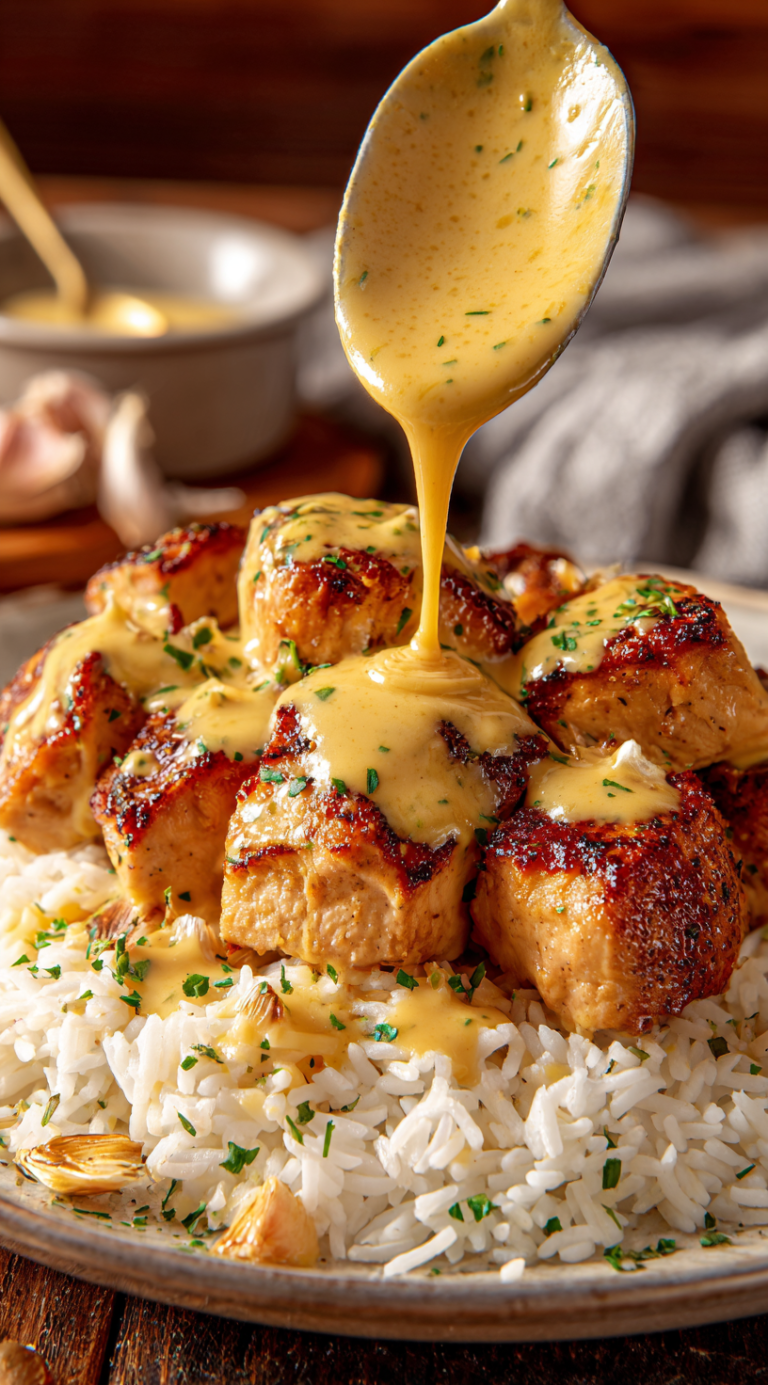
The Dijon Cream Sauce Ties All Flavors Together
Chicken cordon bleu served without a sauce is technically complete but flavor-flat. The mild chicken exterior, the savory ham, and the nutty Swiss cheese all exist in different flavor registers that do not naturally speak to each other without a unifying element. The Dijon cream sauce provides that element — its mild acidity and sharp mustard character cut through the richness of the cheese, amplify the savory quality of the ham, and keep the overall dish tasting bright and fresh rather than heavy and one-dimensional.
Toothpick Securing Prevents Roll Collapse
A chicken cordon bleu roll held only by the tension of the tight roll unravels under the expansion of the chicken as it heats. As the protein fibers tighten and shrink during cooking, the roll naturally wants to open and flatten. Toothpicks inserted through the seam at 1-inch intervals hold the roll closed through both the high-heat sear and the oven bake, ensuring the cheese and ham stay enclosed until the roll is fully set and the protein structure has firmed around the filling.
Ingredients for Chicken Cordon Bleu
These quantities make 4 servings of chicken cordon bleu with enough Dijon cream sauce to generously coat all four rolls at the table.
Chicken and Filling
- Boneless skinless chicken breasts4 (6–7 oz each)
- Turkey ham slices4 slices
- Swiss cheese slices4 slices
- Salt1/2 tsp
- Black pepper1/2 tsp
- Garlic powder1 tsp
Breading
- All-purpose flour1/2 cup
- Large eggs, beaten2
- Breadcrumbs (panko preferred)1 cup
- Olive oil for searing2 tbsp
Dijon Cream Sauce
- Unsalted butter2 tbsp
- All-purpose flour2 tbsp
- Whole milk1 cup
- Dijon mustard2 tbsp
- Salt1/2 tsp
- Black pepper1/4 tsp
Key Ingredient Notes
Chicken Breasts: Use chicken breasts of similar size and weight for this chicken cordon bleu recipe — ideally 6–7 ounces each. After slicing horizontally into thinner cutlets, each piece should be approximately 1/4 to 3/8 inch thick. Cutlets that are too thick will not roll tightly enough to enclose the filling and will require excessive baking time after the sear, over-crisping the crust before the center reaches temperature. If the cutlets are uneven in thickness after slicing, place them between plastic wrap and pound gently with a meat mallet to achieve a uniform thickness across each piece.
Swiss Cheese: Standard supermarket Swiss cheese slices are the correct format for this chicken cordon bleu. Pre-sliced deli Swiss is slightly thinner and melts more quickly — ideal. Thickly cut Swiss from the deli counter does not melt as completely in the 15–20 minute bake time and can leave rubbery sections in the filling. Gruyère is the closest premium substitute and produces a more complex, nuttier filling — use the same quantity in the same slice format.
Panko Breadcrumbs: Panko produces a noticeably crispier, lighter, more visually attractive crust on chicken cordon bleu than fine breadcrumbs. Panko’s larger, airier flake structure creates more surface area and traps more air during the sear, resulting in a crust that is both crunchier and more golden. If only fine breadcrumbs are available, add 1 tablespoon of olive oil to the breadcrumb bowl and mix it through before coating — this mimics the moisture and fat that panko carries naturally and produces better browning in the skillet.
Dijon Mustard for the Sauce: The 2 tablespoons of Dijon mustard in the sauce is the correct quantity for a sauce that tastes distinctly of mustard without being sharp or overpowering. Dijon’s smooth, creamy emulsion integrates seamlessly into the milk-based sauce without the graininess of whole grain mustard or the harshness of yellow mustard. Do not substitute yellow mustard at this quantity — it produces a sharp, one-dimensional sauce. If only whole grain mustard is available, use 1.5 tablespoons instead of 2.
Required Equipment
Making chicken cordon bleu at home requires a specific set of tools that make the rolling, breading, searing, and sauce steps each work correctly.
Large Oven-Safe Skillet or Cast Iron PanBaking Dish (9×13 inch)3 Shallow Bowls for BreadingToothpicksMeat Mallet or Rolling PinInstant-Read ThermometerSmall SaucepanWhisk
An oven-safe skillet allows you to sear the chicken cordon bleu rolls in the same pan and transfer directly to the oven — eliminating a transfer step that risks disrupting the crust and unraveling the rolls during the move. A cast iron skillet retains heat most effectively and produces the most even golden-brown crust during searing. If using a standard skillet that is not oven-safe, transfer the seared rolls carefully to a baking dish with minimal handling before placing in the oven.
Three shallow bowls — wide enough to fit a rolled chicken breast — are essential for the three-stage breading station. Using deep, narrow bowls makes it impossible to coat the rolled chicken evenly, particularly at the curved ends of the roll. Pie dishes or large dinner plates work as well as dedicated breading bowls.
How to Make Chicken Cordon Bleu — Step by Step
Fourteen steps from raw chicken to plated chicken cordon bleu with Dijon cream sauce. Active work is approximately 20 minutes — the oven and the sauce are the rest.
1
Preheat the Oven and Prepare the Station
Preheat the oven to 375°F (190°C). Set up the three breading bowls: the first with 1/2 cup of flour, the second with 2 beaten eggs, the third with 1 cup of breadcrumbs. Line a baking dish or sheet pan with parchment paper for the post-sear bake.
375°F (190°C) — preheat fully before searing begins
2
Slice and Flatten the Chicken
Place each chicken breast on a cutting board. Using a sharp knife held parallel to the board, slice each breast horizontally through the thickest point to create two thinner cutlets — or slice partially through and open it like a book (butterfly cut) to create one wider, thinner piece. Either approach produces the flat surface needed to roll the filling inside.
If the cutlet is uneven in thickness after slicing, place it between two sheets of plastic wrap and pound gently with a meat mallet or the bottom of a heavy pan until the thickness is even throughout — approximately 1/4 to 3/8 inch. The flattened cutlet should feel uniformly pliable with no thick ridges when pressed.
3
Season the Chicken
Season both sides of each flattened chicken cutlet with the salt, black pepper, and garlic powder. Distribute the seasoning evenly across the full surface, including the edges.
Seasoning the chicken before rolling ensures the seasoning reaches the interior of the roll — seasoning only the outside of the breaded roll produces a flavorful crust with a bland chicken interior. The garlic powder in particular benefits from being on the chicken surface directly, where it penetrates slightly during the bake.
4
Add the Ham and Cheese Filling
Lay one slice of turkey ham flat on the seasoned surface of each chicken cutlet, covering the chicken completely but leaving a 1/2-inch border on all edges. Place one slice of Swiss cheese on top of the ham layer.
The layered filling should cover the chicken evenly with a visible border of plain chicken around all edges — this border is what seals when the chicken is rolled, keeping the filling enclosed.
5
Roll Tightly and Secure
Starting at the narrowest end of the chicken cutlet, roll the chicken tightly and firmly forward, keeping constant inward pressure as you roll so the filling stays compressed inside. Roll all the way to the far edge of the chicken.
Place the roll seam-side down. Insert 2–3 toothpicks through the seam at 1-inch intervals, pushing each toothpick through the outer chicken layer, through the seam, and out the other side. A properly secured chicken cordon bleu roll should hold its cylindrical shape without toothpick support when briefly placed upright — the toothpicks reinforce what the tight roll already holds.
6
Bread Each Roll — Three Stages
Working with one roll at a time, roll it in the flour bowl until fully coated on all surfaces. Shake off any excess flour — a thick flour coating does not improve adhesion and produces a pasty layer under the breadcrumbs.
Dip the floured roll into the beaten egg, turning to coat all surfaces completely. The egg coat should appear glossy and uniform with no dry flour patches showing through.
Roll the egg-coated chicken cordon bleu roll in the breadcrumbs, pressing lightly with your palm to ensure the breadcrumbs adhere to all surfaces including the ends. The fully breaded roll should be completely covered in breadcrumbs with no egg-wet patches visible and an even, golden-dry appearance across the full exterior.
7
Sear Until Golden on All Sides
Heat 2 tablespoons of olive oil in a large oven-safe skillet over medium heat. When the oil shimmers and a single breadcrumb dropped in sizzles immediately, add the breaded chicken cordon bleu rolls seam-side down.
Sear without moving for 2–3 minutes per side, turning carefully with tongs to brown all surfaces. Each side should be deeply golden-brown with a visible crust before turning — do not move the rolls before they release naturally from the pan, which indicates the crust has set. Total searing time across all sides is 8–10 minutes.
8
Transfer to Oven and Bake Through
Transfer the seared skillet directly to the preheated 375°F oven, or carefully move the rolls to the prepared baking dish. Bake for 15–20 minutes until the chicken is cooked through.
Verify doneness with an instant-read thermometer inserted into the thickest part of the chicken roll — it must read 165°F (74°C) before the rolls are safe to serve. The finished chicken cordon bleu rolls should feel firm when pressed with tongs, the crust should remain golden without darkening further, and the cheese should be visibly beginning to melt at any crust cracks or roll seams.
9
Rest and Remove Toothpicks
Remove the pan from the oven and allow the chicken cordon bleu rolls to rest for 5 minutes before serving. Remove all toothpicks carefully — count them in as you insert and count them out as you remove to ensure none remain.
The rest allows the internal temperature to stabilize, the cheese to set slightly from fully liquid to a stretchy, cohesive melt, and the juices to redistribute through the chicken so the first cut is clean and juicy rather than producing a flow of liquid across the plate.
How to Make the Dijon Cream Sauce
This sauce takes 4 minutes from cold butter to finished, pourable sauce. Make it while the chicken cordon bleu is resting in the oven during the last 5 minutes of the bake time so both are ready simultaneously.
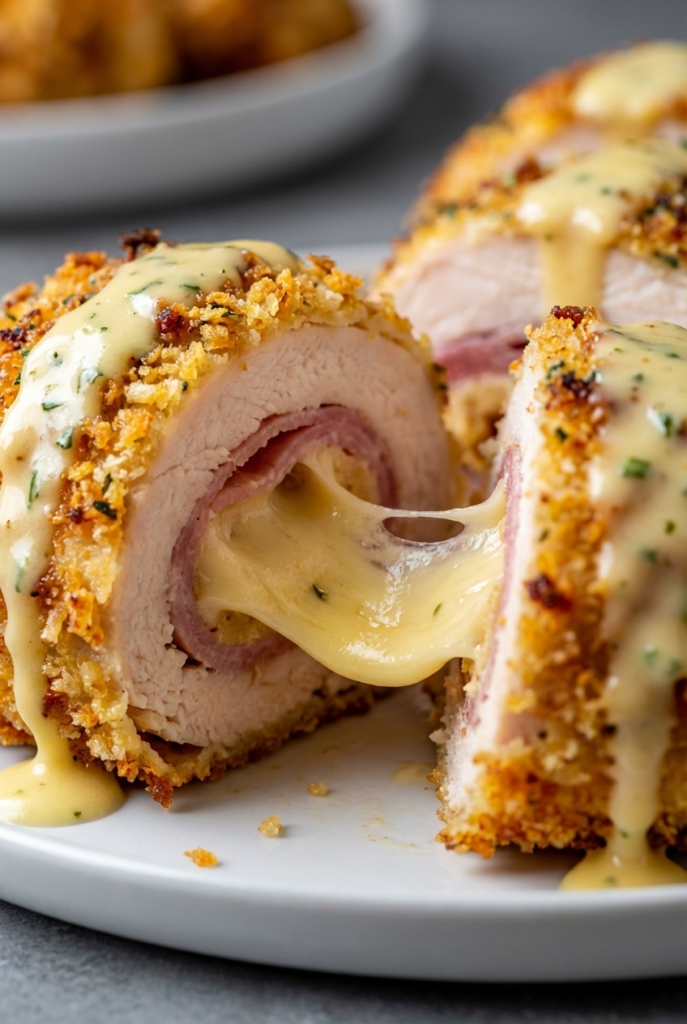
Dijon Cream Sauce — 4-Minute Method
- Melt 2 tablespoons of unsalted butter in a small saucepan over medium heat until it foams and the foam subsides — about 45 seconds. Do not let it brown.
- Add 2 tablespoons of all-purpose flour all at once. Whisk continuously for 60 seconds until the flour and butter form a smooth, pale paste that smells slightly nutty. This is the roux — cook it the full 60 seconds to eliminate the raw flour taste.
- Pour in the 1 cup of milk in a slow, steady stream while whisking constantly. Adding too much milk at once causes lumps — add the first quarter of the milk, whisk until smooth, then add the remainder in a steady pour.
- Continue whisking over medium heat for 2–3 minutes until the sauce thickens to a consistency that coats the back of a spoon and a line drawn through it with a finger holds its shape.
- Remove from heat. Whisk in 2 tablespoons of Dijon mustard, 1/2 teaspoon of salt, and 1/4 teaspoon of black pepper until fully incorporated.
- Taste and adjust seasoning. The sauce should taste creamy, slightly tangy, and distinctly of Dijon without being sharp or overpowering.
For more easy and delicious chicken recipes, explore our collection.
If the Dijon cream sauce develops lumps despite continuous whisking, strain it through a fine-mesh sieve before serving — the sauce will be smooth and correct on the other side of the sieve regardless of what happened during cooking. A blender can also be used to smooth a lumpy sauce in 30 seconds at low speed.
Dana’s Pro Tips for Perfect Chicken Cordon Bleu
- Chill the assembled rolls before breading. After rolling and securing the chicken cordon bleu rolls with toothpicks, place them on a plate, cover loosely with plastic wrap, and refrigerate for 15–30 minutes before breading. The cold temperature firms the chicken and causes the surface proteins to tighten slightly, producing a roll that holds its shape more securely during the breading process and resists unraveling in the hot skillet better than a room-temperature roll. This is the single most effective technique for rolls that stay closed from first sear to table.
- Use one hand for wet and one hand for dry in the breading station. Designate your left hand (or non-dominant hand) for all wet steps — egg dipping only — and your right hand for all dry steps — flour and breadcrumbs only. This prevents both hands from becoming coated in a concrete-like mixture of egg and breadcrumbs that makes the breading process slow, messy, and uneven. Professional kitchen breading stations always operate on this two-hand principle.
- Add a tablespoon of grated Parmesan to the breadcrumb bowl. Mixing 2 tablespoons of finely grated Parmesan into the 1 cup of breadcrumbs before coating produces a crust that is nuttier, more complex in flavor, and browns slightly more deeply during the sear. The Parmesan’s protein content caramelizes at a lower temperature than plain breadcrumbs, producing more visible golden color in less searing time — ideal for a recipe that depends on a quick sear rather than extended pan frying.
- Do not move the chicken cordon bleu rolls in the pan for the first 2–3 minutes of searing. The most common searing mistake across all breaded proteins is moving them too early. When the breadcrumb coating first contacts the hot oil, it is still fragile and wet from the egg coating. After 2–3 minutes of undisturbed contact, the exterior dries, the Maillard reaction begins, and the crust bonds to itself — at this point the roll releases naturally from the pan and flips cleanly. Attempting to flip before the crust has set tears the coating away from the roll.
- Season the breadcrumb bowl, not just the chicken. The standard recipe seasons only the chicken surface before rolling. Adding 1/4 teaspoon of salt, 1/4 teaspoon of garlic powder, and 1/2 teaspoon of dried Italian herbs to the breadcrumb bowl produces a seasoned outer crust that tastes distinctly of herb and garlic in the exterior layer. The contrast between the seasoned crust, the neutral chicken interior, and the savory ham and cheese filling creates a more layered flavor experience in the finished chicken cordon bleu.
- Let the Dijon cream sauce sit for 60 seconds after adding the mustard before serving. Dijon mustard’s flavor compounds — primarily isothiocyanates, which are responsible for its distinctive sharpness — are volatile at high temperatures. Adding the mustard off heat and allowing the sauce to rest for one minute before serving preserves the mustard’s brightness and sharpness. Mustard added to the hot sauce while still on the burner loses a significant portion of its flavor intensity within 30 seconds of heat exposure.
- Score the top of each roll lightly with a knife before searing. Making 2–3 very shallow diagonal cuts across the top of the assembled, toothpick-secured roll creates small channels that allow steam to escape during both searing and baking rather than building up inside the roll and separating the crust from the chicken surface. These channels also provide visual cues about the crust’s browning progress during the sear and create an attractive striped pattern on the finished chicken cordon bleu.
- Add 1 tablespoon of heavy cream to the Dijon sauce for restaurant richness. The standard recipe produces a good sauce from milk alone. Adding 1 tablespoon of heavy cream after the sauce has thickened and before the mustard is added gives it a noticeably richer, more velvety texture and a slightly deeper golden color. This small addition elevates the finished sauce from a good home cook’s result to something that reads as restaurant-quality in both texture and appearance.
Common Mistakes to Avoid With Chicken Cordon Bleu
Cutting the Chicken Too Thick
A chicken cutlet that is more than 3/8 inch thick after slicing and pounding cannot be rolled tightly enough to enclose the filling without cracking. The excessive thickness creates a roll with too large a diameter — it takes longer to cook through, requiring extended baking time that over-browns the crust before the interior reaches 165°F. Always achieve an even 1/4 to 3/8-inch thickness before adding any filling to the chicken cordon bleu.
Filling the Chicken to the Edges
Laying ham and cheese all the way to the edges of the chicken cutlet eliminates the seal margin needed to close the roll. When the chicken is rolled forward, there is no plain chicken surface to fold over and seal the filling inside — the ham and cheese sit at the very edge and slide out during rolling or separate during cooking. Always leave a 1/2-inch border of plain chicken on all four edges of the cutlet before adding the filling.
Skipping the Toothpicks
A chicken cordon bleu roll secured only by its tight rolling tension will begin to unravel in the hot skillet as the chicken heats and expands. The protein fibers in the chicken tighten and shorten during cooking, pulling the roll open. Toothpicks hold the seam closed during this expansion phase. Remove them only after the full bake is complete — at that point the cooked chicken has firmed into its rolled shape permanently and the toothpicks can be removed cleanly.
Rushing the Sear Over High Heat
Searing chicken cordon bleu over high heat in an attempt to speed up the browning produces an exterior that goes from pale to burned without developing the deep, even golden-brown color in between. The breadcrumb and egg coating browns best at medium heat — approximately 350°F oil temperature — where it has time to dry, set, and color evenly. Medium heat also prevents the oil from smoking, which would impart a bitter flavor to the breadcrumb coating.
Adding Milk Too Fast to the Sauce
Pouring the full cup of milk into the hot roux at once causes the temperature of the roux to drop unevenly across the pan — some areas of the roux seize into lumps while others remain smooth. The result is a lumpy sauce that is difficult to rescue without a sieve. Add the first 1/4 cup of milk slowly while whisking vigorously, allow it to fully incorporate into a thick paste, then add the remaining 3/4 cup in a steady pour. The paste stage absorbs the initial milk most effectively.
Forgetting to Remove Toothpicks Before Serving
This sounds obvious but happens regularly when cooking for a group — count the number of toothpicks inserted per roll during assembly and verify the same count is removed after baking. A toothpick left inside a chicken cordon bleu roll is a genuine safety hazard, particularly when the roll is sliced and the pieces are served individually. Establish a habit of counting in and counting out every single toothpick before the dish leaves the kitchen.
Chicken Cordon Bleu Variations and Substitutions
Traditional Pork Ham Version
Replace the turkey ham with thinly sliced Black Forest ham or prosciutto for the more traditional chicken cordon bleu flavor profile. Black Forest ham provides a smoky depth that turkey ham does not. Prosciutto adds a more delicate, salty-sweet character and produces a slightly less thick filling layer that rolls more easily. Both work identically to turkey ham in terms of roll technique and cook time.
Gruyère Upgrade
Substitute Gruyère for Swiss cheese to produce the most classically French version of chicken cordon bleu. Gruyère has a more complex, slightly nutty, earthy flavor than standard Swiss and melts into a slightly creamier, more cohesive pool inside the roll. Use the same slice thickness and quantity. The Dijon cream sauce works even better alongside Gruyère’s flavor profile than alongside standard Swiss.
Baked-Only Version
For a lighter chicken cordon bleu without the pan sear, brush the outside of each breaded roll with 1 tablespoon of melted butter or olive oil and bake directly at 400°F for 25–30 minutes. The higher temperature compensates for the absence of direct skillet contact. The crust will be fully golden and cooked but slightly less deeply colored and crunchy than the seared version — acceptable for a weeknight that does not have time for the two-step method.
Air Fryer Version
Brush the breaded chicken cordon bleu rolls with olive oil and air fry at 375°F for 18–22 minutes, flipping once at the halfway mark. The air fryer produces an excellent crispy crust with no skillet required and significantly less oil than the pan sear method. Verify internal temperature with a thermometer — the air fryer’s circulating heat can produce a very golden exterior before the interior is fully cooked in thicker rolls.
Mushroom Cream Sauce Version
Replace the Dijon cream sauce with a mushroom cream sauce made from the same butter-flour-milk roux base, with 1 cup of thinly sliced sautéed cremini mushrooms and 1 tablespoon of thyme stirred in after the sauce thickens. Omit the Dijon mustard. The mushroom sauce adds an earthy, umami depth that makes the chicken cordon bleu taste significantly richer and more substantial — excellent for a winter dinner party presentation.
Gluten-Free Version
Replace the all-purpose flour in both the breading station and the sauce with a 1:1 gluten-free flour blend. Replace the breadcrumbs with certified gluten-free panko. All other ingredients and quantities in this chicken cordon bleu recipe are naturally gluten-free. The gluten-free version produces a slightly less cohesive crust than the wheat-based original but works well with the two-stage sear-and-bake method.
Quick Substitution Reference
No Swiss cheese? Provolone is the most similar in melt behavior and mild flavor. Mozzarella melts well but has a blander flavor — add an extra pinch of salt to the filling if using mozzarella. Gouda melts beautifully and adds a slightly buttery, sweet note that works well with turkey ham in a chicken cordon bleu filling.
No Dijon mustard? Whole grain mustard at 1.5 tablespoons is the closest substitute and produces a sauce with visible mustard seed texture. Spicy brown mustard at 1 tablespoon provides similar heat and depth. Yellow mustard is not a suitable substitute at the same quantity — reduce to 1 teaspoon if yellow mustard is the only option, as its sharpness is significantly more aggressive than Dijon’s.
No breadcrumbs? Crushed cornflakes produce an excellent, golden, crunchy crust on chicken cordon bleu. Crushed crackers — Ritz or saltines — work similarly and add a slightly buttery, salty note to the exterior. Almond flour at the same quantity produces a denser, nuttier crust with no crunch — functional but very different in character from breadcrumbs.
How to Store and Reheat Chicken Cordon Bleu
Store leftover chicken cordon bleu in an airtight container in the refrigerator for up to 3 days. The breadcrumb crust softens during refrigerator storage as it absorbs moisture from the chicken and filling — this is expected and the crust is largely recoverable through the correct reheating method.
To reheat and restore the crispiness, place the refrigerated rolls on a wire rack set over a baking sheet and reheat at 375°F for 12–15 minutes uncovered. This method allows air to circulate around the entire roll, driving off the absorbed moisture from all surfaces and restoring the crust to a close approximation of its freshly cooked texture. Reheating in a microwave produces a warm but uniformly soft, rubbery-crusted chicken cordon bleu — avoid it entirely if crust quality matters to you. An air fryer at 350°F for 6–8 minutes is the fastest and most effective reheating method for restoring crust crunch.
Store the Dijon cream sauce separately in a small airtight container in the refrigerator for up to 3 days. Reheat gently in a small saucepan over low heat, whisking in 1–2 tablespoons of additional milk as needed to restore its pourable consistency — the sauce thickens significantly in the refrigerator as the starch sets.
Chicken cordon bleu can be assembled, breaded, and refrigerated uncooked for up to 24 hours before searing and baking. This is the best make-ahead approach — the rolls hold their shape better after refrigerator resting and the crust browns more evenly from a cold start. Cover the assembled rolls loosely with plastic wrap on a parchment-lined tray and refrigerate up to 24 hours. Sear and bake as directed on the day of serving, adding 3–4 minutes to the bake time to account for the cold starting temperature.
Serving Suggestions for Chicken Cordon Bleu
Roasted asparagus with lemon zest
Creamy mashed potatoes or pommes purée
Steamed haricots verts with butter
Simple green salad with Dijon vinaigrette
Roasted baby potatoes with rosemary
Buttered egg noodles with parsley
Wild rice pilaf with herbs
Braised leeks or glazed carrots
Plating Chicken Cordon Bleu for a Dinner Party
For a dinner party presentation, slice each chicken cordon bleu roll diagonally at the center to reveal the ham and cheese cross-section, then arrange both halves cut-side up on the plate at a slight angle. Spoon the Dijon cream sauce in a pool alongside the chicken rather than directly over it — this keeps the crust visible and dry rather than sauce-softened. Garnish with a small sprig of fresh thyme and a twist of lemon peel placed between the two halves for color contrast.
Roasted asparagus spears fanned across the plate alongside the sliced chicken cordon bleu make this a visually complete, restaurant-quality plate that requires no additional garnish or effort beyond what is already in this recipe.
For more easy and delicious chicken recipes, explore our collection.
Nutrition Estimate Per Serving
Based on 4 servings. One serving includes one complete chicken cordon bleu roll with filling and a 3-tablespoon portion of Dijon cream sauce.
| Nutrient | Per Serving |
|---|---|
| Calories | 540 kcal |
| Macronutrients | |
| Protein | 52g |
| Total Carbohydrates | 28g |
| — Dietary Fiber | 1g |
| — Total Sugars | 4g |
| Total Fat | 22g |
| — Saturated Fat | 9g |
| — Trans Fat | 0g |
| Vitamins and Minerals | |
| Cholesterol | 188mg |
| Sodium | 820mg |
| Potassium | 540mg |
| Calcium | 28% DV |
| Iron | 14% DV |
| Vitamin B12 | 22% DV |
| Vitamin A | 10% DV |
Values are estimates based on a 6.5-ounce boneless skinless chicken breast, standard supermarket Swiss cheese, turkey ham, panko breadcrumbs, and the full Dijon cream sauce quantity divided among 4 servings. Sodium content varies significantly based on the turkey ham brand — some commercial turkey hams are significantly saltier than others. Using prosciutto instead of turkey ham reduces sodium by approximately 60mg per serving. The baked-only version without the olive oil sear reduces fat by approximately 4g per serving and calories by approximately 40 kcal.
Chicken Cordon Bleu — Frequently Asked Questions
What is Chicken Cordon Bleu made of?
Chicken cordon bleu is made from a boneless skinless chicken breast that is sliced thin, filled with ham and Swiss cheese, rolled tightly, coated in a three-stage breading of flour, beaten egg, and breadcrumbs, and then cooked — either pan-fried, seared and baked, or baked entirely in the oven. It is traditionally served with a creamy Dijon mustard sauce made from a simple butter-flour-milk roux. The name “cordon bleu” means blue ribbon in French, signifying excellence in cooking — the dish itself is a French-Swiss inspired adaptation of the classic paupiette rolling technique applied to chicken.
How do I keep Chicken Cordon Bleu from unraveling?
Three practices keep chicken cordon bleu from unraveling during cooking. First, leave a 1/2-inch border of plain chicken on all edges of the cutlet before adding the filling — this gives you plain chicken surface to roll over and seal at the end. Second, roll the chicken as tightly and firmly as possible, maintaining constant inward pressure throughout the roll. Third, insert 2–3 toothpicks through the seam after rolling — the toothpicks hold the seam closed through the thermal expansion that occurs when the chicken heats. Remove all toothpicks before serving.
Can I make Chicken Cordon Bleu ahead of time?
Yes — chicken cordon bleu is an excellent make-ahead dish. The rolls can be fully assembled, breaded, and refrigerated on a parchment-lined tray for up to 24 hours before cooking. The cold rest actually improves the recipe — the rolls hold their shape more firmly after refrigerator resting and the crust browns more evenly from a cold start. The Dijon cream sauce can also be made up to 2 days ahead, stored in an airtight container, and reheated with a splash of milk to restore its consistency. Assemble and refrigerate the rolls on the day before and make the sauce the morning of for a stress-free dinner party execution.
What temperature should Chicken Cordon Bleu be baked at?
Chicken cordon bleu should be baked at 375°F (190°C) after an initial pan sear. This temperature safely cooks the chicken interior to 165°F in 15–20 minutes without over-browning the already-seared crust. If baking without a prior sear, increase the temperature to 400°F and brush the outside of each roll with olive oil or melted butter — the higher temperature compensates for the absence of direct skillet contact. Always verify doneness with an instant-read thermometer rather than relying on visual cues — the golden crust indicates surface doneness only, not internal temperature.
Why does the cheese leak out of my Chicken Cordon Bleu?
Cheese leaking from chicken cordon bleu during cooking is caused by one of three things. The most common is filling the chicken too close to the edges, leaving no plain chicken margin to seal the roll. The second is rolling too loosely — gaps in the roll give the melting cheese pathways to escape. The third is using a high-moisture cheese like fresh mozzarella rather than low-moisture Swiss or Gruyère — high-moisture cheeses liquefy more completely under heat and are more prone to finding gaps in the roll. Ensure a 1/2-inch plain border, roll firmly, and use low-moisture Swiss.
Can I freeze Chicken Cordon Bleu?
Yes. Chicken cordon bleu freezes well in both raw assembled and fully cooked forms. For raw: bread the rolls, place on a parchment-lined sheet pan, freeze until solid (about 2 hours), then transfer to freezer bags for storage up to 3 months. Cook from frozen at 375°F for 35–40 minutes after a brief pan sear, verifying internal temperature. For cooked: cool completely, wrap individually in foil, freeze up to 2 months. Reheat at 375°F for 18–22 minutes from frozen. The Dijon cream sauce does not freeze well — make a fresh batch on the day of serving.
What is the difference between Chicken Cordon Bleu and Chicken Kiev?
Both chicken cordon bleu and chicken Kiev are breaded rolled chicken dishes, but their fillings and origins are completely different. Chicken cordon bleu is filled with ham and Swiss cheese and is associated with French and Swiss culinary traditions. Chicken Kiev is filled with cold, compound herbed butter — typically garlic and parsley — that melts during cooking and creates a pool of liquid butter inside the roll when cut open. Both use the same breading technique and can be pan-seared then baked, but the fillings, flavor profiles, and sauces are entirely distinct. Chicken cordon bleu pairs with a cream sauce; chicken Kiev serves its own butter as the sauce.
How many calories are in Chicken Cordon Bleu?
One serving of homemade chicken cordon bleu — one complete roll with filling and 3 tablespoons of Dijon cream sauce — contains approximately 540 calories, with 52 grams of protein, 28 grams of carbohydrates, and 22 grams of total fat. The protein content is notably high, making it one of the more protein-dense comfort food recipes available. The baked-only version without the olive oil pan sear reduces calories to approximately 500 per serving. Restaurant chicken cordon bleu portions are typically larger and often deep-fried, producing calorie counts of 700–900 per serving — the homemade version is significantly lighter.
The Chicken Cordon Bleu That Earns Its Blue Ribbon Every Time
Slice thin and pound even. Season before rolling. Leave the border. Roll tightly and secure with toothpicks. Bread in three stages without rushing. Sear at medium heat until golden before it moves. Bake to 165°F and rest five minutes before removing the toothpicks.
Those nine practices are the complete technical difference between a soggy, unraveled, cheese-leaking result and the kind of chicken cordon bleu that holds its shape when sliced, reveals a perfect ham and cheese spiral in the cross-section, and carries a Dijon cream sauce that makes the plate look like a restaurant put it together.
Follow me on Pinterest for more delicious recipes.