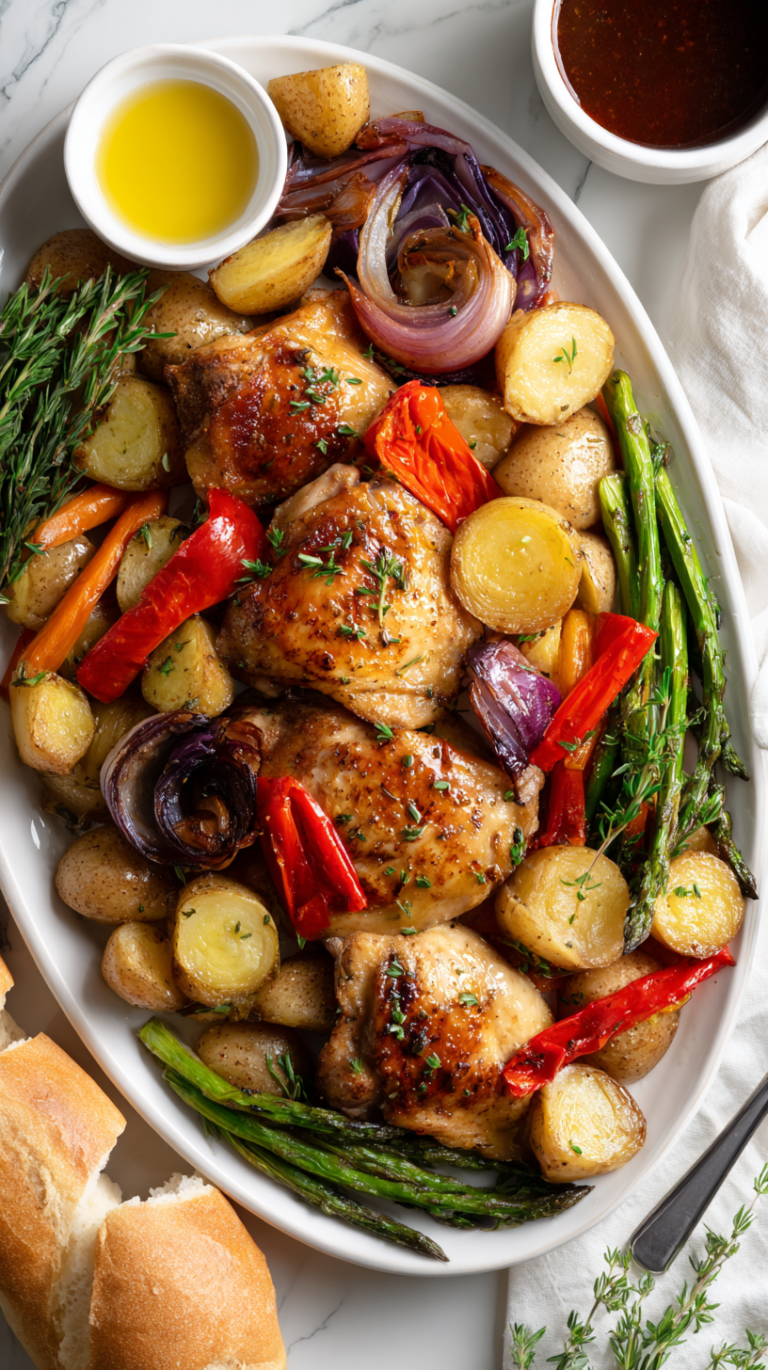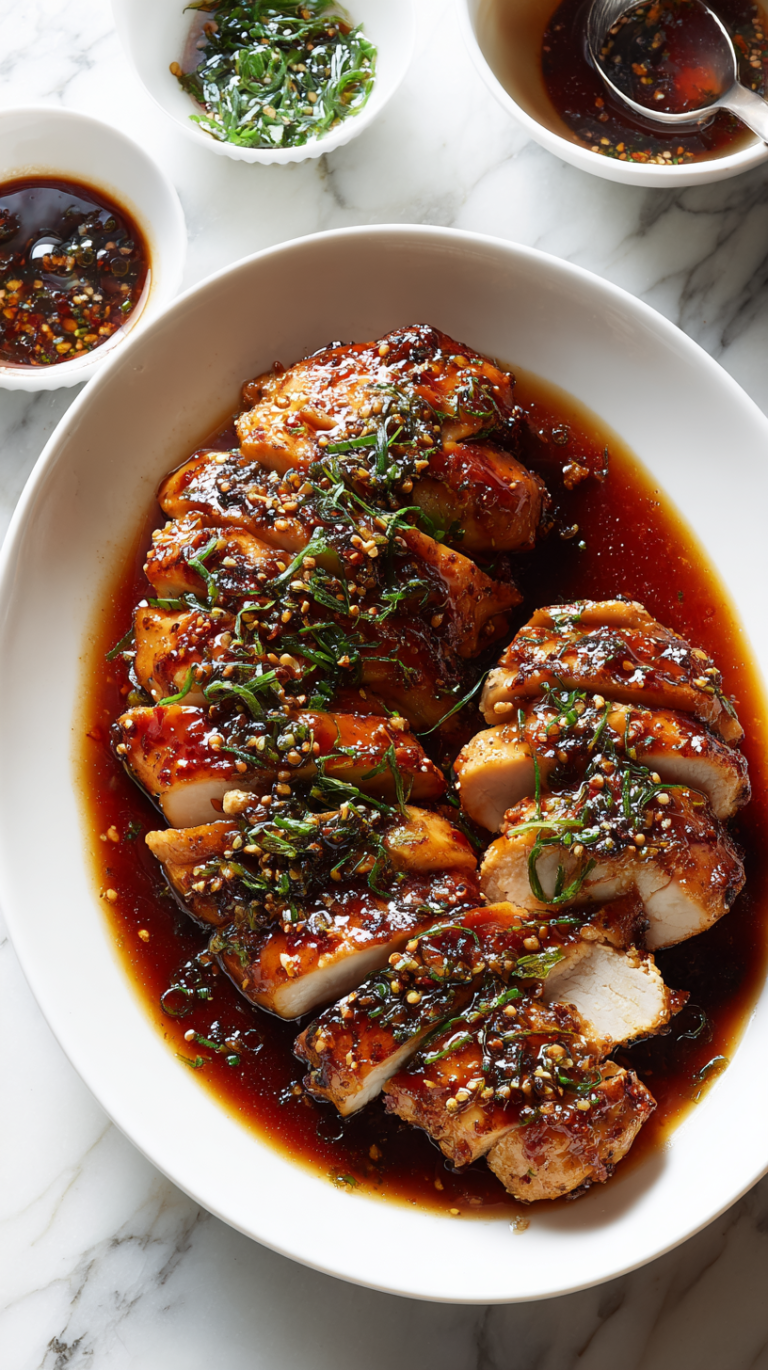
Parmesan Chicken Sheet Pan — The One-Pan Dinner That Actually Delivers a Crunchy Crust
Most baked Parmesan chicken recipes produce a crust that looks golden on the outside but turns soft and pasty by the time the chicken is fully cooked. The coating absorbs the steam released by the chicken beneath it, the breadcrumbs compact rather than crisp, and the Parmesan melts into a gummy layer instead of the crunchy, nutty, deeply browned crust the recipe promised.
For more easy and delicious chicken recipes, explore our collection.

This Parmesan chicken sheet pan recipe solves that problem with a two-part coating system that keeps the crust crispy from the first minute it touches the oven until the last bite at the table. The mayonnaise-Dijon base layer acts as a moisture barrier and adhesive. The Parmesan and breadcrumb top layer crisps against the dry oven heat without absorbing steam from below. Broccoli and cherry tomatoes cook alongside the chicken on the same pan at the same 425°F temperature, requiring no separate preparation and no additional dishes.
Parmesan chicken sheet pan is a one-pan baked dinner made by coating chicken breasts in a mayonnaise-Dijon base, pressing on a Parmesan and breadcrumb crust, surrounding them with broccoli florets and cherry tomatoes, and baking at 425°F until the crust is deeply golden and the chicken reaches 165°F internally — typically in 22–26 minutes.
The 425°F baking temperature is not arbitrary. It is the specific temperature at which the Parmesan crust browns via the Maillard reaction at the same rate that the chicken cooks through to a safe internal temperature. Lower temperatures produce fully cooked chicken with a pale, under-browned crust. Higher temperatures produce a dark, bitter crust before the chicken center reaches safe temperature. At 425°F, both events arrive at the same time.
The complete Parmesan chicken sheet pan dinner — chicken, crust, and two roasted vegetables — comes together from a single baking sheet and a brief 10-minute prep. It is the kind of recipe that works on Tuesday night after a long day and looks polished enough to serve at a weekend dinner table.
Why This Parmesan Chicken Sheet Pan Recipe Works
Every element of this recipe has a specific technical reason for being there. Nothing is decorative.
Mayonnaise Creates a Steam Barrier Between Chicken and Crust
Raw chicken releases significant moisture as it heats. In a standard breaded chicken recipe, that moisture travels upward through the coating and softens the breadcrumbs from below. Mayonnaise — which is an emulsion of egg yolk and oil — forms a protein-fat barrier on the chicken surface when it hits oven heat. This barrier slows the moisture migration from the chicken into the breadcrumb layer, keeping the crust drier and crispier through the full baking time. It also provides the fat needed to achieve the golden-brown Maillard reaction on the crust surface.
Dijon Mustard Adds Depth Without Overpowering
One teaspoon of Dijon mustard in the base coating does two things. It adds a subtle, tangy, slightly sharp background note that cuts through the richness of the Parmesan and olive oil without tasting recognizably of mustard in the finished dish — most people eating this Parmesan chicken sheet pan dinner cannot identify mustard as a specific flavor, but they notice when it is absent. It also helps emulsify the olive oil and mayonnaise base into a more cohesive coating that spreads evenly over the chicken surface.
Grated Parmesan Melts and Browns Differently Than Other Cheeses
Parmesan’s low moisture content and high protein concentration make it behave differently from mozzarella or cheddar under oven heat. Rather than melting into a liquid pool, Parmesan dehydrates further and undergoes rapid Maillard browning. The result is a concentrated, nutty, sharply flavored crust with genuine crunch rather than a soft, melted cheese layer. The ratio of 1 cup Parmesan to 1/2 cup breadcrumbs in this Parmesan chicken sheet pan recipe produces a crust that is predominantly cheese with breadcrumbs providing additional structural support.
Broccoli and Cherry Tomatoes Roast Perfectly at 425°F
Both broccoli florets and cherry tomatoes have roasting temperature sweet spots that align with the 425°F required for the chicken crust. Broccoli at 425°F develops charred, nutty edges in 22–25 minutes — softer and more caramelized than the slightly steamed result it produces at 375°F. Cherry tomatoes at 425°F burst and caramelize within 20 minutes, releasing their concentrated sweet-acid juice across the surrounding pan. Both vegetables are done at the same time as the chicken, which is what makes this a genuine one-pan dinner rather than a recipe requiring staggered vegetable additions.
Parchment Paper Prevents Sticking and Ensures Even Browning
The combination of melting Parmesan and olive oil creates a coating that fuses to unlined metal sheet pans under high heat. Removing the chicken without parchment typically tears away part of the crust from the underside of each breast — the most visually important surface. Parchment paper prevents this and allows the chicken to release cleanly with the full crust intact. It also eliminates the need to grease the pan and makes cleanup a matter of discarding a single sheet of paper.
Firm Pressing of the Crust Ensures Adhesion
Sprinkling the Parmesan and breadcrumb mixture loosely over the chicken produces a crust that falls away in pieces when the chicken is moved or cut. Pressing the mixture firmly onto the mayonnaise-coated surface creates a compressed, dense crust layer that bonds to the coating beneath it. The pressure forces the dry breadcrumb and Parmesan mixture into the wet mayonnaise surface, creating a mechanical bond that holds through the full baking time. Press firmly enough that the mixture indents visibly but not so hard that the chicken breast deforms.
Ingredients for Parmesan Chicken Sheet Pan
These quantities serve 4 people as a complete dinner with vegetables from a single sheet pan. The ingredient list is short but each item serves a specific technical function — do not substitute freely without reading the notes below.
Base Coating Sauce
- Olive oil3 tbsp
- Mayonnaise2 tbsp
- Dijon mustard1 tsp
- Garlic powder1 tsp
- Paprika1/2 tsp
- Black pepper1/2 tsp
Chicken and Crust
- Boneless skinless chicken breasts4 (6–7 oz each)
- Grated Parmesan cheese1 cup
- Breadcrumbs (panko or fine)1/2 cup
- Italian seasoning1 tsp
- Salt1/2 tsp
- Broccoli florets2 cups
- Cherry tomatoes1 cup
Key Ingredient Notes
Chicken Breasts: Use chicken breasts of similar size and thickness for this Parmesan chicken sheet pan recipe — ideally 6–7 ounces each. Breasts of uneven thickness cook unevenly: the thin end overcooks and dries out before the thick center reaches 165°F. If your chicken breasts are very thick (over 1 inch at the thickest point), pound them to an even 3/4-inch thickness using a meat mallet or the bottom of a heavy pan before coating. Even thickness is the single most impactful prep step for consistent results across the sheet pan.
Grated Parmesan: Use finely grated Parmesan — either freshly grated on a microplane or the pre-grated variety sold in containers, not shredded. Finely grated Parmesan adheres to the mayonnaise coating more completely, distributes evenly across the entire crust surface, and dehydrates into a uniformly browned layer. Shredded Parmesan in large flakes creates an uneven, spotty crust with both under-browned gaps and over-darkened thick spots. Freshly grated from a block of Parmigiano-Reggiano produces the most intense, complex flavor and the crunchiest crust of any Parmesan option.
Panko Breadcrumbs: Panko produces a noticeably crispier, lighter crust than fine breadcrumbs in this Parmesan chicken sheet pan recipe. Panko’s larger, airier flake structure creates more surface area and traps more air during baking, resulting in a crust that is both crunchier and more visually attractive. Fine Italian-style breadcrumbs produce a denser, more compact crust with a slightly smoother appearance. Both work — the choice depends on your texture preference. If using fine breadcrumbs, reduce the quantity to 1/3 cup to prevent the crust from becoming too thick and dense.
Mayonnaise: Full-fat mayonnaise is essential here. Light mayonnaise has a higher water content and lower fat content than full-fat — it does not form an effective moisture barrier and does not provide enough fat for proper browning of the crust above it. The quantity used — 2 tablespoons for 4 chicken breasts — is modest enough that the finished Parmesan chicken sheet pan dinner does not taste of mayonnaise. Its role is purely functional: adhesion and moisture barrier.
Broccoli Florets and Cherry Tomatoes: Cut broccoli into florets of roughly equal size so they roast evenly. Very large florets will still be slightly underdone when the chicken is ready. Cherry tomatoes should be left whole — they burst during roasting, releasing their juice and creating a natural pan sauce around the chicken. Halving the tomatoes causes them to release too much liquid too quickly, which can steam the broccoli and reduce the crispiness of the nearby chicken crust edges.
Required Equipment
This Parmesan chicken sheet pan recipe requires a minimal, specific set of tools. Every item listed below is genuinely necessary — nothing here is optional or purely convenient.
Large Rimmed Sheet Pan (18×13 inch)Parchment PaperTwo Mixing BowlsInstant-Read ThermometerPastry Brush or SpoonPaper Towels
The sheet pan size matters significantly. An 18×13 inch rimmed half-sheet pan is the standard size and fits 4 chicken breasts and 3 cups of vegetables in a single layer with adequate space between each element. A smaller pan forces the vegetables against the chicken, trapping steam and softening the crust edges. If you only have a standard 9×13 inch baking pan, arrange the chicken in the center and roast the vegetables on a separate smaller pan in the same oven.
An instant-read thermometer is not optional for this Parmesan chicken sheet pan dinner. The golden crust is a reliable visual indicator that the surface coating is done, but it tells you nothing about the internal temperature of the chicken. Breast thickness variation between pieces means one breast can reach 165°F while another is still at 155°F — only a thermometer catches this. Insert it horizontally into the thickest part of each breast, avoiding the crust on top.
How to Make Parmesan Chicken Sheet Pan — Step by Step
Nine steps from cold ingredients to a golden, fully cooked dinner on the table. Active work takes 10 minutes — the oven handles the rest.
1
Preheat the Oven and Prepare the Pan
Set the oven to 425°F (220°C) and allow it to fully preheat before the pan goes in. Line a large rimmed sheet pan with parchment paper, pressing it flat against the base and sides.
425°F (220°C) — full preheat required before baking
A fully preheated oven creates an immediate high-heat environment from the first second the pan enters. The crust begins browning and setting right away rather than slowly warming with the oven, which is what produces the crispy exterior rather than a soft, steamed one.
2
Dry the Chicken Thoroughly
Place the 4 chicken breasts on a clean surface or cutting board. Pat each breast dry on both sides with paper towels, pressing firmly to remove as much surface moisture as possible.
This step is essential and frequently skipped. Surface moisture on the chicken creates steam the moment it contacts oven heat — steam that travels up through the coating and softens the Parmesan crust from below. The chicken surface should feel dry and slightly tacky to the touch after patting, not slick or wet.
3
Make the Base Coating
In a small bowl, combine the 3 tablespoons of olive oil, 2 tablespoons of mayonnaise, 1 teaspoon of Dijon mustard, 1 teaspoon of garlic powder, 1/2 teaspoon of paprika, and 1/2 teaspoon of black pepper. Whisk or stir until the mixture is fully smooth and uniformly pale orange from the paprika with no visible separation between the oil and mayonnaise.
The completed base coating should be thick enough to cling to the back of a spoon without running immediately — similar in consistency to a thin vinaigrette that has been fully emulsified.
4
Make the Parmesan Crust Mixture
In a separate bowl, combine the 1 cup of grated Parmesan, 1/2 cup of breadcrumbs, 1 teaspoon of Italian seasoning, and 1/2 teaspoon of salt. Stir with a fork until the breadcrumbs are evenly distributed throughout the Parmesan and the Italian seasoning is visible throughout the mixture.
The Parmesan crust mixture should be dry and crumbly with a sharp, nutty, distinctly Italian cheese aroma from the seasoning and Parmesan combined.
5
Coat the Chicken With the Base Layer
Place the dried chicken breasts on the prepared sheet pan. Spoon or brush the base coating evenly over the top surface of each breast, spreading it to the edges so the full surface is covered.
Use approximately 1.5 tablespoons of the coating mixture per breast. The coated surface should appear uniformly pale orange with no bare chicken visible and a glossy, slightly wet surface ready to receive the Parmesan crust. Do not coat the underside of the chicken — the Parmesan crust is applied to the top only.
6
Press the Parmesan Crust Firmly onto Each Breast
Spoon a generous portion of the Parmesan and breadcrumb mixture over the coated surface of each chicken breast — approximately 3–4 tablespoons per breast. Use your palm or the back of the spoon to press the mixture firmly and evenly into the base coating.
The crust should feel compact and dense after pressing, with no loose crumbs falling away when the pan is tilted slightly. The pressed surface should appear even in thickness across the full top of each breast.
7
Arrange the Vegetables on the Sheet Pan
Scatter the 2 cups of broccoli florets and 1 cup of whole cherry tomatoes around the chicken breasts in the remaining space on the sheet pan. Leave at least 1 inch of space between the vegetables and the chicken breasts on all sides.
Drizzle the vegetables with a light coat of olive oil — approximately 1 tablespoon across the full vegetable area. Season with salt and pepper. The vegetables should glisten from the oil but not be pooling in oil at the base of the florets.
8
Bake Until Golden and Cooked Through
Transfer the sheet pan to the fully preheated 425°F oven. Bake for 22–26 minutes, without opening the oven during cooking.
The Parmesan chicken sheet pan is done when the crust is deeply golden brown across the full surface with darker spots at the edges where the Parmesan has caramelized, the broccoli tips are charred and crispy, the cherry tomatoes have burst and collapsed, and the kitchen is filled with the concentrated aroma of browned cheese and roasting vegetables.
Verify doneness with an instant-read thermometer inserted into the thickest part of each breast — the temperature must reach 165°F (74°C) before the chicken is safe to serve.
9
Rest Before Serving
Remove the sheet pan from the oven and allow the chicken to rest on the pan for 5 minutes before serving. Do not cover the chicken during the rest — covering traps steam and softens the Parmesan crust.
The resting period allows the internal juices of the chicken to redistribute from the center outward, so that the first cut produces a juicy interior rather than a flow of liquid across the plate that leaves the chicken dry. The crust should remain crisp and rigid throughout the rest period — if it softens, the vegetables were too close to the chicken and their steam was reaching the crust surface during baking.
For more easy and delicious chicken recipes, explore our collection.
Dana’s Pro Tips for the Perfect Parmesan Chicken Sheet Pan
- Pound the chicken breasts to even thickness before coating. This is the most impactful single prep step for consistent results. Place each breast between two sheets of plastic wrap or inside a zip-lock bag and pound with a meat mallet or the bottom of a heavy skillet to an even 3/4-inch thickness throughout. Even thickness means the thin end and the thick center of each breast reach 165°F simultaneously — no overcooked dry edges while the center finishes cooking. This also produces a more even crust surface area across each breast.
- Use a microplane-grated Parmigiano-Reggiano for the best crust flavor and texture. Pre-grated Parmesan in green canisters is a functional substitute, but freshly microplane-grated Parmigiano-Reggiano produces a crust that is noticeably more complex, sharper, and nuttier in flavor. It also grates into fine, feathery strands that pack more densely and brown more evenly than the coarser commercial pre-grated varieties. The difference is significant enough to be worth the extra two minutes of grating.
- Add the broccoli to the outer edges of the pan, away from the chicken center. The most intense heat in a standard oven comes from the walls and the upper element during baking. Placing the broccoli at the outer edges exposes it to slightly higher heat than the center of the pan where the chicken sits, producing the charred, crispy-tipped broccoli florets that are one of the best results of this Parmesan chicken sheet pan recipe. Broccoli placed directly adjacent to the chicken sits in the reflected heat and moisture zone and takes longer to char.
- Pat the Parmesan crust down a second time halfway through baking. If your oven has a tendency to produce uneven heat or if the crust appears to be lifting slightly at the edges at the halfway mark, press each breast gently but firmly with the back of a spatula at the 12-minute point. This re-bonds any loosening crust sections to the coating beneath and ensures full adhesion through the remaining cook time.
- Broil for 2–3 minutes at the end for maximum crust color. If the Parmesan crust reaches the correct internal chicken temperature before it has developed the deep golden-brown color you want, switch the oven to broil for the final 2–3 minutes. Watch continuously — the transition from golden-brown to dark and bitter on a Parmesan crust takes less than 60 seconds under a broiler. Remove the moment the crust reaches the color you want.
- Let the chicken air-rest on a wire rack placed over the sheet pan. If you have a wire rack that fits inside the sheet pan, transfer the chicken to it for the 5-minute rest rather than leaving it on the parchment. The wire rack keeps the underside of the chicken off the pan surface, preventing the residual heat in the pan from over-steaming the bottom of the breast and softening the outer crust edges. This is a small detail but produces a noticeably crispier result in the finished Parmesan chicken sheet pan dinner.
- Season the broccoli with garlic powder as well as salt and pepper. The standard instruction to drizzle vegetables with olive oil and season with salt and pepper produces well-roasted broccoli — but adding 1/4 teaspoon of garlic powder to the broccoli seasoning ties its flavor to the garlic-forward coating on the chicken, creating a more cohesive overall dish where both the protein and the vegetables read as part of the same flavor profile rather than simply sharing a pan.
- Do not crowd the pan. The single most important factor for achieving the roasted, caramelized quality in both the vegetables and the chicken crust is space. Every piece on this Parmesan chicken sheet pan dinner needs clear air around it. Crowded vegetables steam each other. Crowded chicken releases moisture into the surrounding air that redeposits on the crust surface. If your pan is not large enough to space everything with at least 1 inch of clearance between pieces, use two sheet pans side by side in the oven.
Common Mistakes to Avoid With Parmesan Chicken Sheet Pan
Not Patting the Chicken Dry
Skipping the drying step sends moisture directly into the coating from the moment baking begins. The surface water on the chicken turns to steam, travels up through the base coating layer, and reaches the breadcrumb and Parmesan crust before the oven heat has fully set it. The result is a crust that appears to be browning on the surface while being soft and wet at the interface with the chicken below. Patting completely dry is a 30-second step that determines the texture of the entire bottom half of the crust.
Baking at Too Low a Temperature
Reducing the oven temperature below 425°F to “play it safe” with the chicken produces an underperforming result. At 375°F or 400°F, the Parmesan crust browns slowly and never develops the deep, concentrated, slightly caramelized flavor it achieves at 425°F. The chicken takes longer to reach 165°F, extending the time the crust sits in a moist environment. The broccoli does not develop charred edges. Use 425°F and monitor with a thermometer — do not reduce the temperature.
Sprinkling Rather Than Pressing the Crust
The pressing step is not cosmetic. A lightly sprinkled Parmesan and breadcrumb layer that has not been pressed firmly into the mayonnaise coating has no mechanical bond to the chicken surface. It produces a crust that appears intact going into the oven and falls off in chunks when the chicken is moved to a plate or cut at the table. Press with genuine force — the mixture should visibly compact and indent.
Placing Vegetables Against the Chicken
Cherry tomatoes and broccoli both release steam as they roast. Positioning them directly against the chicken breasts on the sheet pan directs that vegetable steam toward the Parmesan crust edges — which are the most vulnerable part of the crust because they are thinnest and have the least coverage. Maintain at least 1 inch of clear space between the chicken and the vegetables throughout the pan arrangement.
Opening the Oven Door During Baking
Opening the oven door releases the accumulated heat and drops the internal temperature by 25–50°F within seconds. In a recipe that depends on sustained high heat to simultaneously crisp the crust and cook the chicken through, even one early door opening disrupts the process. Set a timer and resist the urge to check on the Parmesan chicken sheet pan until at least the 20-minute mark.
Covering During the Rest Period
Covering the rested chicken with foil after baking traps steam from the hot chicken beneath the foil and redeposits it on the crust surface. The same crust that emerged from the oven rigid and crackling becomes soft, pale, and slightly gummy after just 3–4 minutes under foil cover. Rest the Parmesan chicken sheet pan uncovered and in a single layer at room temperature — never cover a crust-topped baked chicken.
Parmesan Chicken Sheet Pan Variations and Substitutions
With Asparagus and Lemon
Replace the broccoli with 1 bunch of asparagus spears, trimmed and cut into 2-inch pieces, and replace the cherry tomatoes with 1 lemon sliced into thin rounds. The asparagus roasts fully in the same 22–26 minutes at 425°F. Add a squeeze of fresh lemon over the finished chicken and asparagus immediately before serving — the acidity brightens both the Parmesan crust flavor and the asparagus.
With Zucchini and Red Pepper
Replace the broccoli with 1 medium zucchini cut into half-moon slices and the cherry tomatoes with 1 red bell pepper cut into strips. Both roast well at 425°F and soften to a caramelized, slightly sweet quality that complements the sharp Parmesan crust. Toss the zucchini and pepper with a pinch of smoked paprika alongside the salt and olive oil for additional depth.
Gluten-Free Version
Replace the standard breadcrumbs with certified gluten-free panko breadcrumbs or almond flour. Almond flour produces a slightly denser, nutty-flavored crust that pairs well with the Parmesan — reduce the quantity to 1/3 cup since almond flour is denser than breadcrumbs. All other ingredients in this Parmesan chicken sheet pan recipe are naturally gluten-free.
Spicy Parmesan Version
Add 1/4 teaspoon of cayenne pepper and 1/4 teaspoon of crushed red pepper flakes to the Parmesan and breadcrumb mixture. Replace the standard paprika in the base coating with hot smoked paprika for an additional layer of heat. The sharp Parmesan crust amplifies the chili heat — this version works particularly well with the broccoli and cherry tomato combination because the tomato sweetness balances the chili.
With Chicken Thighs
Boneless skinless chicken thighs work well in this Parmesan chicken sheet pan recipe and stay more moist than breasts through the high-heat baking. Use 6–8 boneless skinless thighs, flattened to approximately 1/2-inch thickness. Reduce the bake time to 18–22 minutes and verify with a thermometer to 165°F. The higher fat content of thighs produces slightly more browning on the crust from below — monitor closely in the last 5 minutes.
Herb-Crusted Version
Add 1 tablespoon of finely chopped fresh rosemary and 1 tablespoon of finely chopped fresh thyme directly to the Parmesan and breadcrumb mixture. Replace the Italian seasoning with 1/2 teaspoon of dried oregano. The fresh herbs add visible green flecks to the golden crust and a fragrant, complex herb character that makes the Parmesan chicken sheet pan look and taste notably different from the standard version.
For more easy and delicious chicken recipes, explore our collection.
Quick Substitution Reference
No mayonnaise? Full-fat Greek yogurt is the most effective substitute — it provides a similar protein-fat content that creates a moisture barrier and acts as an adhesive for the Parmesan crust. Use the same 2-tablespoon quantity. Sour cream works similarly. Do not substitute with cream cheese — it is too thick and does not spread evenly enough to create an even coating surface.
No Parmesan? Pecorino Romano is the closest substitute and actually produces a sharper, saltier crust with a slightly different flavor profile that many people prefer. Grana Padano is milder than Parmesan and produces a less intensely flavored but still excellent crust. Reduce the added salt in the breadcrumb mixture by half when using either Pecorino or Grana Padano, as both are saltier than standard Parmesan.
No Dijon mustard? Whole grain mustard at the same 1-teaspoon quantity works as a direct substitute with a slightly more visible presence in the coating. A small squeeze of fresh lemon juice — about 1/2 teaspoon — provides a similar acid-brightness function without the mustard flavor, though it does not contribute the emulsifying property that Dijon provides.
How to Store and Reheat Parmesan Chicken Sheet Pan
Store leftover Parmesan chicken sheet pan portions in an airtight container in the refrigerator and consume within 3 to 4 days. The Parmesan crust softens during refrigerator storage as it absorbs moisture from the chicken beneath it — this is normal and unavoidable, but the crust texture is largely recoverable through the correct reheating method.
To reheat and restore the crust crispiness, place the cold chicken portions on a wire rack set over a sheet pan and reheat at 375°F for 12–15 minutes. This method allows air to circulate under the chicken and drives off the absorbed moisture from both the bottom and top surfaces simultaneously, restoring the crust to a close approximation of its freshly baked texture. Reheating in a microwave produces a warm but soft, rubbery-crusted result with no resemblance to the original — avoid the microwave for this dish.
The roasted vegetables reheat well in the microwave and do not benefit from oven reheating to the same extent as the chicken. Store them separately from the chicken if possible, so that their moisture does not further soften the crust during refrigerator storage.
This Parmesan chicken sheet pan recipe does not freeze well as a completed dish — the Parmesan crust absorbs water during the freeze-thaw cycle and does not recover its texture upon reheating. If you want to prepare in advance, freeze the coated and crusted raw chicken breasts before baking, then bake directly from frozen at 425°F with 8–10 additional minutes of cook time.
Serving Suggestions for Parmesan Chicken Sheet Pan
Lemon-dressed arugula salad alongside
Warm crusty bread for the burst tomato juices
Simple pasta with olive oil and garlic
Roasted garlic mashed potatoes
White bean and herb side salad
Steamed jasmine or basmati rice
Caprese salad with fresh basil
Extra marinara sauce for dipping the crust
Building a Complete Dinner Around This Sheet Pan
The Parmesan chicken sheet pan dinner is complete as written — protein and two vegetables from one pan. For a more substantial dinner, serve it over a base of simple pasta dressed with olive oil, two cloves of thinly sliced garlic sautéed for 2 minutes, and a handful of fresh basil. The burst cherry tomatoes from the sheet pan make a natural sauce when combined with the pasta.
For a lighter meal, serve the Parmesan chicken sheet pan alongside a simple arugula salad dressed with fresh lemon juice, olive oil, shaved Parmesan, and black pepper. The peppery arugula and bright lemon cut through the richness of the browned cheese crust and complement the Italian seasoning profile of the dish without competing with it.
Nutrition Estimate Per Serving
Based on 4 servings. One serving includes one Parmesan-crusted chicken breast and one-quarter of the roasted broccoli and cherry tomatoes.
| Nutrient | Per Serving |
|---|---|
| Calories | 490 kcal |
| Macronutrients | |
| Protein | 52g |
| Total Carbohydrates | 16g |
| — Dietary Fiber | 2g |
| — Total Sugars | 3g |
| Total Fat | 24g |
| — Saturated Fat | 8g |
| — Trans Fat | 0g |
| Vitamins and Minerals | |
| Cholesterol | 135mg |
| Sodium | 720mg |
| Potassium | 680mg |
| Calcium | 34% DV |
| Vitamin C | 62% DV |
| Vitamin A | 18% DV |
| Iron | 12% DV |
Values are estimates based on a 6.5-ounce boneless skinless chicken breast, standard commercial grated Parmesan, full-fat mayonnaise, and panko breadcrumbs. The protein content is notably high per serving — this Parmesan chicken sheet pan dinner provides more than 50 percent of the average adult’s daily protein requirement from a single portion. Sodium content varies depending on the Parmesan brand used. Using freshly grated Parmigiano-Reggiano instead of commercial pre-grated varieties can reduce sodium by approximately 80–120mg per serving. The gluten-free almond flour version reduces carbohydrates to approximately 8g per serving and increases fat by approximately 5g.
Parmesan Chicken Sheet Pan — Frequently Asked Questions
What temperature is best for Parmesan chicken sheet pan?
425°F (220°C) is the optimal baking temperature for Parmesan chicken sheet pan. At this temperature, the Parmesan crust browns through the Maillard reaction at the same rate the chicken cooks to 165°F internally — both events arrive at approximately the same time, typically 22–26 minutes for standard-size chicken breasts. Baking below 400°F produces a pale, under-browned crust and extends the cooking time, giving the moisture from the chicken more time to soften the breadcrumbs. Baking above 450°F risks burning the Parmesan surface before the chicken center is safely cooked.
Why does my Parmesan crust fall off the chicken?
A Parmesan crust that falls away from the chicken is almost always caused by insufficient pressing during assembly. The Parmesan and breadcrumb mixture must be pressed firmly onto the mayonnaise-coated surface — not simply sprinkled on. The pressing creates a mechanical bond between the dry crust layer and the adhesive coating beneath it. A secondary cause is using wet chicken that was not patted dry before coating — the surface moisture breaks the adhesion between the coating and the chicken skin. Pat the chicken completely dry, apply the base coating, and press the Parmesan mixture with real downward force.
Can I make Parmesan chicken sheet pan ahead of time?
The chicken can be assembled — coated with the base layer and Parmesan crust pressed on — and refrigerated uncovered on the parchment-lined sheet pan for up to 4 hours before baking. Refrigerating uncovered allows the surface of the crust to dry slightly, which actually improves browning compared to freshly assembled chicken baked immediately. Do not refrigerate for more than 4 hours or the breadcrumbs begin absorbing moisture from the mayonnaise coating and the crust texture is affected. The vegetable preparation can be done up to 24 hours ahead — store the cut broccoli and tomatoes in separate airtight containers in the refrigerator.
How do I know when the chicken is done without cutting into it?
The most reliable method is an instant-read thermometer inserted horizontally into the thickest part of each breast, reading 165°F (74°C). Visual indicators that suggest the Parmesan chicken sheet pan is likely done include a deeply golden-brown crust across the full top surface with darker areas at the edges, clear juices running from the bottom of the chicken where it contacts the parchment, burst cherry tomatoes with caramelized juice spreading across the pan, and charred tips on the broccoli florets. Use these visual signs to know when to check with the thermometer, not as a substitute for it.
Can I use frozen chicken breasts for this sheet pan recipe?
Frozen chicken breasts must be fully thawed before being used in this Parmesan chicken sheet pan recipe. Frozen or partially thawed chicken releases significantly more surface moisture during baking than fully thawed chicken — this moisture travels into the Parmesan crust and prevents it from crisping. Thaw frozen chicken completely in the refrigerator overnight, then pat thoroughly dry before coating. Do not attempt to speed-thaw under hot water for this recipe — the surface softening from hot water increases moisture content at the surface level even after patting dry.
What other vegetables work well on a Parmesan chicken sheet pan?
The best vegetables for this sheet pan are those that roast fully at 425°F within the same 22–26 minute window as the chicken. Asparagus spears, halved Brussels sprouts, red bell pepper strips, zucchini slices, broccolini, green beans, and sugar snap peas all work well at this temperature and time. Vegetables that require longer roasting at this temperature — whole carrots, dense sweet potato cubes, whole beets — should be cut very small (1/2 inch pieces) or par-cooked before being added to the pan. Avoid high-water vegetables like sliced cucumber or iceberg lettuce — they release too much steam during roasting.
Can I skip the mayonnaise and use only olive oil?
You can use olive oil alone as the base coating, but the result is noticeably different. Olive oil without mayonnaise does not create the same moisture barrier or adhesive bond for the Parmesan crust. The crust will be less securely attached and more likely to slide or fall away when the chicken is served. The finished Parmesan chicken sheet pan will also have a slightly drier surface texture because the protein emulsion in the mayonnaise — from the egg yolk — contributes to both the moisture retention and the browning quality of the base coating. The olive oil-only version is still good, just less reliable in crust adhesion and slightly less rich.
How many calories are in Parmesan chicken sheet pan?
One serving of this Parmesan chicken sheet pan dinner — one chicken breast with its Parmesan crust and one-quarter of the roasted broccoli and cherry tomatoes — contains approximately 490 calories, with 52 grams of protein, 16 grams of carbohydrates, and 24 grams of total fat. This makes it a high-protein, moderate-calorie dinner that provides more than half a day’s protein for an average adult in a single serving. The calorie count varies with chicken breast size — a 5-ounce breast produces approximately 430 calories while an 8-ounce breast produces approximately 560 calories per serving.
The Parmesan Chicken Sheet Pan Dinner That Belongs in Every Weekly Rotation
Pat the chicken completely dry. Mix the base coating smooth. Press the Parmesan crust with genuine force. Space everything on the pan. Bake at the full 425°F. Check temperature with a thermometer. Rest uncovered for five minutes.
Those seven practices are the complete technical difference between a soggy, crust-shedding result and the kind of Parmesan chicken sheet pan dinner that comes out of the oven with a crust so golden and rigid it crackles when you press it — juicy chicken beneath, charred broccoli alongside, burst tomatoes pooling their sweet-acid juice across the pan.
One pan. Ten minutes of prep. Thirty-five minutes start to plate. A dinner that looks and tastes like it took considerably longer than it did.
Follow me on Pinterest for more delicious recipes.