Golden Bang Bang Chicken Sliders That Hit Every Note
Bang bang chicken sliders solve a specific problem that standard chicken sliders do not: they are genuinely exciting. Most slider recipes deliver soft bun, mild chicken, and a forgettable sauce. Bang bang chicken sliders deliver crispy buttermilk-fried chicken, a creamy-sweet-spicy sauce that hits three flavor notes simultaneously, and a build that is compact enough for a party platter but satisfying enough to anchor a weeknight dinner.
The name comes from the bang bang sauce, a Thai-inspired condiment built from mayonnaise, sweet chili sauce, sriracha, and honey that has become one of the most replicated restaurant sauces in home cooking. The sauce is both the seasoning and the reason people come back for a third slider. It coats the crispy chicken without softening the crust, carries heat that builds rather than overwhelms, and balances the richness of the fried coating with enough sweetness and acid to keep every bite interesting.
For more easy and delicious chicken recipes, explore our collection.
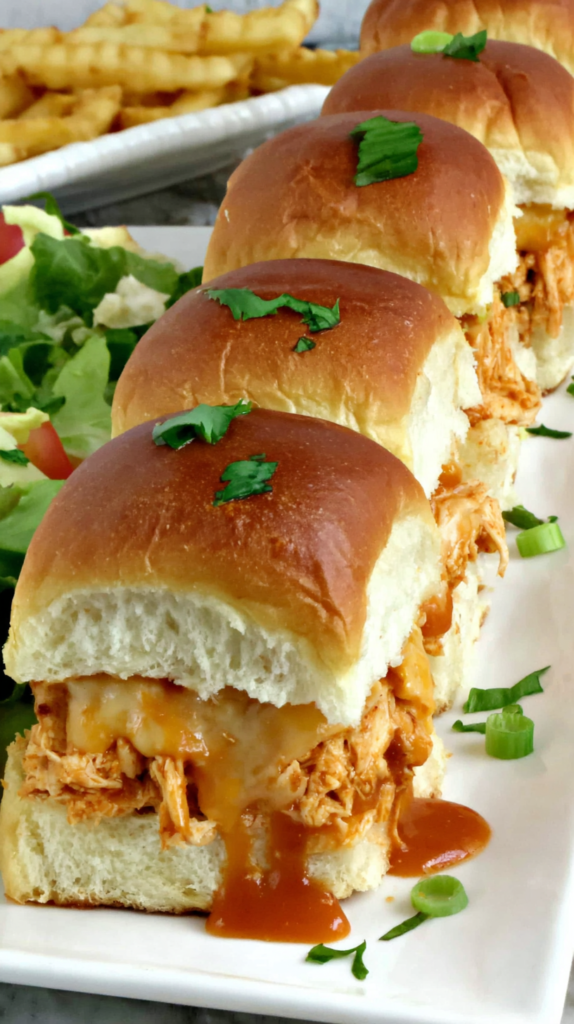
The two consistent problems with bang bang chicken sliders at home are a coating that goes soggy within minutes of being sauced and a sauce that is either too sweet, too spicy, or too thin to cling properly. This recipe solves both. The flour-cornstarch combination in the coating produces a crust that stays structurally intact when tossed with the sauce. The sauce recipe is specifically calibrated — one part sweet chili, two parts mayonnaise, a measured amount of sriracha, and just enough honey to round the edges — so it coats without drowning and stings without burning.
These bang bang chicken sliders are appropriate for game day, a backyard gathering, a birthday party, a casual dinner, or a meal prep session for lunches throughout the week. The recipe makes twelve sliders, which serves six people at two sliders each. The coating and sauce components each take under ten minutes to prepare. The frying takes twenty minutes with proper timing. Total active time from cold ingredients to plated sliders is under forty minutes.
Follow the steps in order, particularly the buttermilk soak timing and the double-dredge technique, and you will have bang bang chicken sliders that outperform anything from a fast-casual restaurant at a fraction of the cost.
Why This Bang Bang Chicken Sliders Recipe Works
Bang bang chicken sliders can go wrong at the coating, at the sauce, or at the assembly. This recipe addresses all three with specific technique decisions.
Buttermilk Soak for Tenderness and Adhesion
Soaking the cut chicken pieces in buttermilk before dredging does two things simultaneously. The lactic acid in buttermilk begins gently breaking down the surface proteins of the chicken, which tenderizes the exterior of each piece and produces a more tender bite in the finished bang bang chicken sliders. More practically, buttermilk is thick and acidic, which means the coating adheres to the surface of the chicken far more tenaciously than it would to dry or water-soaked chicken. The buttermilk acts as a glue layer between the meat and the flour-cornstarch crust, which significantly reduces the likelihood of the coating separating during frying.
Flour Plus Cornstarch for Lasting Crunch
Using both all-purpose flour and cornstarch in the dredging mixture is the professional technique that produces a coating that stays crispy after being tossed with sauce. Flour alone produces a soft, bread-like crust that absorbs moisture quickly and goes soggy within minutes of contact with any wet sauce. Cornstarch is virtually pure starch with no protein and no moisture-absorbing gluten — it fries into a light, shatteringly crisp shell that resists sauce absorption far more effectively than flour alone. The 2:1 flour-to-cornstarch ratio in this recipe produces bang bang chicken slider coating that is crispy at the moment of service and maintains acceptable crunch for 15 to 20 minutes after saucing.
Bang Bang Sauce Calibrated for Coating, Not Dipping
The bang bang sauce in this recipe is slightly thicker than a standard dipping sauce because it needs to coat and cling to crispy chicken pieces without running off onto the bun. The 2:1 ratio of mayonnaise to sweet chili sauce produces the right viscosity. Mayonnaise is an emulsified fat that clings to fried surfaces cleanly. Sweet chili sauce adds body, sweetness, and a gentle heat. Sriracha brings the direct capsaicin heat and a fermented complexity. Honey or sugar smooths the acid edges. Together these four components produce a sauce that coats without drowning, and that tastes complete across sweet, spicy, savory, and creamy simultaneously.
Small Chicken Pieces for the Slider Format
Cutting the chicken breasts into small, roughly equal pieces before the buttermilk soak is critical for the slider format. Pieces that are too large produce bang bang chicken sliders where the chicken overhangs the bun and falls apart when you pick it up. Pieces that are too small produce a coating-heavy result where the dredge overwhelms the meat. Pieces roughly 1.5 to 2 inches across, about the size of a golf ball, fry to fully cooked in 4 to 5 minutes per side and fill a standard slider bun without overflow.
Slider Buns That Complement Rather Than Compete
The bun choice for bang bang chicken sliders matters more than most people realize. A bun that is too soft will compress into paste under the weight of the sauced chicken. A bun that is too crusty makes the slider difficult to eat cleanly. The ideal bun for bang bang chicken sliders is a soft brioche slider roll or a potato roll — both have enough structure to hold the sauced chicken without collapsing, and their slight sweetness works with the sweet chili component of the bang bang sauce rather than against it.
Ingredients for Bang Bang Chicken Sliders
This recipe makes 12 bang bang chicken sliders, serving 6 people at 2 sliders each as a main course or 12 people as an appetizer portion. All measurements are exact.
The Chicken
- 1 1/2 lb boneless, skinless chicken breasts, cut into pieces approximately 1.5 to 2 inches across
- 1 cup buttermilk
The Dredging Coating
- 1 cup all-purpose flour
- 1/2 cup cornstarch
- 1 teaspoon fine salt
- 1/2 teaspoon ground black pepper
- 1 teaspoon garlic powder
- 1 teaspoon paprika (smoked or sweet)
For Cooking
- Neutral oil for deep frying — vegetable, canola, or peanut oil (approximately 3 to 4 cups for a medium saucepan)
- Cooking spray for air frying, if using the air fryer method
The Bang Bang Sauce
- 1/2 cup full-fat mayonnaise
- 1/4 cup sweet chili sauce
- 1 to 2 tablespoons sriracha, adjusted to your heat preference
- 1 tablespoon honey or granulated sugar
The Assembly
- 12 slider buns, preferably brioche or potato rolls
- Shredded lettuce or shredded cabbage, optional
Key Ingredient Notes
Chicken Breasts: Boneless, skinless chicken breasts cut into even pieces produce consistent cooking times and uniform-sized bites for bang bang chicken sliders. Try to cut pieces that are as close to the same size as possible — a piece that is twice the size of the others will either be undercooked when the smaller pieces are done or the smaller pieces will be overcooked by the time the large one finishes. Boneless, skinless chicken thighs are an excellent substitute that produce juicier, more forgiving bang bang chicken sliders — see the Variations section.
Buttermilk: Full-fat buttermilk produces the best results in the soak for bang bang chicken sliders. The fat content adds richness to the chicken surface and the lactic acid provides tenderizing action. If you do not have buttermilk, make a functional substitute by combining 1 cup of whole milk with 1 tablespoon of white vinegar or fresh lemon juice. Stir and let sit for 5 minutes until the milk curdles slightly. This substitute works well but does not produce quite the same coating adhesion as genuine buttermilk.
Cornstarch: Do not substitute the cornstarch with additional flour. The cornstarch is the primary source of the lasting crunch in bang bang chicken slider coating. Potato starch is a direct 1:1 substitute for cornstarch with very similar crunch properties. Arrowroot starch also works but produces a slightly glassier, more brittle crust. Do not use rice flour alone as the cornstarch substitute — it produces a different texture profile that does not hold up to saucing as well.
Sweet Chili Sauce: Mae Ploy and Taste of Thai are the two most widely available and consistently reliable sweet chili sauce brands for bang bang sauce. Look for a sauce that lists chili and sugar early in the ingredient list and has visible red pepper flakes throughout. Thin, watery sweet chili sauces produce a bang bang sauce that runs off the chicken rather than coating it. A good sweet chili sauce should pour slowly and hold a brief coating on the back of a spoon before running off.
Sriracha: Start with 1 tablespoon of sriracha and taste the bang bang sauce before committing to 2 tablespoons. Sriracha varies in heat between brands and age of bottle — older bottles are often hotter. The sauce should have a clear, building heat that arrives 2 to 3 seconds after the first bite rather than immediate mouth burn. If the heat is present on first contact, the sriracha level is too high for most guests. Adjust down by adding more mayonnaise in 1-tablespoon increments.
Mayonnaise: Full-fat mayonnaise — Hellmann’s, Duke’s, or Kewpie — provides the right fat content and emulsification for bang bang sauce. Reduced-fat mayonnaise contains more water and produces a thinner, less clinging sauce. Kewpie (Japanese mayonnaise) produces a richer, slightly more complex bang bang sauce due to its higher yolk content and rice vinegar base. If you can find it, it is worth using in bang bang chicken sliders.
Slider Buns: King’s Hawaiian slider rolls, brioche slider buns, and potato slider rolls all work well for bang bang chicken sliders. King’s Hawaiian rolls are particularly popular for their slight sweetness, which plays directly off the sweet chili component in the sauce. Lightly toast the cut surfaces of the buns before assembly — the toasted surface adds texture and prevents the bun from absorbing moisture from the sauce as quickly.
Required Equipment
You do not need specialized equipment for bang bang chicken sliders, but using the right tools makes the frying process significantly safer and more consistent.
- Medium to large heavy-bottomed pot or Dutch oven — for deep frying. A pot with high sides minimizes oil splatter. A 4-quart or 6-quart Dutch oven is ideal. Do not use a thin-bottomed pot — it cannot maintain a stable oil temperature through multiple batches.
- Instant-read thermometer or candy thermometer — for monitoring oil temperature. Maintaining oil at 350 F to 375 F is the single most important variable in producing crispy, non-greasy bang bang chicken slider coating. Without a thermometer, oil temperature is a guess.
- Wire rack set over a sheet pan — for draining fried chicken after cooking. Never use paper towels flat on a plate — the chicken sits in its own steam and the coating softens within 2 to 3 minutes. Wire rack drainage keeps the coating crispy.
- Large mixing bowls — two, for the buttermilk soak and the flour-cornstarch dredge, plus one for tossing the fried chicken in bang bang sauce
- Spider strainer or slotted spoon — for lowering chicken pieces into the oil and removing them without splashing
- Air fryer — if using the air fryer method instead of deep frying
- Small whisk — for combining the bang bang sauce ingredients until fully smooth
- For more easy and delicious chicken recipes, explore our collection.
Step-by-Step Instructions: How to Make Bang Bang Chicken Sliders
Step 1: Cut and Soak the Chicken
- Cut the chicken breasts into pieces approximately 1.5 to 2 inches across. Try to make the pieces roughly similar in size. They do not need to be perfectly uniform, but the largest and smallest pieces should not differ by more than 50 percent in size.
- Place the cut chicken pieces into a bowl and pour the buttermilk over them. Toss the chicken gently to ensure every piece is submerged or well-coated with buttermilk.
- Let the chicken soak in the buttermilk for a minimum of 15 minutes at room temperature. For deeper flavor penetration and better tenderizing, soak for up to 4 hours in the refrigerator. Even 15 minutes makes a measurable difference in how well the coating adheres compared to unsoaked chicken.
Chef’s Note: If you are planning ahead for a party, the buttermilk soak can run overnight in the refrigerator, covered. The extended acid exposure produces the most tender bang bang chicken slider meat of any soak duration. Remove from the refrigerator 15 minutes before dredging to bring the chicken closer to room temperature.
Step 2: Make the Bang Bang Sauce
- Combine the mayonnaise, sweet chili sauce, sriracha, and honey or sugar in a small bowl.
- Whisk vigorously until the sauce is completely smooth, glossy, and uniform in color — no streaks of white mayonnaise or red sriracha visible. The sauce should be thick enough to coat a spoon and hold that coating for several seconds without running.
- Taste the bang bang sauce. It should be creamy and slightly sweet on first contact, followed by a building heat from the sriracha that arrives 2 to 3 seconds later. Adjust with additional sriracha for more heat or additional honey for more sweetness. Set aside.
Chef’s Note: Bang bang sauce made 1 hour ahead tastes better than sauce made immediately before serving. The flavors meld and the honey integrates into the mayo-chili base more completely after a short rest. Make the sauce first, cover it, and refrigerate it while you prepare the chicken for the bang bang chicken sliders.
Step 3: Prepare the Dredging Station
- In a wide, shallow bowl or rimmed baking sheet, combine the flour, cornstarch, salt, black pepper, garlic powder, and paprika. Whisk or stir until the spices are evenly distributed throughout the dry mixture. There should be no visible clumps of any single spice.
- Set up your cooking station: buttermilk-soaked chicken on the left, dredging mixture in the center, and a clean baking sheet or wire rack on the right for the coated pieces. This assembly-line setup keeps the process efficient and prevents the dredging mixture from being contaminated with excessive buttermilk, which clumps the dry mixture over time.
Step 4: Dredge the Chicken
- Remove a chicken piece from the buttermilk, allowing the excess buttermilk to drip off for 3 to 4 seconds — not all of it, just the large drips. You want a thin, even coat of buttermilk remaining on the surface, not a thick pool.
- Place the piece into the flour-cornstarch mixture. Press the dredging mixture firmly against all surfaces of the chicken piece, turning it and pressing repeatedly until every surface is evenly coated with a dry, opaque layer.
- For extra crunch — highly recommended for bang bang chicken sliders — return the coated piece to the buttermilk briefly, then dredge a second time in the flour-cornstarch mixture. This double-coat produces a thicker, crunchier crust that holds its texture even longer after saucing.
- Set the coated chicken pieces on a clean wire rack or plate. Allow them to rest for 5 minutes before frying. This short rest allows the coating to hydrate slightly and adhere more firmly to the buttermilk surface, which significantly reduces coating loss during frying.
Step 5A: Deep Fry Method
- Pour 3 to 4 inches of neutral oil into the heavy-bottomed pot. Heat the oil over medium-high heat until it reaches 350 F to 375 F on your thermometer. This typically takes 8 to 10 minutes from cold. Do not rush this — oil that is not fully at temperature will produce greasy, pale-coated bang bang chicken sliders rather than crispy, golden ones.
- Test the oil temperature with a small pinch of the dredging mixture dropped in — it should sizzle immediately, rise to the surface quickly, and turn golden brown within 30 to 40 seconds. If it sinks and sits without sizzling, the oil is not hot enough. If it browns in under 10 seconds, the oil is too hot.
- Working in batches of 4 to 6 pieces, lower the coated chicken pieces gently into the hot oil using a spider strainer or tongs. Do not drop them — lowering them slowly minimizes splashing. Do not overcrowd the pot — adding too many pieces at once drops the oil temperature and produces greasy, pale coating instead of the crispy golden-brown crust you need for bang bang chicken sliders.
- Fry for 4 to 5 minutes, turning once halfway through, until the coating is a deep golden brown and the internal temperature of the chicken reaches 165 F. The coating should look uniformly amber-gold, not pale yellow. If the coating is coloring too fast in under 3 minutes, the oil is too hot — reduce heat slightly for subsequent batches.
- Remove the fried pieces with the spider strainer and transfer to a wire rack set over a sheet pan. Never place fried chicken on paper towels flat on a plate — the bottom coating steams and softens within 2 minutes. Wire rack drainage maintains crunch.
- Allow the oil to return to 350 F to 375 F between batches. This takes 1 to 2 minutes. Frying in oil that has dropped below 325 F produces greasy, soggy coating on bang bang chicken sliders.
Chef’s Note: The visual target for perfectly fried bang bang chicken slider bites is an even, deep amber-gold that looks like the color of a good potato chip. Pale yellow means undercooked and greasy. Dark brown means the outside is ahead of the inside. Aim for the amber-gold every time.
Step 5B: Air Fryer Method
- Preheat the air fryer to 400 F for 3 to 5 minutes.
- Spray the air fryer basket generously with cooking spray. Place the coated chicken pieces in a single layer in the basket — do not stack or overlap. Air fryers cook by circulating hot air around the food, and overlapping pieces prevent even browning.
- Spray the tops of the chicken pieces with cooking spray. This is essential for air fryer bang bang chicken sliders — without oil on the coating surface, the cornstarch and flour will not brown and the crust will be dry and pale rather than golden.
- Air fry at 400 F for 10 to 12 minutes, flipping once at the 6-minute mark and spraying the newly exposed surface with cooking spray after flipping. The coating should be golden brown on both sides with no pale spots.
- Check internal temperature — 165 F is the minimum. Transfer to a wire rack.
Chef’s Note: The air fryer produces bang bang chicken sliders with approximately 60 to 70 percent of the crunch of the deep-fried version. The skin-to-surface contact in deep frying produces a uniformly browned, sealed crust that air circulation cannot fully replicate. Both methods are excellent — the air fryer version has meaningfully less fat and is significantly easier to clean up.
Step 6: Sauce the Chicken
- Transfer the fried chicken pieces to a large mixing bowl. Pour approximately two-thirds of the bang bang sauce over the chicken.
- Toss gently using tongs or two spoons until every piece is evenly coated with sauce. The coating should be glossy and uniformly orange-red with no dry patches on any piece. If some pieces look under-sauced, add more bang bang sauce and toss again.
- Do not sauce more chicken than you plan to serve immediately. The sauce will begin softening the coating within 10 to 15 minutes. For parties where the sliders will be served over time, keep the sauced chicken and the remaining bang bang sauce separate and sauce individual portions at the time of serving.
Step 7: Toast the Buns and Assemble
- Split the slider buns and place them cut-side-down in a dry skillet over medium heat for 60 to 90 seconds until the cut surface is lightly golden and slightly crispy. This toasting step creates a barrier that slows moisture absorption from the sauced chicken and adds a textural element to the finished bang bang chicken sliders.
- Place the bottom half of each toasted slider bun on a serving board or plate. Add a small amount of shredded lettuce or shredded cabbage if using — the crunch of the raw cabbage or lettuce provides contrast to the sauced chicken and the soft bun.
- Place 2 to 3 sauced chicken pieces on each slider bun bottom, depending on the size of your pieces and the size of your buns. Drizzle a small amount of additional bang bang sauce directly over the chicken on the bun.
- Set the top bun in place. Serve the bang bang chicken sliders immediately.
Chef Priya Nakamura Pro Tips for the Best Bang Bang Chicken Sliders
Tip 1: Use the Double-Dredge for Maximum Crunch
A single dredge in the flour-cornstarch mixture produces good coating on bang bang chicken sliders. A double dredge — buttermilk, dredge, brief return to buttermilk, dredge again — produces a coating that is visibly thicker, more textured, and crunchier both immediately out of the fryer and after saucing. The second coat adds an outer layer that is less affected by the moisture of the bang bang sauce. For a party where the sliders will sit for 10 to 15 minutes before being eaten, the double dredge is not a suggestion — it is the technique that keeps the sliders from going soggy before guests have a chance to grab one.
Tip 2: Make the Bang Bang Sauce Ahead
Bang bang sauce made 1 to 24 hours ahead and refrigerated is consistently better than sauce made immediately before serving. The honey or sugar integrates fully into the mayonnaise base, the sriracha mellows slightly, and the sweet chili flavor becomes more present and rounded. Make the sauce when you start the buttermilk soak, cover it with plastic wrap, and refrigerate it until you are ready to toss the fried chicken. Pull it from the refrigerator 15 minutes before using so it reaches room temperature and flows more easily over the hot chicken.
Tip 3: Oil Temperature Is Not Optional
The single most impactful variable in the fried version of bang bang chicken sliders is consistent oil temperature. Oil that drops below 325 F produces greasy coating. Oil that exceeds 400 F produces burned coating over raw chicken. The 350 F to 375 F target range is where cornstarch-flour coating crisps fast enough to seal the surface before grease can penetrate. Use a thermometer, check between batches, and let the oil return to temperature before adding the next batch. This one discipline produces reliably crispy bang bang chicken sliders every single time.
Tip 4: Shredded Cabbage Beats Shredded Lettuce
Shredded cabbage holds its crunch longer than shredded lettuce in bang bang chicken sliders, particularly at a party where the sliders may sit assembled for 5 to 10 minutes before being eaten. Green cabbage or a coleslaw mix both work well. The slight bitterness of raw cabbage provides a counterpoint to the sweet heat of the bang bang sauce that lettuce, which is more neutral, does not provide as effectively. A small handful of cabbage per slider also adds a structural layer between the bun bottom and the sauced chicken that slows moisture transfer to the bread.
Tip 5: Toast the Buns Without Exception
An untoasted slider bun in contact with sauced bang bang chicken will be soggy within 3 minutes. The toasted cut surface of the bun creates a slightly hardened layer that resists moisture absorption significantly longer. This is not a preference suggestion — it is structural. Toast the buns in a dry skillet, under a broiler for 60 seconds, or in the air fryer at 350 F for 2 minutes. The 90 seconds this takes is directly responsible for bang bang chicken sliders that hold together through the last bite.
Tip 6: Sauce Just Before Serving
The 15-minute window after saucing is when bang bang chicken sliders are at their best. After 20 minutes, the bang bang sauce has begun penetrating the coating and the crunch starts to diminish. For a party, set up a station with the fried chicken pieces and the sauce in separate bowls and sauce small batches every 10 to 15 minutes as the previous batch is consumed. This assembly-line approach keeps every slider at peak crunch from the first guest to the last.
Tip 7: Season the Buttermilk Soak
Adding 1/2 teaspoon of salt and 1/2 teaspoon of garlic powder directly to the buttermilk before adding the chicken seasons the meat from the outside in during the soak rather than relying entirely on the dredging spices. The result is bang bang chicken slider bites where the flavor is present inside the meat as well as on the coating surface. This step costs 30 seconds and is one of the most noticeable flavor improvements you can make to the recipe without changing any other component.
Tip 8: Drain Thoroughly Before Saucing
Chicken pieces that carry excess frying oil into the bang bang sauce dilute and thin the sauce. After removing the fried pieces from the oil, let them rest on the wire rack for at least 2 minutes before tossing in sauce. The wire rack allows oil to drip off and the brief rest allows the crust to set and firm up. Saucing immediately while dripping with oil produces a thinner, less flavorful result and slicks the bun in a way that makes the bang bang chicken sliders difficult to eat cleanly.
Common Mistakes to Avoid When Making Bang Bang Chicken Sliders
Mistake 1: Skipping the Buttermilk Soak
Chicken that is not soaked in buttermilk before dredging produces bang bang chicken sliders with a coating that is more likely to fall off during frying and less tender inside. The buttermilk soak takes 15 minutes minimum and up to overnight. It is the step that most differentiates home versions of bang bang chicken sliders from restaurant versions where the chicken has often been soaking for hours. Do not skip it.
Mistake 2: Frying in Oil That Is Too Cold
Cold oil — below 325 F — saturates the flour-cornstarch coating with grease before the crust can set and seal. The result is bang bang chicken sliders with heavy, greasy, pale-colored coating that goes soggy within minutes. Always heat oil to 350 F to 375 F before frying and verify with a thermometer. The visual test of a bread cube or a pinch of flour in the oil is not accurate enough for the oil temperature precision that consistent bang bang chicken slider coating requires.
Mistake 3: Overcrowding the Pot
Adding too many pieces of coated chicken to the oil at once drops the oil temperature by 25 F to 50 F instantly. When the temperature drops, the coating absorbs oil rather than crisping. Fry in batches of 4 to 6 pieces maximum in a medium pot, and let the oil return to temperature between batches. Two properly fried batches of bang bang chicken slider pieces are better than one large, overcrowded, greasy batch.
Mistake 4: Draining on Paper Towels
Flat paper towels trap steam under the fried chicken coating. The steam condenses into moisture that re-wets the coating from the bottom, producing soft, soggy undersides even on perfectly fried pieces. Always drain fried bang bang chicken slider pieces on a wire rack set over a sheet pan. The airflow around the bottom of each piece keeps the coating dry and crispy on all surfaces simultaneously.
Mistake 5: Making the Bang Bang Sauce Too Thin
A thin bang bang sauce runs off the chicken and pools at the bottom of the slider rather than coating each piece. The correct sauce consistency is thick enough to hold a 3 to 4 second coating on the back of a spoon. If the sauce is too thin, either the sweet chili sauce used was too watery or the proportions were off. Fix thin sauce by adding additional mayonnaise in 1-tablespoon increments until the consistency improves.
Mistake 6: Saucing the Entire Batch Before Serving
For any gathering where sliders will be consumed over more than 15 to 20 minutes, saucing the entire batch of fried chicken at once means the last servings will have soft, sauce-saturated coating by the time they are eaten. Sauce in small batches to order, keeping the remaining fried pieces on a wire rack in a 200 F oven to stay warm and crispy. The bang bang sauce can wait at room temperature for up to 2 hours.
Mistake 7: Using Pre-Made Bang Bang Sauce From a Bottle
Bottled bang bang sauce products exist and are significantly less flavorful than the homemade version in this recipe. They are typically thinner, sweeter, and less balanced than a sauce made fresh from mayonnaise, sweet chili, sriracha, and honey. The homemade bang bang sauce takes 3 minutes to make and uses four ingredients most people already have. Make it fresh for bang bang chicken sliders that taste the way the dish is supposed to.
Variations and Substitutions for Bang Bang Chicken Sliders
Air Fryer Bang Bang Chicken Sliders
The full air fryer method is described in Step 5B above. For the most successful air fryer bang bang chicken sliders, ensure the pieces are in a single layer with space between them, spray both sides with cooking spray generously, and do not skip the flip at the 6-minute mark. The air fryer version produces approximately 60 to 70 percent of the crunch of the deep-fried version and requires roughly 30 percent less oil. For health-conscious cooking or easy weeknight preparation, the air fryer is a genuinely excellent method for bang bang chicken sliders.
Bang Bang Chicken Thigh Sliders
Boneless, skinless chicken thighs cut into pieces produce bang bang chicken sliders that are juicier and more forgiving than the breast version. Thighs have more intramuscular fat, which keeps them moist even if they spend an extra minute in the oil. Cut thighs into similar-sized pieces as the breast version and use the same buttermilk soak and dredging process. Fry at the same temperature — 350 F to 375 F — but check internal temperature carefully since thigh pieces can vary in thickness. The finished bang bang chicken sliders with thigh meat will have a richer flavor than the breast version.
Spicy Bang Bang Chicken Sliders
For a spicier version, double the sriracha in the bang bang sauce to 3 to 4 tablespoons and add 1/2 teaspoon of cayenne pepper to the dredging mixture. For an extreme heat version, substitute half the sweet chili sauce with gochujang (Korean fermented chili paste). Gochujang adds depth, fermented complexity, and significant heat to the bang bang sauce that is more interesting than simply adding more sriracha. Serve with extra ranch dressing or additional plain mayonnaise on the side for guests who need to temper the heat.
Baked Bang Bang Chicken Sliders
For a baked version, coat the chicken pieces as described, place on a wire rack over a foil-lined sheet pan, spray generously with cooking spray on all sides, and bake at 425 F for 20 to 25 minutes, flipping once at 12 minutes and re-spraying after the flip. The baked version will not match the crunch of the fried version, but it produces a reasonably crispy result with significantly less fat. Brush lightly with bang bang sauce during the final 3 to 4 minutes of baking for a caramelized, glazed exterior.
Gluten-Free Bang Bang Chicken Sliders
Replace the all-purpose flour in the dredging mixture with a certified gluten-free 1:1 flour blend and keep the cornstarch as written. Use gluten-free slider buns. Verify the sweet chili sauce is gluten-free — some brands use soy sauce as an ingredient, which contains wheat. All other components in this recipe are naturally gluten-free. The gluten-free version produces bang bang chicken sliders with a slightly lighter crust than the standard version due to the different protein structure of gluten-free flours.
Bang Bang Shrimp Sliders
The bang bang sauce was originally popularized by Bonefish Grill as a shrimp dish, and shrimp bang bang sliders are an excellent variation. Use large, peeled, deveined shrimp in place of chicken. Soak briefly in buttermilk for 10 minutes, dredge in the same flour-cornstarch mixture, and fry at 350 F for 2 to 3 minutes per side until pink, curled, and golden. Shrimp bang bang sliders are lighter and faster than the chicken version. The bang bang sauce recipe is identical.
Bang Bang Cauliflower Sliders
Cut a large head of cauliflower into florets approximately the same size as the chicken pieces used in the original recipe. Soak the florets in the same buttermilk mixture, dredge in the same flour-cornstarch coating, and fry at 350 F for 3 to 4 minutes until the coating is deep golden brown and the cauliflower is tender but still has slight bite. The cauliflower version absorbs the bang bang sauce beautifully and produces a genuinely satisfying vegetarian version of bang bang chicken sliders that most guests enjoy regardless of dietary preference.
Dairy-Free Bang Bang Chicken Sliders
Replace the buttermilk with unsweetened almond milk or oat milk combined with 1 tablespoon of apple cider vinegar. Let this mixture sit for 5 minutes until it curdles slightly to mimic the acidity of buttermilk. Replace the mayonnaise in the bang bang sauce with a high-quality dairy-free vegan mayo — Hellmann’s Vegan, Sir Kensington’s Vegan, or Just Mayo all produce a sauce very close to the dairy-containing original. All other components in the recipe are naturally dairy-free.
How to Store and Reheat Bang Bang Chicken Sliders
Storing the Components Separately
Bang bang chicken sliders should never be stored fully assembled — a fully assembled slider becomes a soggy mess within an hour of refrigeration. Store the fried chicken pieces, the bang bang sauce, and the toasted buns separately. The fried chicken pieces keep in an airtight container in the refrigerator for up to 3 days. The bang bang sauce keeps covered in the refrigerator for up to 5 days. The toasted buns keep at room temperature in a sealed bag for 2 days.
Reheating the Fried Chicken
The best method for reheating fried bang bang chicken slider pieces is in a preheated oven at 400 F on a wire rack over a sheet pan for 8 to 10 minutes. This method dries out any surface moisture that accumulated during refrigeration and restores a significant amount of the original crunch before saucing. The air fryer at 375 F for 5 to 6 minutes is equally effective and faster.
Microwave reheating is acceptable when speed is the priority. The coating will soften significantly. Heat at 70 percent power in 60-second intervals until hot throughout. Re-sauce immediately before assembling to compensate for the softened coating texture.
Freezing Fried Chicken Pieces
Fried and unsauced bang bang chicken slider pieces freeze well for up to 2 months. Cool completely after frying, arrange in a single layer on a parchment-lined sheet pan, and freeze until solid — approximately 2 hours. Transfer to a zip-top freezer bag. Reheat from frozen on a wire rack in a 400 F oven for 15 to 18 minutes until crispy and heated through to 165 F internal temperature. Sauce and assemble immediately after reheating.
Storing the Bang Bang Sauce
Homemade bang bang sauce keeps well in a sealed jar or airtight container in the refrigerator for up to 5 days. The sauce actually improves over the first 24 hours as the flavors integrate. Give it a good stir before using after refrigeration — the components can separate slightly. Do not freeze bang bang sauce — the mayonnaise emulsion breaks upon thawing.
What to Serve With Bang Bang Chicken Sliders
Bang bang chicken sliders are a high-impact, bold-flavored main. The best sides complement their heat and richness without competing with the dominant bang bang sauce flavor.
Cooling and Creamy Sides
- Classic coleslaw with a light vinegar dressing — the acid and crunch of coleslaw provide the perfect counterpoint to the spicy-sweet bang bang sauce
- Ranch dip or blue cheese dip on the side — additional creamy dipping sauce for guests who want to moderate the heat
- Cucumber and avocado salad with lime juice — the cool, fatty avocado tempers the sriracha heat effectively
- Creamy corn salad with cotija cheese and lime
Crunchy and Starchy Sides
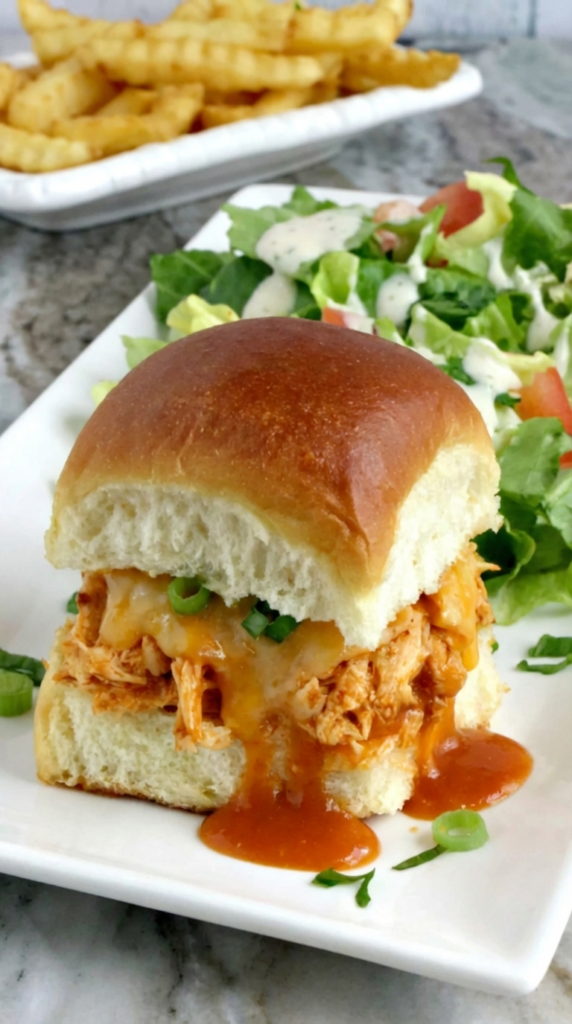
- Waffle fries or crinkle-cut fries — the most natural pairing for bang bang chicken sliders in a casual dining format
- Sweet potato fries — the sweetness of the sweet potato works with the sweet chili component of the bang bang sauce
- Onion rings — a textural complement to the crispy chicken coating
- Potato chips or kettle chips — for an effortless party spread
Lighter Accompaniments
- Asian cucumber salad with rice vinegar, sesame oil, and chili flakes
- Simple green salad with sesame ginger dressing
- Edamame with sea salt
- Mango salsa — the natural sweetness and acidity of fresh mango pairs remarkably well with the bang bang sauce flavor profile
- For more easy and delicious chicken recipes, explore our collection.
Drinks That Work Well
Bang bang chicken sliders pair well with drinks that have enough sweetness or effervescence to cut through the heat and richness of the sauce. Lemonade, iced tea, a light lager beer, or a wheat beer are all excellent choices. The carbonation in sparkling water or soda provides palate-cleansing contrast between bites. For a themed party, Thai iced tea served over ice is a natural pairing that mirrors the Thai-influenced flavor profile of the bang bang sauce.
Nutrition Estimate Per Serving
Based on 6 servings of 2 bang bang chicken sliders each, using the deep fry method. Values are estimates and will vary based on oil absorption during frying, specific brands used, and bun size.
| Nutrient | Amount Per Serving (2 sliders) |
| Calories | 520 kcal |
| Total Fat | 22g |
| Saturated Fat | 4g |
| Cholesterol | 85mg |
| Sodium | 780mg |
| Total Carbohydrates | 52g |
| Dietary Fiber | 2g |
| Total Sugars | 10g |
| Protein | 30g |
| Calcium | 80mg |
| Iron | 3mg |
Note: The air fryer method reduces total fat to approximately 14g and calories to approximately 430 kcal per serving due to significantly lower oil absorption. Using chicken thighs instead of breasts increases total fat by approximately 4g per serving with slightly higher calorie content.
Frequently Asked Questions About Bang Bang Chicken Sliders
What is bang bang sauce made of?
Bang bang sauce is made from four ingredients: mayonnaise, sweet chili sauce, sriracha, and honey or sugar. The standard ratio for bang bang chicken sliders is 1/2 cup mayonnaise, 1/4 cup sweet chili sauce, 1 to 2 tablespoons sriracha (adjusted to heat preference), and 1 tablespoon of honey. Whisk these together until smooth. The sauce is creamy, sweet, and spicy simultaneously — the mayonnaise provides the creamy base, the sweet chili sauce adds sweetness and body, the sriracha delivers heat, and the honey rounds and balances all the edges.
Can I make bang bang chicken sliders in an air fryer?
Yes. The air fryer method produces bang bang chicken sliders with excellent flavor and a reasonably crispy coating that is lower in fat than the deep-fried version. Preheat the air fryer to 400 F, coat the chicken as described, spray both sides generously with cooking spray, and air fry for 10 to 12 minutes at 400 F, flipping once at 6 minutes and re-spraying after the flip. The critical difference from deep frying is the generous oil spray — without it, the coating will be pale and dry rather than golden and crispy. The air fryer version is slightly less crunchy than deep-fried but the flavor difference is minimal.
How do I keep bang bang chicken sliders from getting soggy?
Three steps prevent soggy bang bang chicken sliders: use a double-dredge in the flour-cornstarch coating for extra thickness and crunch, drain fried pieces on a wire rack (never paper towels), and sauce just before serving rather than ahead of time. Toast the bun cut-surfaces in a dry pan before assembly to create a barrier against moisture transfer. For a party, keep the fried chicken and sauce separate and assemble in small batches every 10 to 15 minutes as they are consumed.
What is the best oil for frying bang bang chicken sliders?
The best oils for frying bang bang chicken sliders are neutral-flavored oils with a smoke point above 400 F: vegetable oil, canola oil, refined peanut oil, and refined sunflower oil are all excellent choices. Peanut oil produces the cleanest, most neutral fried flavor with no oil taste transferring to the coating. Avoid olive oil — its smoke point is too low for the 350 F to 375 F frying temperature required and its flavor is too pronounced for this application.
Can I make bang bang chicken sliders with chicken thighs?
Yes, and many cooks prefer the thigh version for bang bang chicken sliders. Boneless, skinless chicken thighs have more fat than breasts, which keeps them juicy even if cooked a minute longer than necessary. They produce bang bang chicken sliders with a richer, more savory meat flavor. Cut the thighs into pieces similar in size to the breast pieces, use the same buttermilk soak and dredging process, and fry at the same temperature. Check internal temperature — boneless thighs are done at 165 F but benefit from the same careful piece-size uniformity as breasts.
How far in advance can I make bang bang chicken sliders?
The bang bang sauce can be made up to 24 hours in advance and refrigerated. The chicken can be cut and soaked in buttermilk up to overnight in the refrigerator. The frying and assembly should be done as close to serving time as possible — ideally within 15 to 20 minutes of serving. If you must prepare further ahead, fry the chicken pieces up to 2 hours before serving and hold them on a wire rack in a 200 F oven, then sauce and assemble within 10 minutes of serving. Fully assembled bang bang chicken sliders do not hold well.
Is bang bang chicken spicy?
Bang bang chicken sliders made with 1 tablespoon of sriracha as written in this recipe have a mild to moderate heat level — noticeable, building heat that arrives a few seconds after the first bite, but not overwhelming for most adults. At 2 tablespoons of sriracha the heat is moderate to assertive. The sweet chili sauce and honey in the bang bang sauce moderate the heat of the sriracha, which is why bang bang sauce is broadly appealing — it reads as exciting and flavorful rather than aggressively spicy. Always taste and adjust the sauce before serving.
What buns work best for bang bang chicken sliders?
The best buns for bang bang chicken sliders are soft brioche slider rolls, King’s Hawaiian sweet rolls, and potato dinner rolls in slider size. All three have enough structure to hold sauced chicken without collapsing, and their slight sweetness complements the sweet chili component of the bang bang sauce. Always toast the cut surfaces of the buns before assembly to create a moisture barrier. Avoid very large rolls — the bun-to-chicken ratio is important in bang bang chicken sliders, and an oversized bun dilutes the sauce flavor with too much neutral bread.
Final Thoughts on Bang Bang Chicken Sliders
Bang bang chicken sliders work because every component earns its place. The buttermilk soak tenderizes and builds adhesion. The cornstarch-flour coating crisps in a way that flour alone cannot match. The bang bang sauce delivers three simultaneous flavor notes — creamy, sweet, spicy — that make the first bite interesting and every subsequent bite equally so. The slider format makes them accessible, portable, and crowd-friendly in a way that a plated chicken dish is not.
The technique details in this recipe — double dredge, thermometer discipline for oil temperature, wire rack drainage, saucing just before serving, toasting the buns — are not arbitrary. Each one addresses a specific failure point that produces a bang bang chicken slider that is worse than it should be. Learn the reasons behind each step and you will be able to adapt the recipe confidently.
Make the sauce a few hours ahead. Soak the chicken in buttermilk while the sauce rests. Double-dredge for extra crunch. Fry to amber-gold at consistent temperature. Sauce to order. Toast the buns.
Bang bang chicken sliders made this way are the ones people ask you to bring to the next gathering. They are the ones that disappear from the platter before anything else. Make them once with this recipe and they will be in your regular rotation from that point forward.
Follow me on Pinterest for more delicious recipes.