Chicken Parmesan Casserole That Fixes Every Problem With the Classic
Chicken Parmesan is one of the most beloved Italian-American dishes, but it is also one of the most time-consuming to make properly. Breading and frying individual chicken cutlets, building a sauce, layering everything in order — on a weeknight, that is often more effort than the result justifies. Chicken parmesan casserole solves every one of those problems without sacrificing a single thing that makes the original so good.
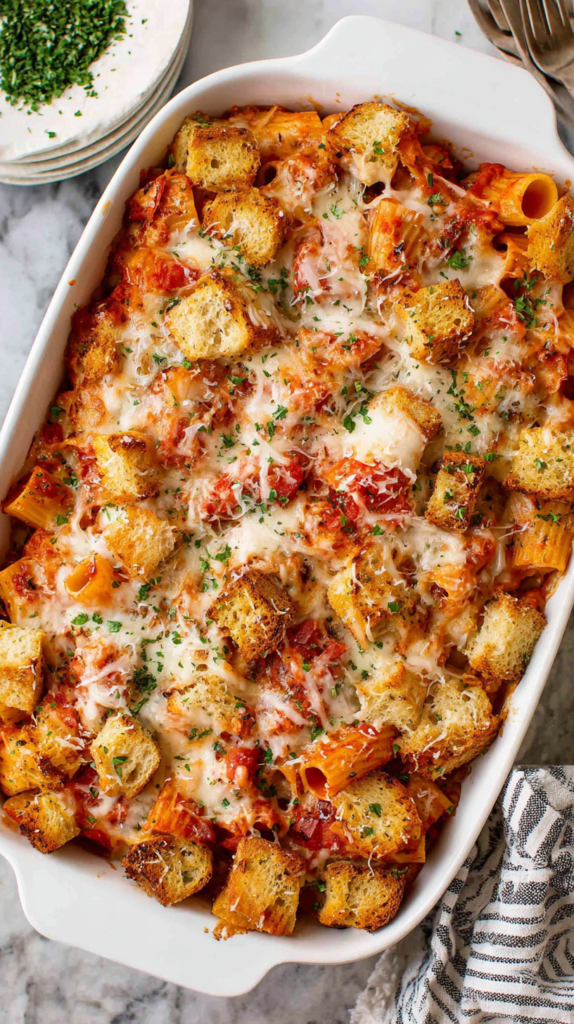
This chicken parmesan casserole combines shredded chicken, al dente pasta, rich marinara sauce, and a double layer of Parmesan and mozzarella in a single 9×13-inch baking dish. You get all the flavors of traditional chicken parmesan — the savory garlic-seasoned chicken, the tomato-forward sauce, the golden, bubbling cheese top — in a format that takes 15 minutes of active prep and comes out of the oven ready to feed eight people.
For more easy and delicious chicken recipes, explore our collection.
The most common problems home cooks run into with chicken parmesan casserole are watery sauce, overcooked pasta, and a cheese layer that turns rubbery instead of golden and stretchy. This recipe addresses all three with specific technique choices built directly into the steps.
Whether you are using leftover rotisserie chicken, prepping for a weeknight family dinner, feeding a crowd at a potluck, or building a meal prep batch for the week, this chicken parmesan casserole recipe is the most efficient path to a genuinely satisfying result. Follow the steps exactly, particularly the foil timing and the pasta cook level, and you will have a casserole that tastes like it took significantly more effort than it did.
This is the chicken parmesan casserole recipe that people ask for again. Make it once and it becomes part of your regular rotation.
Why This Chicken Parmesan Casserole Recipe Works
A chicken parmesan casserole can go wrong in several predictable ways. Understanding why this recipe avoids those pitfalls is what allows you to adapt it confidently.
Shredded Chicken Distributes Evenly
Traditional chicken parmesan uses whole or sliced breasts that sit in defined layers. In a chicken parmesan casserole, shredded chicken distributes throughout the pasta and sauce, ensuring that every serving contains a consistent amount of meat. There are no sections of the casserole that are heavy on chicken and light on pasta, or vice versa. Shredding also increases the surface area of the chicken so it absorbs the flavors of the marinara, garlic, and Italian seasoning during baking rather than remaining as a separate component in the dish.
Pre-Seasoning the Chicken Before Assembly
Heating the shredded chicken with garlic powder, Italian seasoning, salt, and pepper in a skillet before it goes into the casserole does something important: it drives the seasoning into the surface of the chicken through heat rather than relying on the bake time to do that work. Cold, unseasoned chicken added to a casserole dish remains bland at its core even after 40 minutes in the oven. Two minutes in a hot skillet with olive oil and seasoning changes that entirely.
Two-Cheese Strategy for Texture and Flavor
Parmesan and mozzarella serve different functions in a chicken parmesan casserole. Mozzarella melts into long, stretchy pulls and provides the creamy, mild dairy base that binds the casserole together. Parmesan does not melt in the same way — it browns, crisps slightly, and delivers the sharp, salty, nutty flavor that defines the dish. Using both cheeses in two layers — mixed into the casserole base and spread across the top — means you get Parmesan and mozzarella flavor integrated throughout the dish and a properly browned, golden crust on top.
Foil-On Then Foil-Off Baking Method
Covering the chicken parmesan casserole with foil for the first 30 minutes of baking traps steam inside the dish. That steam heats the casserole through to the center without drying out the top layer of cheese or causing the pasta near the surface to over-bake. Removing the foil for the final 10 minutes exposes the cheese top to direct oven heat, which produces the golden, bubbling, lightly browned surface that is the visual and textural signature of a well-made chicken parmesan casserole.
Slightly Undercooked Pasta Going In
The pasta in a chicken parmesan casserole continues cooking inside the oven for 40 minutes. If the pasta is fully cooked to package instructions before it goes into the baking dish, it will be mushy and broken down by the time the casserole is done. Cooking the pasta to just under al dente — about 1 to 2 minutes less than the package suggests — gives it the structural integrity to absorb sauce during baking without turning soft. This is the single most important technique in achieving a chicken parmesan casserole with pasta that has texture and bite rather than dissolving into the sauce.
Ingredients for Chicken Parmesan Casserole
This recipe makes 8 generous servings from a standard 9×13-inch baking dish. All quantities are exact. Do not adjust cheese quantities downward — the cheese-to-pasta ratio is calibrated for a casserole that is creamy throughout and properly browned on top.
The Core Casserole Ingredients
- 4 cups cooked chicken, shredded (approximately 1.5 lbs of boneless, skinless breast or thigh, or 1 standard rotisserie chicken)
- 2 cups marinara sauce (choose a thick, tomato-forward jar sauce or homemade)
- 1 cup grated Parmesan cheese, freshly grated from a block
- 2 cups shredded mozzarella cheese, freshly shredded from a block
- 2 cups cooked pasta — penne, rotini, or rigatoni work best
- 1 tablespoon olive oil
- 1 teaspoon Italian seasoning
- 1 teaspoon garlic powder
- Salt and black pepper to taste
- Fresh basil or flat-leaf parsley for garnish, optional
Key Ingredient Notes
Cooked Chicken: Rotisserie chicken is the most efficient source for this chicken parmesan casserole. One standard grocery store rotisserie chicken yields approximately 3.5 to 4 cups of shredded meat from the breast and thigh sections combined. The already-seasoned, slightly smoky flavor of rotisserie chicken adds depth to the casserole that plain poached chicken does not have. If cooking chicken specifically for this recipe, baking at 400 F for 20 to 22 minutes or poaching in lightly salted water produces the cleanest-tasting result. Chicken thighs are an excellent substitute for breasts — their higher fat content keeps the casserole moist even after extended baking time.
Marinara Sauce: The quality of the marinara sauce directly determines the flavor of the finished chicken parmesan casserole. Use a thick, chunky marinara with visible tomato pieces rather than a smooth, thin sauce — thin sauces make the casserole watery. Rao’s Homemade, Victoria, and Don Pepino are consistently recommended for their tomato concentration and flavor. If your preferred sauce seems thin, simmer it in a small saucepan for 5 to 8 minutes before using to reduce the water content. Homemade marinara is even better and worth the extra 20 minutes if you have them.
Parmesan Cheese: Use a block of Parmigiano-Reggiano or Grana Padano and grate it yourself. Pre-grated Parmesan in a can or a green shaker bottle contains cellulose and anti-caking agents that prevent it from melting properly and browning correctly on the surface of the chicken parmesan casserole. The difference in flavor between freshly grated Parmesan and the shelf-stable pre-grated product is substantial. Freshly grated Parmesan is nuttier, saltier, and more complex — it is worth buying the block every time.
Mozzarella Cheese: Buy a block of whole-milk, low-moisture mozzarella and shred it yourself. Whole-milk mozzarella has a higher fat content than part-skim, which means it melts more smoothly and browns more evenly on the casserole surface. Pre-shredded mozzarella bags contain cellulose anti-caking coatings that make the cheese resist melting and produce a stringy, uneven top rather than a cohesive, golden crust. Fresh mozzarella (the water-packed ball variety) is not suitable for this recipe — the high moisture content will make the chicken parmesan casserole watery.
Pasta Shape: Short pasta with ridges or tubes — penne, rotini, rigatoni, cavatappi — work best in chicken parmesan casserole because they trap sauce and cheese inside their structure and hold their shape during baking. Long pasta like spaghetti does not work well in a casserole format because it clumps and does not distribute evenly with the chicken and sauce. Rigatoni is particularly good because its wide tube interior captures pockets of marinara sauce in every bite.
Olive Oil: Used for heating the chicken in the skillet before assembly. Extra-virgin olive oil provides the best flavor. If you prefer a more neutral taste, light olive oil or avocado oil are acceptable substitutes.
Italian Seasoning: A pre-mixed blend of oregano, basil, thyme, rosemary, and marjoram. Using a blend provides the complete Italian herb profile without measuring six separate spices. Taste your blend before using — dried herb blends lose potency over time. If yours smells faint, use 1.5 teaspoons rather than 1 to ensure adequate herb flavor in the finished chicken parmesan casserole.
Required Equipment
You need a small number of tools to make chicken parmesan casserole well. None of them are specialized.
- 9×13-inch baking dish — glass or ceramic preferred; a 9×13 dish provides the right depth-to-surface ratio for a chicken parmesan casserole that cooks evenly and has a properly proportioned cheese-to-filling ratio. Metal baking pans also work but can cause the edges to brown faster than the center.
- Large skillet or saute pan — for heating and seasoning the shredded chicken before assembly. A 12-inch skillet gives you enough room to spread the chicken in an even layer so it heats and seasons uniformly.
- Large mixing bowl — for combining the pasta, sauce, and half the cheese before the chicken is added. The bowl needs to be large enough to hold the full casserole mixture for easy stirring.
- Box grater or rotary grater — for grating fresh Parmesan and shredding the mozzarella from the block. A food processor with a shredding disc is faster for large quantities.
- Aluminum foil — for covering the baking dish during the first phase of baking. The foil creates a sealed steam environment that cooks the casserole through without drying the surface.
- Large pot — for cooking the pasta to just under al dente before assembly.
- Instant-read thermometer — optional but useful for confirming the center of the chicken parmesan casserole has reached 165 F before serving, particularly important when using pre-cooked or refrigerated chicken.
Step-by-Step Instructions: How to Make Chicken Parmesan Casserole
Step 1: Preheat the Oven and Prepare the Baking Dish
- Set your oven to 375 F and allow it to fully preheat before the casserole goes in. An oven that has not fully reached temperature will require longer baking time and the foil-on and foil-off timing described below will be inaccurate.
- Lightly grease the inside of the 9×13-inch baking dish with cooking spray or a thin film of olive oil applied with a paper towel. Coat the bottom and sides. This prevents the pasta and cheese from sticking to the edges and makes cleanup significantly easier.
Step 2: Cook the Pasta to Just Under Al Dente
- Bring a large pot of heavily salted water to a rolling boil. The water should taste noticeably salty — this is the primary opportunity to season the pasta itself, and well-seasoned pasta is the difference between a chicken parmesan casserole that tastes fully developed and one that tastes flat.
- Add the pasta and cook for 1 to 2 minutes less than the minimum time on the package directions. For penne that instructs 11 to 12 minutes, cook for 9 to 10 minutes. The pasta should be tender enough to bite through but still have a firm, slightly chalky center when you test a piece. This undercooking is intentional — the pasta will finish cooking in the oven and absorb the surrounding sauce during baking.
- Drain the pasta thoroughly. Do not rinse it — the surface starch on the pasta helps the marinara sauce adhere. Toss the drained pasta with a very light drizzle of olive oil if it will be sitting for more than 5 minutes before going into the mixing bowl.
Chef’s Note: Pasta that is fully cooked before going into the casserole will be soft and broken down after 40 minutes in the oven. Undercooked pasta going in means perfectly textured pasta coming out. This step separates a good chicken parmesan casserole from a mushy one.
Step 3: Season and Heat the Chicken
- Heat the olive oil in a large skillet over medium heat until it shimmers — approximately 1 to 2 minutes.
- Add the shredded chicken to the skillet in an even layer. Sprinkle the garlic powder, Italian seasoning, salt, and black pepper evenly over the surface of the chicken.
- Stir the chicken to coat it thoroughly with the oil and spices. Continue cooking for 4 to 5 minutes, stirring occasionally, until the chicken is heated through and aromatic — you will smell the garlic and Italian herbs blooming in the hot oil. The chicken should not be browning or crisping at this stage, just warming and absorbing the seasoning.
- Remove the skillet from heat and set aside while you prepare the casserole base.
Step 4: Build the Casserole Base
- Pour the marinara sauce into the large mixing bowl.
- Add the drained, slightly undercooked pasta to the marinara sauce. Stir until every piece of pasta is coated with sauce.
- Add half of the grated Parmesan (1/2 cup) and half of the shredded mozzarella (1 cup) to the pasta and sauce mixture. Stir until the cheese is evenly distributed throughout. The residual heat from the pasta will begin to soften the cheeses slightly.
- Add the seasoned shredded chicken to the pasta mixture. Fold everything together until the chicken is evenly distributed throughout the pasta — no large pockets of chicken sitting on top and no sections of pasta with no chicken.
Chef’s Note: Folding rather than stirring aggressively helps the shredded chicken stay in distinct pieces rather than breaking down into a shredded mass that blurs with the pasta. Use a silicone spatula and turn the mixture from the bottom up rather than stirring in circles.
Step 5: Fill the Baking Dish
- Transfer the casserole mixture to the greased 9×13-inch baking dish. Use a spatula to spread it into an even layer across the dish, ensuring the chicken, pasta, and sauce are distributed uniformly from edge to edge and corner to corner.
- Press the mixture gently but firmly into the dish — you want the casserole to be compact enough that it heats through evenly and slices cleanly when served, not loosely piled so the edges dry out while the center stays cold.
Step 6: Add the Cheese Top
- Scatter the remaining shredded mozzarella (1 cup) evenly over the surface of the casserole in the baking dish. Distribute it in a thin, even layer that covers the entire surface — do not pile it in the center.
- Follow with the remaining grated Parmesan (1/2 cup), scattered evenly over the mozzarella layer. The Parmesan on top will brown and develop a slightly crispy, golden crust during the uncovered portion of the bake. This layer is what gives the chicken parmesan casserole its signature appearance and the slight texture contrast between the bubbling mozzarella and the browned Parmesan.
Step 7: Bake Covered
- Cover the baking dish tightly with aluminum foil. Crimp the edges down so the foil seals against the rim of the dish — this traps steam inside during baking and is essential for heating the casserole through to the center without the surface drying out.
- Place the covered baking dish in the center rack of the preheated 375 F oven. Bake for 30 minutes. At this point the casserole should be fully hot throughout and the cheese underneath the foil should be partially melted but not yet browned.
Step 8: Bake Uncovered for the Cheese Crust
- Carefully remove the foil from the baking dish. The steam that escapes when you peel back the foil will be very hot — pull the foil away from yourself to avoid a steam burn.
- Return the uncovered baking dish to the oven and bake for an additional 10 minutes. Watch the casserole during this phase. The mozzarella should be visibly bubbling across the entire surface and developing golden-brown spots, particularly at the edges where the heat is most concentrated. The Parmesan on top should be darker in color — a deep golden-brown, not pale — and slightly crispy to the touch.
- If the cheese is not sufficiently browned at 10 minutes, switch the oven to the broiler setting on HIGH for 2 to 3 minutes. Watch it continuously during broiling — the transition from perfectly golden to burned takes less than a minute under a broiler.
Chef’s Note: The visual target for a finished chicken parmesan casserole is a surface that looks like the top of a well-made lasagna: patches of deep golden-brown on the Parmesan, fully melted mozzarella with lighter golden areas, and the edges of the dish bubbling actively with sauce.
Step 9: Rest and Serve
- Remove the chicken parmesan casserole from the oven and set it on a heatproof surface. Do not serve it immediately — allow it to rest for 5 minutes uncovered. During this rest the internal temperature equalizes, the sauce thickens slightly as it cools from boiling, and the cheese sets enough to cut into clean portions.
- Scatter the fresh basil leaves or chopped flat-leaf parsley over the surface of the casserole just before serving. Add the garnish at the last moment — placing fresh herbs on a just-out-of-the-oven casserole wilts and darkens them within seconds.
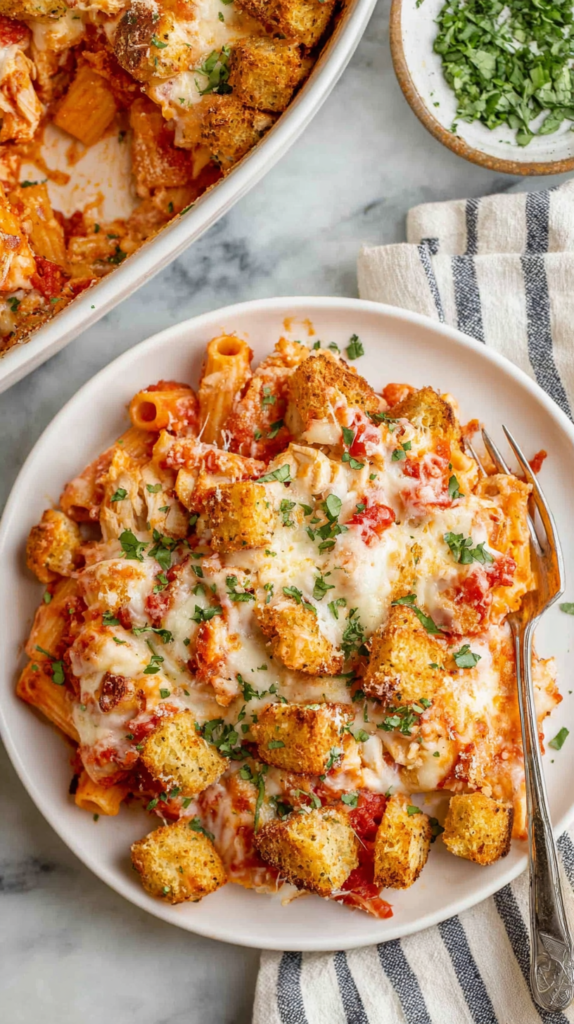
- Cut the chicken parmesan casserole into portions using a sharp spatula or serving spoon. Each serving should contain a balanced amount of pasta, chicken, sauce, and the browned cheese top.
Chef Sofia Renner Pro Tips for the Best Chicken Parmesan Casserole
Tip 1: Season the Pasta Water Heavily
The pasta cooking water is the one point in this chicken parmesan casserole recipe where you season the pasta itself rather than relying entirely on the sauce and cheese to carry flavor. Water that tastes like mild salt water will produce underseasoned pasta that tastes flat inside the casserole no matter how good the sauce is. The water should taste nearly as salty as a light broth. This is not a small detail — it is the foundation of a well-seasoned chicken parmesan casserole.
Tip 2: Use a Thick Marinara Sauce
Thin marinara sauce makes a watery chicken parmesan casserole. The pasta absorbs some liquid during baking, but not enough to compensate for a sauce that was already too thin before it went in. If your preferred jar sauce looks watery, pour it into a small saucepan and simmer over medium heat for 8 to 10 minutes before using. The reduced sauce will have a more concentrated tomato flavor and the finished casserole will have a tighter, more cohesive consistency.
Tip 3: Let the Casserole Rest Before Cutting
Cutting into a chicken parmesan casserole directly out of the oven produces portions that fall apart, sauce that runs across the plate, and cheese that slides off the top. The 5-minute rest period after baking allows the cheese to firm slightly, the sauce to thicken from boiling temperature to a more viscous serving temperature, and the entire casserole to set enough to hold its shape when portioned. This is a short wait with a disproportionate effect on the serving experience.
Tip 4: Rotisserie Chicken Is a Genuine Upgrade
Using rotisserie chicken in chicken parmesan casserole is not a shortcut that compromises quality. The roasted, slightly smoky flavor of rotisserie chicken adds a dimension to the casserole that plain poached chicken does not have. The skin-on cooking process also keeps the meat more moist than poaching, which means the shredded chicken stays juicier during the 40-minute bake. Pull the meat while it is still warm for the easiest shredding.
Tip 5: Mix Cheese Into the Base, Not Just on Top
Many chicken parmesan casserole recipes put all the cheese on top and rely on it to flavor the dish from above. This recipe mixes half the cheese directly into the pasta and sauce base, which means you get cheese flavor integrated throughout every bite rather than concentrated only in the top layer. The top cheese layer still develops the golden crust, but the interior of the casserole is equally cheesy rather than bland at the bottom.
Tip 6: Do Not Skip the Foil Cover
The foil cover during the first 30 minutes of baking is not optional. Without it, the surface cheese browns and dries out before the center of the chicken parmesan casserole reaches proper serving temperature. The foil traps steam, which heats the casserole from all sides simultaneously. Removing the foil for the final 10 minutes gives the cheese top the direct heat it needs to brown. Both phases are necessary for a casserole that is fully hot throughout with a properly golden, not overcooked, cheese surface.
Tip 7: Bloom Your Spices in the Skillet
Adding the garlic powder and Italian seasoning to the hot skillet with the olive oil and chicken — rather than sprinkling them cold into the casserole mixture — activates the volatile aromatic compounds in the dried spices. Heat-bloomed spices smell and taste dramatically more present than cold spices mixed into a bowl. The 4 to 5 minutes the seasoned chicken spends in the skillet is the most flavor-efficient step in the entire chicken parmesan casserole recipe.
Tip 8: Reserve Pasta Water as Insurance
Before draining the cooked pasta, scoop out 1/2 cup of the starchy pasta cooking water and set it aside. If the finished chicken parmesan casserole looks drier than you want after baking, drizzle 2 to 3 tablespoons of the reserved pasta water over the top before the foil goes on. The starch in pasta water helps the sauce re-emulsify and adds moisture without diluting flavor the way plain water would.
Tip 9: Fresh Basil Goes On at the End, Always
Fresh basil placed on a hot surface turns black and bitter within a minute. Always add fresh herb garnish to chicken parmesan casserole after the dish has been plated or served, not while it is still in the hot baking dish. If you want basil flavor cooked into the dish, add 1 teaspoon of dried basil to the skillet with the other spices in Step 3. Use fresh basil exclusively as a serving garnish for color and aroma.
Common Mistakes to Avoid When Making Chicken Parmesan Casserole
Mistake 1: Fully Cooking the Pasta Before Baking
This is the most common reason chicken parmesan casserole turns out mushy. Fully cooked pasta absorbs additional liquid and softens further during the 40 minutes it spends in the oven. The result is a casserole where the pasta has dissolved into the sauce rather than holding distinct, al dente pieces. Always pull the pasta 1 to 2 minutes before the package minimum and go into the oven with slightly underdone pasta. It will be perfectly cooked when the casserole is done.
Mistake 2: Using Pre-Shredded Bagged Cheese
Pre-shredded mozzarella and pre-grated Parmesan from bags and cans contain cellulose and potato starch coatings that resist melting. Pre-shredded mozzarella produces a rubbery, stringy top rather than a smooth, golden, stretchy melt. Pre-grated Parmesan in a can does not brown properly and lacks the sharp, nutty flavor of freshly grated Parmigiano-Reggiano. Buying blocks and grating your own takes 3 extra minutes and produces a visibly and noticeably better chicken parmesan casserole.
For more easy and delicious chicken recipes, explore our collection.
Mistake 3: Using Thin Marinara Sauce
A marinara sauce that is too thin results in a chicken parmesan casserole with a watery, soupy bottom layer that does not set during baking. Always check the consistency of your marinara before using it. It should be thick enough to coat the back of a spoon and hold that coating for several seconds. If it drips off immediately, reduce it before using.
Mistake 4: Skipping the Chicken Skillet Step
Adding raw-seasoned chicken directly to the casserole mixture without the skillet pre-cook step results in chicken that is seasoned only on the surface. The 4 to 5 minutes in a hot skillet drives the garlic, herbs, and salt into the muscle fibers of the chicken so the seasoning is present throughout every bite rather than just the outer layer. This step takes 6 minutes total and contributes more flavor to the finished chicken parmesan casserole than any other single step.
Mistake 5: Leaving Out the Foil
Baking the chicken parmesan casserole uncovered for the full 40 minutes dries out the cheese top, over-bakes the surface pasta, and frequently results in a casserole that is bubbling and overcooked at the edges while the center is still cool. The foil creates an even heat environment for the first 30 minutes. The final 10 minutes uncovered provides the browning. Skip the foil and you lose control of the balance between those two outcomes.
Mistake 6: Not Resting the Casserole
Serving chicken parmesan casserole directly from the oven without a rest period means the sauce is at boiling temperature, the cheese is still fully molten, and the portions will not hold their shape. Five minutes of resting changes all of that. The sauce thickens, the cheese firms slightly, and the portions cut cleanly. Resting is not optional — it is part of the recipe.
Mistake 7: Overloading With Sauce
Adding more marinara sauce than the recipe calls for is a common instinct when assembling a casserole — more sauce seems like more flavor. In practice, excess sauce makes the chicken parmesan casserole wet and prevents the pasta from absorbing the surrounding flavors properly during baking. The 2-cup measurement is calibrated for the amount of pasta and chicken in this recipe. If you want a saucier result, serve additional warmed marinara on the side rather than increasing what goes into the dish.
Variations and Substitutions for Chicken Parmesan Casserole
Chicken Parmesan Casserole With Breadcrumb Topping
For a texture and presentation that more closely resembles classic fried chicken parmesan, add a breadcrumb layer over the cheese before the uncovered baking phase. Mix 1/2 cup of Italian-style breadcrumbs with 2 tablespoons of melted butter and 2 tablespoons of freshly grated Parmesan. Scatter this mixture over the top of the mozzarella and Parmesan cheese layer immediately before removing the foil. The breadcrumbs toast to a golden, crunchy crust during the final 10 minutes and add the crunch that distinguishes traditional chicken parmesan from a standard pasta bake.
Spicy Chicken Parmesan Casserole
Add 1/2 teaspoon of crushed red pepper flakes to the chicken in the skillet during Step 3 and use an arrabbiata sauce (spicy tomato sauce with chilies) in place of standard marinara. The heat of the arrabbiata and the red pepper flakes builds gradually in the finished casserole without overwhelming the Parmesan and mozzarella flavors. Serve with additional red pepper flakes on the table for guests who want more heat.
Gluten-Free Chicken Parmesan Casserole
Substitute the regular pasta with a gluten-free penne or rotini. Most gluten-free pasta is made from corn, rice, or chickpea flour. Gluten-free pasta behaves slightly differently during baking — it tends to absorb sauce more aggressively than wheat pasta, which can result in a drier casserole if left unchecked. Slightly increase the marinara sauce to 2.5 cups when using gluten-free pasta to compensate for the additional absorption. All other ingredients in this chicken parmesan casserole recipe are naturally gluten-free.
Low-Carb Chicken Parmesan Casserole
Replace the pasta with zucchini cut into half-moons, cauliflower florets, or spaghetti squash strands. Zucchini and cauliflower release significant moisture during baking, so reduce the marinara sauce to 1.5 cups and consider patting the cut vegetables dry with paper towels before assembly. The finished casserole will be looser and less structured than the pasta version but carries the same chicken parmesan flavor profile. This version is significantly lower in carbohydrates and calories.
Extra Cheese Chicken Parmesan Casserole
For a more indulgent version, add an additional 1/2 cup of shredded provolone to the base mixture along with the mozzarella and Parmesan. Provolone melts smoothly, has a mild, slightly sharp flavor, and adds a stringiness to the interior of the casserole that reads as extra luxurious. A layer of thinly sliced fresh mozzarella placed on top of the shredded cheese layer before the uncovered bake also creates an impressive, restaurant-style presentation.
Chicken Parmesan Casserole With Vegetables
Saute 1 cup of diced bell peppers, 1 cup of sliced mushrooms, or 1 cup of diced zucchini in the olive oil before adding the chicken to the skillet in Step 3. Cook the vegetables until softened and any excess moisture has evaporated — approximately 4 to 5 minutes. Add the seasoned chicken to the skillet after the vegetables and proceed with the recipe as written. The vegetables add fiber, color, and a second flavor dimension to the chicken parmesan casserole without requiring any structural changes to the recipe.
Using Chicken Thighs
Boneless, skinless chicken thighs are an excellent substitute for chicken breasts in chicken parmesan casserole. Thighs have more fat and stay moister during the extended baking time. They also shred easily and have a richer, more savory flavor than breast meat. Use the same quantity — 4 cups shredded — and the same skillet seasoning method. The finished casserole will be noticeably juicier throughout.
Make-Ahead Chicken Parmesan Casserole
This chicken parmesan casserole can be fully assembled, covered tightly with plastic wrap, and refrigerated for up to 24 hours before baking. When ready to bake, remove the plastic wrap, cover with foil, and add 10 to 15 minutes to the covered baking phase (40 to 45 minutes covered rather than 30) to account for the casserole starting cold from the refrigerator. Proceed with the uncovered baking phase as written. This make-ahead capability is one of the most practical features of the chicken parmesan casserole format.
Dairy-Free Chicken Parmesan Casserole
Use a dairy-free mozzarella-style shredded cheese and a dairy-free Parmesan alternative, both of which are available at most grocery stores in the natural foods section. Dairy-free cheeses generally require slightly longer or slightly higher heat to melt than dairy cheese. Consider using the broiler for the final 3 to 4 minutes to ensure adequate browning on the surface of the dairy-free chicken parmesan casserole. The texture of the finished dish will be slightly different but the flavor profile remains recognizably chicken parmesan.
How to Store and Reheat Chicken Parmesan Casserole
Refrigerator Storage
Allow the baked chicken parmesan casserole to cool to room temperature — approximately 25 to 30 minutes. Cut into individual portions for easier reheating, or store the full casserole in the baking dish covered tightly with plastic wrap or foil. Refrigerate for up to 4 days. The casserole actually tastes slightly better on day two after the flavors have had time to meld overnight.
Freezer Storage
Chicken parmesan casserole freezes well both baked and unbaked. For baked casserole, allow it to cool completely, portion into individual servings, wrap tightly in plastic wrap and then foil, and freeze for up to 3 months. Unbaked chicken parmesan casserole can be assembled in the baking dish, covered tightly, and frozen directly — thaw overnight in the refrigerator before baking using the make-ahead timing described in the Variations section.
Reheating in the Oven
Preheat the oven to 350 F. Place the desired amount of chicken parmesan casserole in an oven-safe dish. Add 1 to 2 tablespoons of water or marinara sauce over the surface to restore moisture. Cover tightly with foil and heat for 20 to 25 minutes until hot throughout. Remove the foil for the final 5 minutes to re-crisp the cheese top. This method is the best for maintaining the original texture of the casserole.
Reheating in the Microwave
Place a single serving of chicken parmesan casserole in a microwave-safe bowl or plate. Add 1 tablespoon of marinara sauce or water over the top to prevent drying. Cover with a microwave-safe lid or damp paper towel. Heat at 70% power in 90-second intervals, stirring between intervals, until heated through. The cheese will not re-brown in the microwave, but the flavor remains fully intact. This method is best for quick single-serving reheating.
Reheating in a Skillet
For a single portion that retains some of the original cheese texture, place the chicken parmesan casserole serving in a non-stick skillet over medium-low heat. Add 2 tablespoons of water around the edges, cover with a lid, and heat for 5 to 7 minutes until heated through. The covered skillet environment re-steams the pasta and keeps the chicken moist. Remove the lid for the last minute to allow any excess moisture to evaporate.
What to Serve With Chicken Parmesan Casserole
Chicken parmesan casserole is a complete one-dish meal on its own, but the right accompaniments round out the dinner plate and balance the richness of the cheese and marinara.
Salads
- Caesar salad — the sharp, anchovy-forward dressing and crisp romaine provide textural and flavor contrast to the soft, rich chicken parmesan casserole
- Simple arugula salad with lemon vinaigrette and shaved Parmesan — the peppery bitterness of arugula and the brightness of the lemon dressing cut through the richness of the casserole
- Caprese salad — sliced fresh tomatoes, fresh mozzarella, and basil with olive oil and flaky salt echo the Italian flavor profile of the casserole without redundancy
- Mixed green salad with a light Italian vinaigrette
Bread
- Garlic bread — the most classic pairing for any Italian-American pasta or casserole dish; the crispy, butter-rich garlic bread is ideal for scooping up any marinara sauce that pools at the bottom of the serving
- Crusty Italian bread or ciabatta sliced and served warm
- Focaccia with rosemary and flaky salt — a more substantial bread option for larger gatherings
Vegetable Sides
- Roasted broccoli with garlic and olive oil — one of the most compatible vegetable sides for chicken parmesan casserole; the slight bitterness and caramelized edges of roasted broccoli complement the sweet marinara and salty Parmesan
- Sauteed spinach with garlic
- Roasted asparagus with lemon zest
- Steamed green beans with butter and salt
- For more easy and delicious chicken recipes, explore our collection.
Wine Pairing
Chicken parmesan casserole pairs well with medium-bodied red wines that complement the tomato-based marinara sauce and the savory Parmesan. Chianti Classico, Montepulciano d’Abruzzo, and Sangiovese-based wines all have sufficient acidity to cut through the fat of the cheese while complementing the Italian herb seasoning. For white wine, a full-bodied Pinot Grigio or a Vermentino from Sardinia provides enough structure to stand up to the richness of the casserole.
Nutrition Estimate Per Serving
Based on 8 servings from a standard 9×13-inch chicken parmesan casserole, using the exact quantities listed and whole-milk cheeses. Values are estimates and will vary based on specific ingredient brands, pasta shape, and exact chicken quantity.
| Nutrient | Amount Per Serving (1/8 of casserole) |
| Calories | 420 kcal |
| Total Fat | 18g |
| Saturated Fat | 8g |
| Cholesterol | 95mg |
| Sodium | 740mg |
| Total Carbohydrates | 32g |
| Dietary Fiber | 3g |
| Total Sugars | 5g |
| Protein | 36g |
| Calcium | 320mg |
| Iron | 3mg |
Note: Using chicken thighs instead of breasts increases total fat by approximately 4g per serving. The low-carb zucchini version reduces total carbohydrates to approximately 10g per serving with similar protein content.
Frequently Asked Questions About Chicken Parmesan Casserole
Can I make chicken parmesan casserole ahead of time?
Yes. Chicken parmesan casserole is one of the best make-ahead dinner recipes available. Assemble the full casserole in the baking dish, cover tightly with plastic wrap, and refrigerate for up to 24 hours before baking. When you are ready to cook, remove the plastic wrap, cover with foil, and add 10 to 15 extra minutes to the covered baking phase to account for the cold starting temperature. Finish uncovered as described in the recipe. The flavors actually improve slightly overnight as the pasta, sauce, and seasoning meld together in the refrigerator.
What kind of pasta works best for chicken parmesan casserole?
Short, tubular pasta with ridges works best in chicken parmesan casserole. Penne, rigatoni, rotini, and cavatappi are the top choices because their shape traps sauce and cheese inside and they hold their structure during baking. Rigatoni is particularly effective because the wide tube captures pockets of marinara in every bite. Avoid long pasta like spaghetti or linguine — they clump during baking and do not distribute evenly with the chicken and sauce. Whatever shape you choose, cook it to just under al dente before it goes into the casserole.
How do I prevent the chicken parmesan casserole from being watery?
Watery chicken parmesan casserole almost always comes from thin marinara sauce. Choose a thick, concentrated marinara with visible tomato pieces — not a thin, water-forward sauce. If your preferred sauce is thin, simmer it for 8 to 10 minutes before using to reduce the water content. Additionally, make sure the cooked pasta is well-drained before going into the casserole and that any vegetables you add have been cooked until their moisture has evaporated in the skillet.
Can I use raw chicken instead of pre-cooked?
This recipe is specifically designed for pre-cooked chicken. Raw chicken does not cook through evenly in a casserole format in the time this recipe calls for, and the moisture released by raw chicken as it cooks inside the casserole will make the dish watery and dilute the flavor of the sauce. If you only have raw chicken, bake it at 400 F for 20 to 22 minutes or poach it in simmering water for 15 to 18 minutes before shredding and proceeding with the recipe. Rotisserie chicken is the most convenient and flavorful pre-cooked option.
Why is my cheese on top rubbery instead of golden?
Rubbery cheese on top of a chicken parmesan casserole is almost always caused by using pre-shredded bagged mozzarella. Pre-shredded cheese contains anti-caking coatings that prevent it from melting smoothly and browning correctly. Always shred mozzarella from a whole-milk, low-moisture block immediately before using. Additionally, make sure you are removing the foil for the final 10 minutes of baking — cheese cannot brown while covered. If the cheese is still pale after 10 uncovered minutes, use the broiler on HIGH for 2 to 3 minutes while watching constantly.
How many servings does chicken parmesan casserole make?
This recipe makes 8 generous servings from a 9×13-inch baking dish. For a crowd of more than 8 people, the recipe doubles cleanly — use two separate 9×13-inch dishes rather than trying to fit double the quantity in a deeper pan. Baking time remains the same for both dishes baked side by side on the same oven rack.
Can I freeze chicken parmesan casserole?
Yes, both baked and unbaked. For baked casserole, cool completely, portion into individual servings, wrap each portion in plastic wrap and then foil, and freeze for up to 3 months. Reheat from frozen in a 350 F oven for 35 to 40 minutes covered with foil. For unbaked casserole, assemble fully in the baking dish, cover tightly with two layers of plastic wrap and one layer of foil, and freeze for up to 2 months. Thaw overnight in the refrigerator before baking using the make-ahead timing in the Variations section.
What is the difference between chicken parmesan casserole and regular chicken parmesan?
Classic chicken parmesan consists of breaded, pan-fried or baked chicken cutlets topped with marinara sauce and melted cheese, typically served over or alongside spaghetti. Chicken parmesan casserole uses shredded cooked chicken without any breading and combines the chicken, pasta, sauce, and cheese together in a single baking dish. The casserole format eliminates the breading and frying steps, scales easily for a crowd, and produces a dish where every serving contains a consistent amount of all components. The flavors are essentially identical — the format is what changes.
Final Thoughts on Chicken Parmesan Casserole
Chicken parmesan casserole is one of those recipes that earns its place in a regular weeknight rotation because it delivers genuinely good food without requiring genuinely difficult technique. The active prep time is 15 minutes. The rest is oven time.
The details that separate a great chicken parmesan casserole from an average one are not complicated. Undercook the pasta by 2 minutes. Season the chicken in a hot skillet rather than cold. Mix half the cheese into the base instead of putting all of it on top. Cover the baking dish for most of the cook time, remove the foil at the end. Rest it before cutting.
Every one of those steps is straightforward. Together they produce a chicken parmesan casserole that has al dente pasta, juicy, well-seasoned chicken, rich tomato sauce, and a golden, properly browned cheese crust that holds its shape when you cut it.
Make it on a weeknight when you need dinner for a crowd with minimal effort. Make it ahead on a Sunday for easy meals through the week. Bring it to a potluck and expect to be asked for the recipe. It is the kind of dish that consistently delivers more than the effort it requires.
Follow me on Pinterest for more delicious recipes.