Juicy Orange Chicken Thighs Recipe That Never Fail
Orange chicken thighs recipes have a reputation problem. Most home cooks end up with one of two disasters: pale, rubbery chicken swimming in a watery sauce that never sticks, or dry, overcooked meat underneath a burnt sugar crust. Neither version earns a spot in the weekly rotation.
For more easy and delicious chicken recipes, explore our collection.
This guide fixes both problems. You will get oven-baked orange chicken thighs with skin that crisps properly, a glaze that thickens into a glossy, sticky coat, and meat that stays juicy all the way to the bone. No deep-frying. No complicated techniques. Just reliable results every single time.
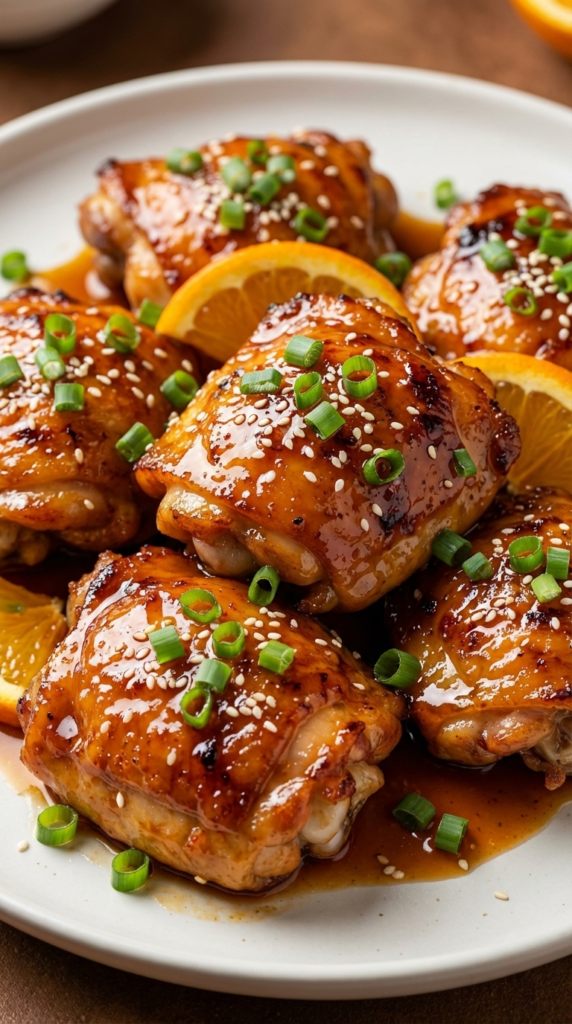
The orange chicken thighs recipe below is built around bone-in, skin-on thighs because fat content and bone structure protect against drying out at high heat. The marinade doubles as a basting sauce, concentrating as it roasts into a caramelized orange glaze that coats every surface. Whether you are cooking for a Tuesday night dinner or a weekend gathering, this is the sticky orange chicken thigh recipe that earns repeat requests.
Keep reading for ingredient breakdowns, step-by-step instructions with sensory markers, chef tips, common mistakes, variations for different diets, storage guidance, and a full FAQ section. Everything you need to make orange baked chicken thighs that rival any restaurant version.
Why This Orange Chicken Thighs Recipe Works
Understanding the mechanics behind a recipe helps you troubleshoot and adapt it confidently. Here is why this specific formula consistently produces results.
Bone-In Thighs Are the Right Cut
Bone-in, skin-on chicken thighs contain significantly more intramuscular fat than breasts. That fat renders during roasting, basting the meat from the inside. The bone acts as an insulator, slowing heat penetration and reducing the risk of overcooking. Orange chicken thighs baked this way stay tender at 400 degrees Fahrenheit without constant monitoring.
The Marinade-to-Glaze Technique
Splitting the marinade into two portions is the key move. Three-quarters goes into the marinating bag, where citric acid from the orange juice begins to tenderize the protein. The reserved quarter gets brushed on mid-bake, adding a fresh citrus layer on top of the already-caramelizing base. The result is a multi-dimensional sticky orange glaze, not a flat, one-note sweetness.
High Heat Creates the Maillard Reaction
Roasting at 400 degrees Fahrenheit produces both the Maillard reaction on the skin and caramelization of the brown sugar glaze simultaneously. These are two chemically distinct browning processes that together create the complex, roasted flavor in a great baked orange chicken thigh. Lower temperatures produce neither effect efficiently.
Resting Locks in Juices
Cutting into chicken immediately after pulling it from the oven pushes all the accumulated juices out onto the cutting board. A five-minute rest allows muscle fibers to relax and reabsorb the liquid, meaning every bite of your orange chicken thighs stays moist.
Ingredients for Orange Chicken Thighs
These quantities serve four people with generous portions. Scale up proportionally for larger batches.
For the Chicken
- 4 bone-in, skin-on chicken thighs (approximately 2.5 lbs / 1.1 kg total)
- 1 teaspoon kosher salt
- 1/2 teaspoon black pepper
For the Orange Marinade and Glaze
- Zest of 1 large orange (about 1 tablespoon)
- 1/2 cup freshly squeezed orange juice (from 2-3 large oranges)
- 3 tablespoons rice vinegar
- 4 tablespoons brown sugar (light or dark)
- 3 tablespoons low-sodium soy sauce
- 1 teaspoon ground ginger
- 1/2 to 1 teaspoon red pepper flakes (adjust to heat preference)
- 3 cloves garlic, minced
- 1 tablespoon cornstarch (optional, for a thicker pan glaze)
Optional Garnishes
- Sliced green onions
- Toasted sesame seeds
- Thin orange slices
By Chef Marcus Lane | Prep: 15 min | Cook: 45 min | Total: 1 hr | Serves: 4
| Prep Time | 15 minutes |
| Cook Time | 40-45 minutes |
| Total Time | 1 hour (plus 30 min marinade) |
| Servings | 4 |
| Difficulty | Easy |
| Cuisine | American-Asian Fusion |
| Method | Baked / Oven-Roasted |
| Best For | Weeknight dinner, meal prep, family meals |
For more easy and delicious chicken recipes, explore our collection.
Key Ingredient Notes
Chicken thighs: Higher fat content keeps the meat juicy during baking. Pat them thoroughly dry with paper towels before marinating. This removes surface moisture that would otherwise steam the skin instead of crisping it. For boneless orange chicken thighs, reduce total bake time by 8 to 10 minutes.
Orange zest: This is the most aromatic component of the entire recipe. The essential oils in orange zest are far more concentrated than juice. Use a microplane grater and stop before you hit the white pith, which is bitter. Roll the orange firmly on the counter before zesting to break up the oil cells and increase yield.
Orange juice: Fresh-squeezed provides cleaner, brighter acidity than carton juice. If using store-bought, choose a pulp-free variety. Pulp creates a gritty texture in the finished glaze. Avoid orange juice from concentrate, which has a flat, cooked flavor.
Rice vinegar: The mild sweetness and low acidity of rice vinegar balance the richness of the chicken without overwhelming the citrus. Seasoned rice vinegar (which already contains sugar and salt) can replace plain rice vinegar plus one tablespoon of brown sugar.
Brown sugar: Brown sugar does two things: it sweetens the sauce and its molasses content promotes deep caramelization. Dark brown sugar gives a richer, slightly more complex glaze. For a less sweet orange chicken thigh recipe, reduce to 3 tablespoons.
Soy sauce: Low-sodium soy sauce gives you control over salt levels. Full-sodium versions will make the glaze too salty as it reduces and concentrates during baking. Tamari is a gluten-free substitute with nearly identical flavor.
Ground ginger: Adds warmth and slight spice that complements the citrus. Fresh grated ginger (1 tablespoon) delivers more pungency if you prefer a bolder flavor profile. Both work in this orange chicken thighs marinade.
Red pepper flakes: Start with 1/2 teaspoon for mild heat. Go to 1 teaspoon for medium. At 1.5 teaspoons, you get a genuinely spicy-sweet orange chicken thigh that will clear sinuses pleasantly. Toasting the flakes in a dry pan for 30 seconds before adding them to the marinade deepens their smoky, fruity heat.
Required Equipment
- Rimmed baking sheet (half-sheet pan): The rim prevents marinade from dripping onto the oven floor and causing smoke.
- Parchment paper or aluminum foil: Prevents sticking and makes cleanup fast.
- Wire rack (optional but recommended): Elevating the thighs allows heat to circulate underneath, producing crispier skin on orange chicken thighs.
- Microplane or fine zester: Essential for getting orange zest without bitter pith.
- Resealable plastic bag or shallow dish: For marinating.
- Instant-read thermometer: The only reliable way to confirm chicken thighs reach 165 degrees Fahrenheit internally.
- Pastry brush or spoon: For basting with reserved marinade mid-bake.
Step-by-Step Instructions: Baked Orange Chicken Thighs
Step 1: Make the Orange Marinade
Combine orange zest, orange juice, rice vinegar, brown sugar, soy sauce, ground ginger, minced garlic, and red pepper flakes in a medium bowl. Whisk until the brown sugar fully dissolves. The mixture should smell immediately bright and aromatic, with citrus and ginger hitting first, followed by a warm, savory depth from the soy sauce.
Taste the marinade now. This is your only opportunity to adjust seasoning before it goes on raw chicken. Add more red pepper flakes for heat, another teaspoon of brown sugar for sweetness, or a splash more orange juice for brightness.
Reserve one quarter of the marinade in a separate small bowl. Cover it and refrigerate. This portion will become your basting glaze.
Step 2: Prepare and Marinate the Chicken Thighs
Pat each chicken thigh completely dry with paper towels, pressing firmly against both the skin side and the underside. Any remaining moisture will steam the skin during roasting instead of crisping it. Season lightly with salt and black pepper on both sides.
Place the chicken thighs in a resealable bag or shallow baking dish. Pour the larger portion of marinade over the chicken. Massage gently through the bag to ensure complete, even coating. Seal tightly, pressing out air.
Refrigerate for at least 30 minutes. For deeper flavor penetration and more tender orange chicken thighs, marinate for 4 to 6 hours. The maximum is 24 hours. Beyond that, the citric acid begins to break down the meat texture in an unpleasant way.
Step 3: Preheat the Oven and Prep the Pan
Remove chicken from the refrigerator 15 minutes before baking. Cold chicken placed directly in a hot oven cooks unevenly, with exterior overcooked before the interior reaches temperature.
Preheat your oven to 400 degrees Fahrenheit (200 degrees Celsius). Line a rimmed baking sheet with parchment paper or foil. Place a wire rack on top of the lined sheet for best results. Lightly oil the rack.
Lift each thigh out of the marinade, allowing excess to drip off briefly, and arrange skin-side up on the rack. Do not crowd the pan. Crowding causes steam to accumulate and prevents the skin from crisping on your orange baked chicken thighs.
Step 4: First Roast
Place the pan on the center rack of the preheated oven. Roast uncovered for 25 minutes without opening the oven. The skin will begin to render its fat and turn golden. The marinade coating will start to caramelize and darken around the edges of the pan.
At the 25-minute mark, the skin should be pale golden and the glaze around the thighs a dark amber. This is normal and correct. The sugar in the marinade caramelizes before the chicken fully cooks.
Step 5: Baste and Finish Baking
Pull the pan from the oven. Brush or spoon the reserved marinade generously over the top and sides of each chicken thigh. Work quickly to keep oven temperature from dropping.
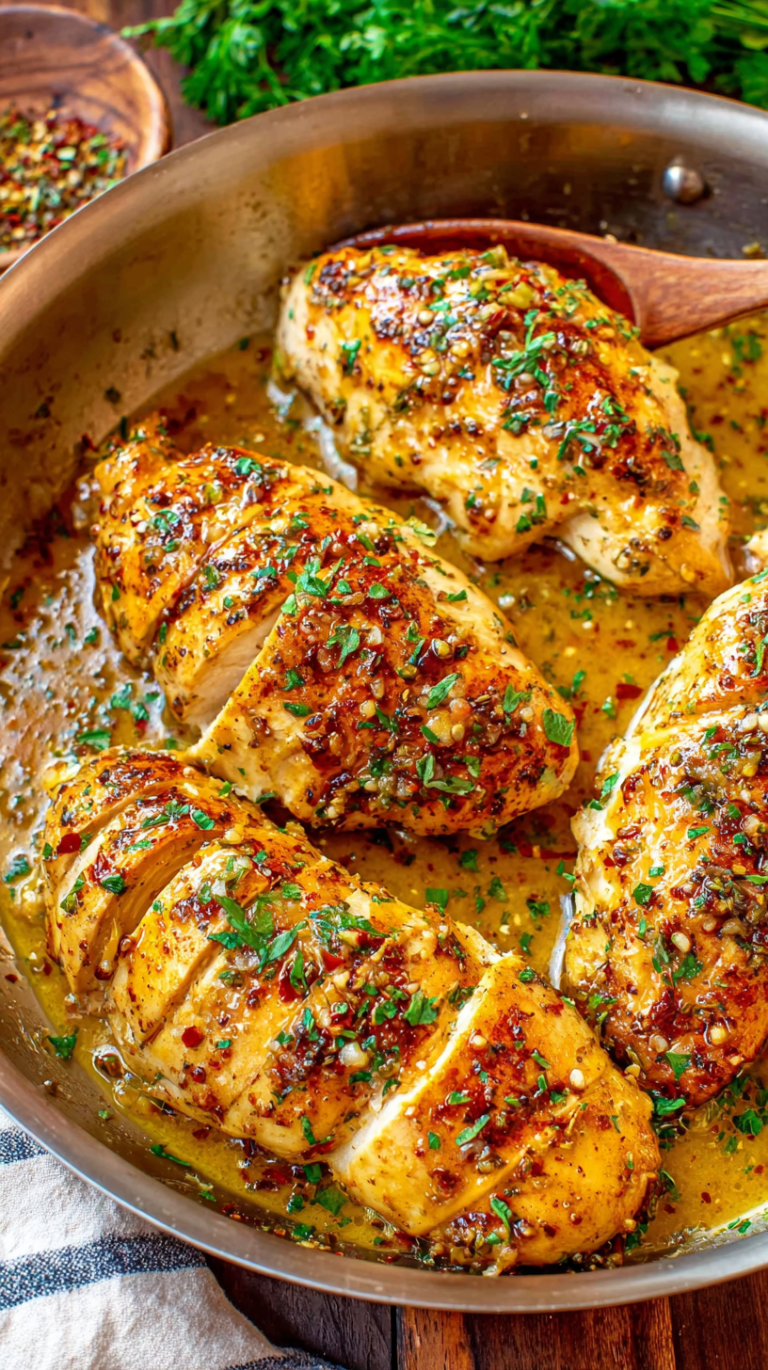
Return to the oven and continue roasting for 15 to 20 more minutes. The chicken is done when the internal temperature reads 165 degrees Fahrenheit at the thickest part of the thigh, not touching bone. The skin should be deep golden-brown, lacquered, and pulling slightly away from the meat at the edges.
For the crispiest possible skin on your orange chicken thighs, switch the oven to broil for the final 2 to 3 minutes. Watch constantly. The difference between perfectly blistered skin and burnt chicken is about 60 seconds under a broiler.
Step 6: Rest and Serve
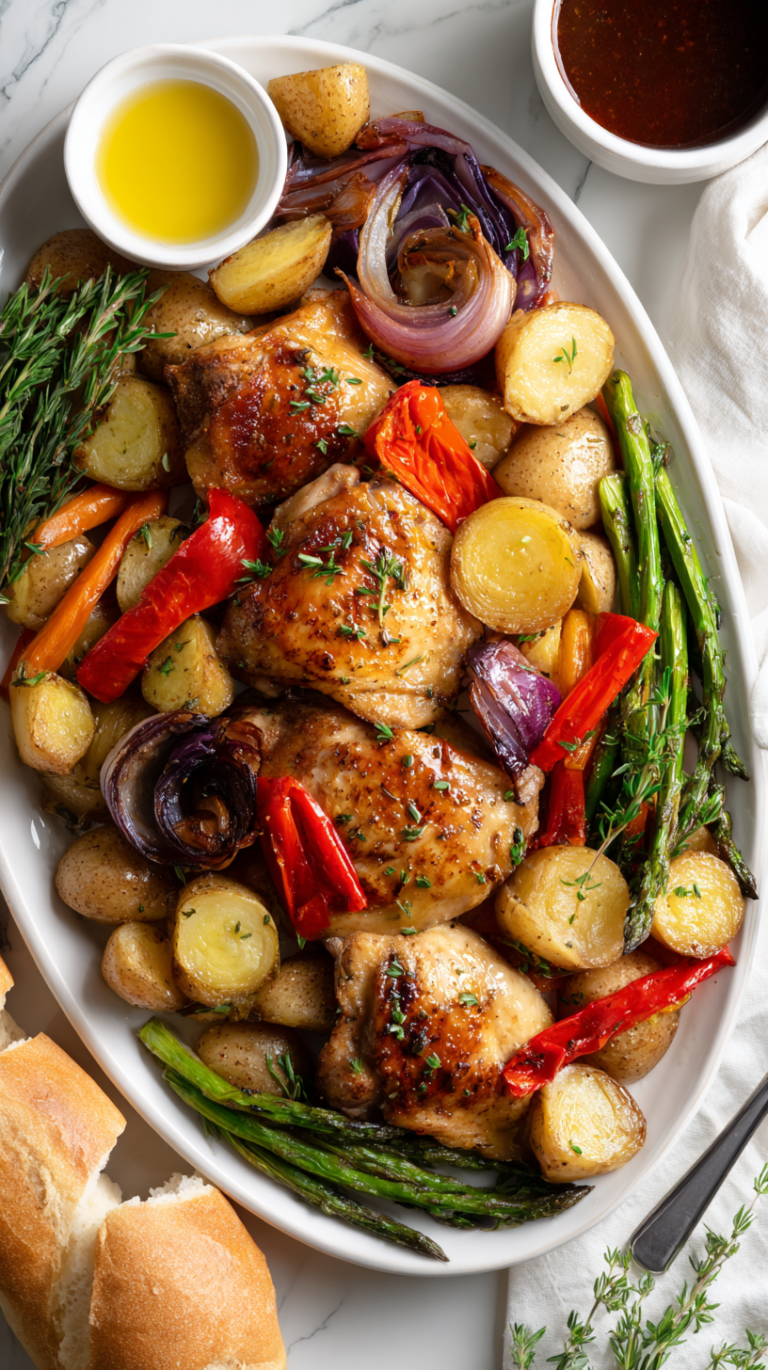
Transfer the baked orange chicken thighs to a serving plate or cutting board. Let them rest for 5 minutes before serving. During this time, the internal juices redistribute and the glaze firms up into a sticky, glossy coat.
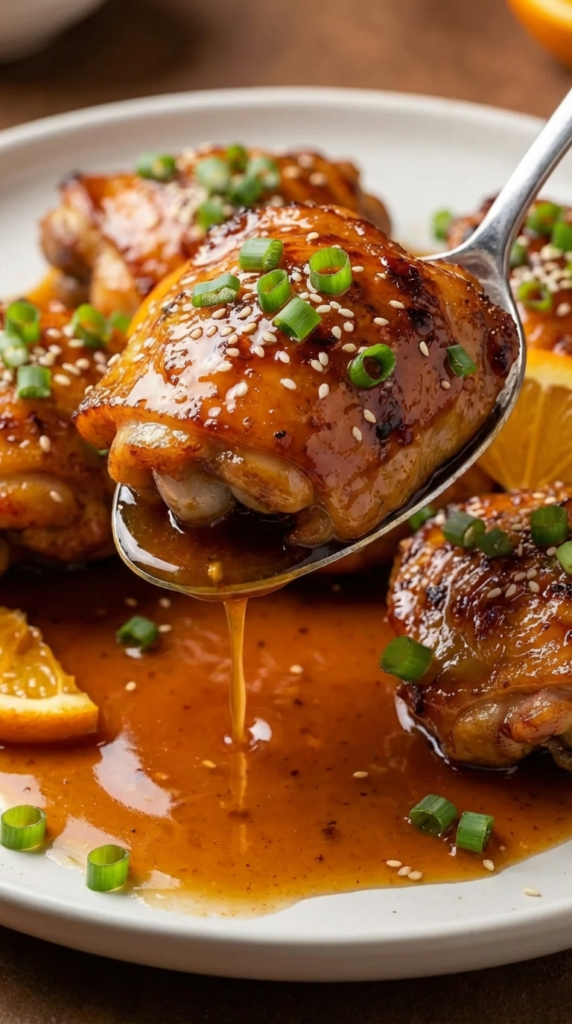
Spoon any pan drippings over the top. These drippings are concentrated orange glaze mixed with rendered chicken fat. They are intensely flavorful and should not be wasted. Garnish with green onions and sesame seeds if desired.
Chef Marcus Lane’s Pro Tips for Perfect Orange Chicken Thighs
Use a wire rack every time: The single most impactful change you can make to this recipe is elevating the chicken off the pan. Direct contact with the baking sheet creates a steamed, soft underside. On a rack, hot air circulates completely around each thigh, crisping the skin on all exposed surfaces.
Do not skip patting dry: Moisture on chicken skin is the enemy of crispiness. Even after marinating, briefly blot the skin-side with a paper towel before placing on the rack. You will keep the flavored coating without the surface water that causes steaming.
Bring the chicken to room temperature: Fifteen minutes on the counter before baking narrows the temperature gap between the outside and inside of the meat. This produces more even cooking throughout your orange chicken thighs.
For more easy and delicious chicken recipes, explore our collection.
Toast spices when intensity matters: If you want the red pepper flakes and ginger to come forward more aggressively, toast them briefly in a dry pan over medium heat before adding to the marinade. The dry heat volatilizes their aromatic compounds, amplifying both heat and complexity.
Save the pan drippings: After the chicken rests, the baking sheet will have dark, caramelized orange glaze pooled around the edges. Scrape this up and pour it over the finished chicken. It is more concentrated and flavorful than anything you can add at the table.
Add cornstarch for restaurant-style thickness: Whisk one tablespoon of cornstarch into the reserved basting marinade before applying it at the 25-minute mark. This accelerates the sauce’s transition from thin liquid to glossy, clingy glaze during the second half of baking. This is how Chinese-American takeout orange chicken achieves that distinctive lacquered look.
Rest uncovered, not under foil: Tenting the chicken with foil during resting traps steam, which softens the skin you worked to crisp. Rest uncovered in a warm spot.
Marinate overnight when time allows: The difference between a 30-minute marinade and an overnight marinade is noticeable. Extended marinating drives flavor deeper into the meat and the longer exposure to citric acid tenderizes the thighs further. This is the approach for meal-prepped orange chicken thighs prepared the night before serving.
Common Mistakes to Avoid
Mistake 1: Skipping the Pat-Dry Step
This is the most frequently skipped instruction in any skin-on chicken recipe. Surface moisture produces steam in the oven, which softens skin instead of crisping it. Even five seconds with a paper towel makes a measurable difference in your finished orange chicken thighs.
Mistake 2: Marinating Longer Than 24 Hours
Orange juice is moderately acidic. Beyond 24 hours in an acid-based marinade, the texture of chicken thigh meat begins to turn mushy and chalky on the exterior. Flavor gains plateau after 8 hours anyway. Set a timer.
Mistake 3: Overcrowding the Pan
Chicken releases moisture as it cooks. When pieces are packed together, that moisture has nowhere to go and the surrounding air becomes saturated with steam. Each orange chicken thigh needs at least one inch of clear space on all sides. Use two pans if needed rather than crowding.
Mistake 4: Not Using a Thermometer
Color and timing are approximate indicators. An instant-read thermometer is exact. Chicken thighs at 165 degrees Fahrenheit are safe and juicy. At 175 to 180 degrees, they are overcooked regardless of how good the glaze looks. Buy a reliable thermometer and use it every time.
Mistake 5: Using High-Sodium Soy Sauce Without Adjusting
As the marinade reduces and caramelizes in the oven, salt concentrates. A marinade made with regular soy sauce that tastes balanced in the bowl will become noticeably salty by the time it has reduced into a glaze. Low-sodium soy sauce solves this without requiring formula adjustments.
Mistake 6: Skipping the Basting Step
The reserved marinade brushed on at the 25-minute mark creates a second caramelization layer. Recipes that skip this produce a thinner, less glossy orange glaze. The basting step is what distinguishes a restaurant-quality orange chicken thigh from a home version.
Mistake 7: Cutting into the Chicken Immediately
Cutting into chicken right out of the oven causes juices to run out onto the board, leaving drier meat. A five-minute rest is not optional. It is the step that keeps your orange baked chicken thighs juicy rather than dry at the center.
Variations and Substitutions
Boneless Skinless Orange Chicken Thighs
Remove the skin and bone for a leaner version. Reduce total bake time to 25 to 30 minutes at 400 degrees Fahrenheit. Watch the internal temperature carefully since boneless thighs cook faster and have less fat to protect against drying out. The glaze on boneless orange chicken thighs will be thinner because there is no rendered skin fat to emulsify with the caramelized marinade.
Spicy Orange Chicken Thighs
Increase red pepper flakes to 1.5 teaspoons and add one teaspoon of sriracha or sambal oelek to the marinade. For a deeper, smokier heat, substitute one teaspoon of gochugaru (Korean chili flakes) for the standard red pepper flakes. Spicy orange chicken thighs pair particularly well with plain steamed rice, which moderates the heat.
Honey Orange Chicken Thighs
Replace brown sugar with an equal volume of raw honey. Honey creates a slightly different glaze texture, more prone to sticking and caramelizing quickly. Watch closely during the final 10 minutes and reduce oven temperature slightly to 375 degrees Fahrenheit to prevent the honey glaze from burning.
Slow Cooker Orange Chicken Thighs
Pour the full marinade over chicken thighs in the slow cooker. Cook on low for 6 to 7 hours or high for 3 to 4 hours. The skin will not crisp in a slow cooker. For texture contrast, transfer cooked thighs to a foil-lined baking sheet and broil for 3 to 4 minutes after slow cooking. The braising liquid can be reduced in a saucepan over medium-high heat until thickened into a drizzling sauce.
Air Fryer Orange Chicken Thighs
Marinate exactly as directed. Preheat the air fryer to 380 degrees Fahrenheit. Cook bone-in thighs for 22 to 25 minutes, flipping once at the 12-minute mark and basting with reserved marinade. Air fryer orange chicken thighs achieve excellent skin crispiness while using significantly less oven space. Check temperature at 20 minutes.
Gluten-Free Orange Chicken Thighs
Replace soy sauce with tamari or coconut aminos in equal measure. Both are naturally gluten-free. Coconut aminos is slightly sweeter and less salty than tamari, so reduce brown sugar by one tablespoon when using it. Verify that your rice vinegar is gluten-free certified, as some brands process in shared facilities.
Sheet Pan Meal Version
Arrange broccoli florets, sliced bell peppers, and snap peas around the chicken thighs on the same baking sheet. Toss the vegetables in two tablespoons of the marinade before adding to the pan. The vegetables roast alongside the chicken and absorb the orange glaze as it bubbles and spreads. Dinner and sides in a single pan.
Storage and Reheating
Refrigerator Storage
Cool the orange chicken thighs to room temperature before storing, but do not leave them out longer than two hours. Transfer to an airtight container and refrigerate. Properly stored orange baked chicken thighs last 3 to 4 days in the refrigerator.
The glaze will firm up significantly when chilled. This is normal. It melts back down during reheating.
Freezer Storage
Orange chicken thighs freeze exceptionally well due to their higher fat content. Place cooled thighs in a freezer-safe container or zip bag, pressing out as much air as possible. Label with the date. They keep well for up to 3 months frozen. For best texture, freeze thighs and pan sauce separately.
Reheating in the Oven (Best Method)
Preheat oven to 350 degrees Fahrenheit. Arrange thighs on a baking sheet, skin-side up. Add a tablespoon of water or chicken broth to the bottom of the pan to create a small amount of steam, which prevents the meat from drying out. Cover loosely with foil for the first 10 minutes, then uncover for the final 5 minutes to re-crisp the skin. Total reheat time is about 15 minutes.
Reheating in the Air Fryer
Set the air fryer to 350 degrees Fahrenheit. Reheat orange chicken thighs for 5 to 6 minutes until heated through and skin is crispy again. This method best preserves the texture of the original dish.
Reheating in the Microwave
The microwave is the fastest method but softens the skin. Place thighs on a microwave-safe plate with a damp paper towel over the top. Reheat in 60-second intervals at 70 percent power until hot throughout. Accept that the skin will not be crispy using this method.
Serving Suggestions for Orange Chicken Thighs
Classic Pairings
- Steamed jasmine rice: The neutral base absorbs the orange glaze that pools on the plate. Use long-grain jasmine for its fragrant aroma, which complements the citrus in the glaze.
- Garlic fried rice: A more substantial base that adds its own flavor. Make it a day ahead using day-old rice for the best texture.
- Stir-fried bok choy: The mild bitterness of bok choy contrasts the sweetness of the orange glaze. Cook in a hot wok with garlic and a splash of soy sauce for 3 minutes.
- Steamed broccoli: Simple steamed broccoli works well because it does not compete with the bold glaze flavors. The broccoli can be tossed with a small spoonful of pan drippings from the orange chicken thighs.
For a Complete Sheet Pan Meal
- Roasted asparagus: Toss spears with olive oil and salt, arrange around the chicken during the last 15 minutes of baking.
- Sugar snap peas: Add during the final 10 minutes. They stay crisp and absorb residual orange glaze from the pan.
Garnishes That Add Value
- Toasted sesame seeds: Add a nutty crunch that contrasts the sticky glaze texture.
- Thinly sliced green onions: Provide freshness and a mild allium bite that cuts through the richness of the glaze.
- Thin orange slices or zest curls: Reinforce the visual connection to the flavor of the dish.
- Thinly sliced red chili: For heat-lovers, fresh chili adds both color contrast and sharper heat than red pepper flakes.
Nutrition Estimate Per Serving
The following is an estimate based on one bone-in chicken thigh with glaze. Actual values vary depending on exact size of thighs, amount of glaze consumed, and specific brands used.
| Nutrient | Amount Per Serving |
| Calories | ~385 kcal |
| Protein | ~32g |
| Total Fat | ~18g |
| Saturated Fat | ~5g |
| Carbohydrates | ~22g |
| Sugar | ~17g |
| Sodium | ~620mg |
| Fiber | ~0.3g |
To reduce calories: use boneless skinless orange chicken thighs and reduce brown sugar to 2 tablespoons. Sodium can be reduced by switching to coconut aminos in place of soy sauce.
Frequently Asked Questions About Orange Chicken Thighs Recipes
Can I use chicken breasts instead of thighs in this orange chicken recipe?
Yes, chicken breasts work in this orange chicken recipe, but require adjustments. Breasts contain less fat and no bone, making them more prone to drying out. Reduce total baking time to 25 to 30 minutes at 400 degrees Fahrenheit and check internal temperature at the 22-minute mark. The orange glaze behaves the same, but you will notice less richness in the final dish compared to using thighs.
How long should I marinate orange chicken thighs?
The minimum is 30 minutes for surface flavor. Two to four hours produces noticeably deeper flavor penetration. Overnight (8 to 12 hours) is the sweet spot for both flavor and tenderness. Do not exceed 24 hours. Citric acid in orange juice begins to break down meat proteins after this point, resulting in a mushy texture on the exterior of the orange chicken thighs.
Why is my orange glaze not thickening?
There are two common reasons. First, the oven temperature may be too low, preventing adequate caramelization of the brown sugar. Confirm your oven runs at the correct temperature with an inexpensive oven thermometer. Second, you may have used too much marinade relative to the sugar content. Adding one tablespoon of cornstarch to the reserved basting sauce before applying it at the 25-minute mark reliably solves thin-glaze issues.
For more easy and delicious chicken recipes, explore our collection.
Can I make orange chicken thighs ahead of time?
Absolutely. There are two approaches. First, complete the full recipe, cool, refrigerate, and reheat as directed in the storage section. Second, marinate the raw chicken thighs overnight and bake fresh the next day. The second approach produces better texture since the skin crisps freshly. Marinated raw orange chicken thighs in an airtight container hold safely in the refrigerator for up to 24 hours before baking.
What can I substitute for rice vinegar in this orange chicken recipe?
Apple cider vinegar in an equal amount provides similar mild acidity with a slightly fruitier background note. White wine vinegar works as well. Plain distilled white vinegar has sharper acidity, so reduce to two tablespoons and add one teaspoon of sugar to balance. Do not use balsamic vinegar, which would introduce conflicting flavors into the orange chicken thighs marinade.
How do I get crispy skin on baked orange chicken thighs?
Three things produce crispy skin consistently: patting completely dry before marinating, using a wire rack so air circulates underneath, and finishing under the broiler for the last 2 to 3 minutes. If your oven runs cool, check with an oven thermometer and adjust baking time accordingly. Skin that is not fully dry before cooking will never fully crisp regardless of temperature.
Is this orange chicken thighs recipe gluten-free?
It is not gluten-free as written because soy sauce contains wheat. To make it fully gluten-free, substitute tamari or coconut aminos for the soy sauce in equal measure. Verify your rice vinegar is gluten-free certified. All other ingredients in the orange chicken thighs recipe are naturally free of gluten.
Can I cook orange chicken thighs in an air fryer?
Yes, and the results are excellent. Marinate exactly as directed. Preheat the air fryer to 380 degrees Fahrenheit. Cook bone-in, skin-on orange chicken thighs for 22 to 25 minutes, flipping and basting with reserved marinade at the halfway point. The skin on air fryer orange chicken thighs is often crispier than oven-baked versions because circulating dry heat is more efficient at rendering fat from the skin.
6 More Orange Chicken Thighs Recipes Worth Knowing
The base recipe above is the most straightforward approach. These six variations cover different cooking methods, flavor profiles, and dietary needs, all built on the same orange marinade foundation.
1. Grilled Orange Chicken Thighs
Marinate as directed, then cook over medium-high direct heat on a clean, oiled grill grate. Bone-in thighs take 6 to 7 minutes per side. Watch for flare-ups caused by rendered fat hitting the flames. Move the chicken to indirect heat if needed and finish with the lid closed. The charred edges of grilled orange chicken thighs add a smoky dimension missing from the baked version.
2. Crispy Pan-Seared Orange Chicken Thighs
Pat dry, season with salt and pepper. Heat two tablespoons of neutral oil in a cast-iron or stainless steel skillet over medium-high heat until shimmering. Add thighs skin-side down and press firmly with a spatula for the first 30 seconds. Cook undisturbed for 8 to 10 minutes until skin is deep golden and releases naturally. Flip, add the orange marinade to the pan, and simmer over medium heat for 12 to 15 minutes until internal temperature hits 165 degrees Fahrenheit. The pan sauce reduces around the chicken, creating a stovetop orange glaze.
3. Slow Cooker Orange Chicken Thighs with Vegetables
Layer sliced onions and minced garlic on the bottom of the slow cooker. Arrange marinated orange chicken thighs on top skin-side up. Pour the remaining marinade over everything. Cook on low for 6 to 7 hours. During the last 30 minutes, add broccoli florets or snap peas. Broil for 3 minutes after slow cooking to crisp the skin. Strain the cooking liquid into a small saucepan and reduce by half over medium-high heat for a concentrated orange drizzling sauce.
4. Instant Pot Orange Chicken Thighs
Use the saute function to brown marinated chicken thighs skin-side down for 3 to 4 minutes per side. Remove, add orange marinade and a quarter cup of chicken broth to deglaze. Return chicken to the pot, seal, and cook on high pressure for 12 minutes with a quick release. The skin will not be crispy from pressure cooking. Transfer to a baking sheet and broil for 3 to 4 minutes after pressure cooking. Reduce the cooking liquid on saute function for 5 minutes for a glaze.
5. Orange Sesame Chicken Thighs
Add two tablespoons of toasted sesame oil and one tablespoon of sesame seeds directly to the orange marinade. The sesame oil adds a nutty, roasted backdrop that pairs well with orange. Finish the baked thighs with additional sesame seeds and thinly sliced scallions. This variation bridges Chinese-American orange chicken flavor with Japanese sesame-forward profiles.
6. Orange Miso Chicken Thighs
Whisk two tablespoons of white miso paste into the orange marinade alongside the other ingredients. Miso adds umami depth and a fermented richness that makes the glaze more complex without changing the citrus character. Reduce soy sauce to one tablespoon when using miso to prevent the dish from becoming too salty. Orange miso chicken thighs pair well with a simple cucumber salad.
Orange Chicken Thighs for Meal Prep
These orange baked chicken thighs are one of the better proteins for weekly meal preparation. The glaze acts as a protective coating that slows moisture loss during refrigerator storage, meaning the thighs taste closer to freshly made on day three or four than most other baked chicken options.
Batch Cooking Instructions
Double or triple the recipe using two half-sheet pans. Rotate pans between the top and bottom racks at the basting point to ensure even browning. A batch of eight thighs feeds four adults twice across the week.
Portion into individual containers with rice and a vegetable for complete grab-and-go lunches. The orange chicken thighs reheat well in either a microwave or office toaster oven.
Freezer Meal Preparation
Assemble the raw marinated orange chicken thighs in a freezer-safe bag and freeze before cooking. Thaw completely in the refrigerator overnight before baking. The marinade continues to flavor the chicken during the thawing process, producing a deeper result than a 30-minute fresh marinade.
Conclusion
Orange chicken thighs recipes do not require complicated technique, specialty equipment, or restaurant training. What they require is understanding why each step matters: dry skin before marinating, high heat for caramelization, reserved marinade for layered glazing, a wire rack for air circulation, and five minutes of patience before cutting.
This baked orange chicken thighs recipe is the version that eliminates guesswork. The marinade is made from pantry staples. The method is straightforward. The results are reliably sticky, glossy, and well-balanced between sweet, tangy, and savory.
Try the base recipe first. Once you know how it behaves, use the variations to adapt it to your equipment, dietary needs, and flavor preferences. Grilled, air-fried, slow-cooked, or stovetop, the orange chicken thighs formula works across all of them.
Save the pan drippings. Rest the chicken. Use a thermometer. These three habits alone will elevate every orange chicken thighs recipe you cook from this point forward.
Follow me on Pinterest for more delicious recipes.